

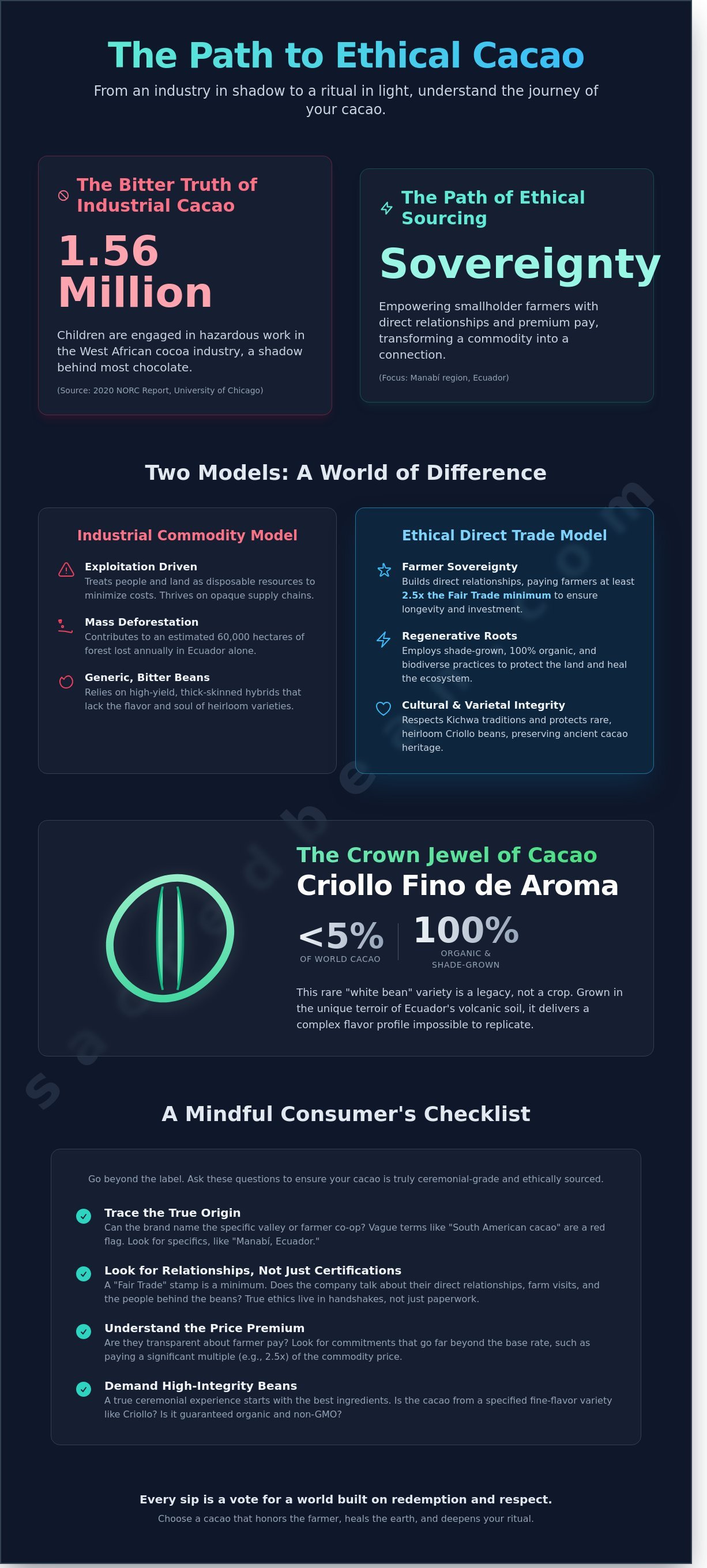
According to the 2020 NORC report from the University of Chicago, 1.56 million children are still working in the cocoa industry across West Africa. It's a heavy weight to carry when you're just looking for a moment of peace. You want your daily ritual to feel sacred, not stained by the shadows of exploitation or vague marketing terms that don't actually protect the person behind the plant. It's difficult to find a deep, spiritual connection to the earth when you're worried about the hands that harvested your cup.
We believe your morning practice should be built on a foundation of redemption and honesty. This guide will show you how ethical cacao sourcing transforms your ritual into a direct line of support for the smallholder farmers in the Manabí region of Ecuador. You'll learn how to spot high-integrity sourcing and deepen your practice through a transparent connection to the origin of your cacao. Let's walk this path together, from the Ecuadorian soil to your quietest moments of intention.
Key Takeaways
- Understand why ethical cacao sourcing is about more than just a fair price; it’s about restoring farmer sovereignty and healing the earth we all share.
- Explore the rare Criollo Fino de Aroma bean and how the sacred soil of the Andes creates a flavor profile rooted in ancient heritage.
- Uncover the "Certification Trap" and why direct relationships matter more than a stamp on a box for true ceremonial quality.
- Master a mindful checklist to vet your source, looking for the real people and specific valleys behind your morning ritual.
- Discover how our "Roasting for Redemption" philosophy transforms a simple bean into a journey of second chances and deep connection.
What Is Ethical Cacao Sourcing? Beyond the Label
Ethical cacao sourcing is a commitment to a transparent relationship. It's a bridge built on farmer sovereignty, environmental regeneration, and deep cultural respect. For us, it isn't a marketing buzzword or a shiny sticker on a package. It's the pulse of our conscience. We see it as a radical departure from the industrial machine that treats the earth and its people as disposable commodities. Real ethics start where the paperwork ends; they live in the soil and the hands of the families who tend it.
The reality of the global trade is often bitter. Industrial production thrives on exploitation and large-scale deforestation to keep costs low. A 2020 report from the University of Chicago revealed that nearly 1.5 million children were engaged in hazardous work on cocoa farms in West Africa alone. This systemic crisis of child labor in the cocoa industry is the shadow side of the snacks found on grocery store shelves. We refuse to let our ritual be fueled by that kind of pain. We've seen enough struggle in our own lives to know that true transformation cannot grow from the seeds of suffering.
We are witnessing a shift. People are moving away from seeing cacao as a sugary snack and returning to its roots as a sacred, high-integrity medicine. When you approach a cup with intention, the quality of the bean matters. The ethics behind the bean are the very foundation of any true ceremonial-grade experience. Without integrity at the origin, the ritual loses its weight. You can't find presence in a product born from absence of care.
The Human Element: Sovereignty vs. Charity
We believe in sovereignty, not charity. Charity often keeps communities dependent on the next handout; sovereignty gives them the power to thrive on their own terms. We pay our partners in Ecuador at least 2.5 times the standard Fair Trade minimum price. This ensures farm longevity and allows families to invest in their own futures. This financial respect changes the energy of the final ritual brew. When a farmer is honored, that resonance carries through the bean and into your cup. It's a vibration of abundance rather than lack.
Regenerative Roots: Caring for the Earth
Our roots are regenerative. In Ecuador, we focus on biodiversity to protect the land from the 60,000 hectares of forest lost annually to industrial agriculture. Our beans are shade-grown and 100% organic. This isn't just a preference; it's a non-negotiable requirement for sacred beans. We work specifically to protect the rare Criollo varieties. These ancient trees are often replaced by industrial hybrids that produce more but lack the soul of the original. By choosing ethical cacao sourcing, we ensure these heirloom varieties continue to breathe.
- Farmer Sovereignty: Direct trade that bypasses exploitative middlemen.
- Environmental Honor: Protecting the 5% of the world's cacao that is considered "fine flavor" through organic practices.
- Cultural Integrity: Respecting the traditional knowledge of Ecuadorian Kichwa communities.
This path isn't the easiest or the cheapest. It's the honest one. By understanding the journey of the bean, you connect with a story of redemption and hope. Every sip becomes a vote for a world where everyone has the chance to rise from the ashes and build something beautiful.
The Criollo Fino de Aroma Difference: Why Variety and Origin Matter
We don't settle for the ordinary. Most of the world consumes cacao that's flat, bitter, and stripped of its soul. We look for the "white bean." This is Criollo Fino de Aroma. It's the crown jewel of the cacao world, representing less than 5% of global production. This bean isn't just a crop; it's a legacy. Choosing this variety is the foundation of ethical cacao sourcing because it requires us to look beyond the industrial machine and seek out the rare and the real.
Mass production thrives on uniformity. It demands high yields and thick skins that can survive harsh shipping. This drive for profit often ignores the human cost. According to reports on child labor on cocoa farms, the industrial model in West Africa has trapped over 1.5 million children in dangerous work. We refuse to be part of that story. By focusing on rare Criollo varieties, we're forced to work directly with small estates. We can't buy this on a faceless commodity market. We buy it through handshakes and shared intentions.
Terroir and Tradition
Ecuador is where the magic happens. Here, the volcanic soil of the Andes meets the heavy breath of the Amazon. This specific terroir creates a profile that's impossible to replicate. You'll taste notes of jasmine, dark berries, and toasted walnuts. It's a sensory map of a land that hasn't been over-farmed or exhausted. We honor the ancestral knowledge of the Kichwa and other local communities. They've tended these trees for generations. They know when the fruit is ready just by the sound of the wind through the pods. Fino de Aroma is a classification that identifies a bean by its superior floral fragrance and the ethical integrity of its ancestral heritage.
Preserving the Sacred Seed
The industry is under threat from a hybrid called CCN-51. Developed in 1965, this bean was built for volume and disease resistance. It's hardy, but it lacks spirit. It tastes like acid and wood. When farmers are pressured to switch to CCN-51, we lose heirloom biodiversity. We lose the "Arriba Nacional" flavor that makes Ecuadorian cacao legendary. Ethical cacao sourcing means paying a premium to keep these ancient trees in the ground. It's about protecting a heritage that's being paved over by industrial greed.
There's a deep connection between the farmer's pride and the quality in your cup. When a grower is paid fairly and respected as an artisan, they pour that dignity into the harvest. This energy carries through. It's why you should look for ceremonial cacao that honors these specific seeds. You aren't just drinking a beverage. You're participating in the preservation of a sacred seed. You're supporting a farmer who chose tradition over a quick paycheck. If you're ready to bring this level of intention into your morning, you might find peace in our sustainably sourced collections.
Mass production destroys the delicate nuances of high-quality cacao. It roasts the life out of the bean to hide inconsistencies. We do the opposite. We let the bean speak. We let the origin tell its own story of redemption and resilience. Every sip is a tribute to the hands that picked the fruit and the soil that fed it.
Certifications vs. Reality: Fair Trade, Direct Trade, and the Truth
A logo on a box is often just ink. It provides a sense of comfort, but it rarely tells the whole story of the person who harvested the fruit. We've learned that a stamp doesn't always mean a farmer is thriving. In 2020, a U.S. Department of Labor-funded study conducted by NORC at the University of Chicago found that 1.56 million children were still engaged in child labor in cocoa production areas of Ivory Coast and Ghana. Many of these areas were covered by standard certifications. This reality is why ethical cacao sourcing must go deeper than surface-level bureaucracy.
Fair Trade acts as a floor. It established a minimum price to protect farmers from the volatile swings of the commodity market. In 2023, the Fair Trade premium was roughly $240 per metric ton above the market price. While this is a vital safety net for mass-market production, it often falls short for the high standards of ceremonial cacao. It ensures a baseline of safety, but it doesn't always provide the resources needed for a family to move beyond survival and into a life of genuine abundance.
Direct trade is different. It is the gold standard because it is built on a handshake and a shared vision. We don't rely on distant middlemen to tell us how the farmers are doing. We go there. By removing the layers of traditional supply chains, we can pay 50% to 100% above the commodity market rates. This direct connection ensures that the money stays in the hands of the Ecuadorian families who tend the trees. It creates a circle of connection that spans from the Amazon basin to our community in Quebec City.
We manage the journey through a bean-to-bar process. This means we control every step. We see the raw beans in Ecuador and we roast them ourselves. This level of oversight ensures that the ceremonial cacao you hold in your hands hasn't been diluted or exploited along the way. It is a process rooted in transparency and a rebellious commitment to doing things the right way, even when it is the hard way.
Decoding the Labels
What does "Organic" mean in a remote Ecuadorian forest? For many small-batch artisans, the $1,000 cost of annual certification is a barrier they cannot climb. Many of our partners farm ancestrally. They use the same chemical-free methods their grandparents used. We look for transparency reports and soil health over colorful logos. Mass-market labels often fail small farmers, so we prioritize the origin and the actual practices of the community over a piece of paper.
The True Cost of Integrity
Integrity has a price. A commodity farmer often earns less than $1.20 per day, a figure that keeps families trapped in a cycle of poverty. When you see a higher price tag on our cacao, you are seeing the "redemption" in the price. That money pays for living wages, reforestation efforts, and the preservation of rare heirloom trees. It is an investment in the future of the forest and the dignity of the human spirit.
When you hold a bag of organic cacao nibs, you are looking at a window into the raw bean. There are no fillers or hidden ingredients. These nibs represent the unadulterated truth of our ethical cacao sourcing. They serve as a reminder that every cacao ritual starts with a seed that was planted, harvested, and processed with intention. It is a sacred cycle that honors both the earth and the hands that work it.
How to Vet Your Cacao: A Mindful Consumer’s Checklist
Choosing your cacao is an act of conscience. It's a vote for the kind of world you want to live in. When we started Sacred Bean in 2016, we realized that the industry was filled with shadows. To bring light back into the process, you have to look beyond the label. You need to find the heart. Research the founder of the brand. Is there a person with a story, or just a corporate board? We believe in redemption because we've lived it. If a brand doesn't share its "why," it's likely because their "how" isn't something they want you to see.
Specific origin data is the first marker of ethical cacao sourcing. If a bag simply says "South America" or "Product of Ecuador," it's too vague. In 2022, the Cacao Barometer reported that nearly 60% of farmers still live below the poverty line because of these broad, faceless supply chains. Look for the name of a specific valley, a province like Napo, or a dedicated cooperative. This level of detail shows that the brand knows their farmers by name. It proves they aren't just buying bulk remnants from a massive warehouse.
Transparency is about more than just numbers; it's about the narrative of the hands involved. A transparent brand shares the struggle and the triumph of the harvest. They don't hide behind industry jargon. They show you the drying beds and the fermentation crates. If they can't tell you how their 2023 harvest impacted the local community, they aren't truly connected to the source. We believe that 100% traceability is the only way to ensure that the spirit of the cacao remains untainted by exploitation.
Finally, trust your senses. The sensory test is a direct line to the quality of the sourcing. Ethical, high-quality cacao should never taste "burnt" or "flat." If you catch notes of ash or charcoal, the beans were likely over-roasted to hide mold or poor fermentation. High-vibration cacao should be vibrant. It should taste of the earth, perhaps with hints of tropical fruit or native spice. It should feel alive on your tongue, not dull or processed.
Asking the Right Questions
When you look at a brand, notice the language they use. Do they talk about "chocolate" or do they honor the "cacao"? This distinction matters. Many commercial brands strip the bean of its power. We prefer using ceremonial cacao powder because it's processed with a gentle touch. It retains the natural fats and the spirit of the plant. Check the packaging too. In 2024, there's no excuse for non-sustainable materials. The vessel should reflect the sacredness of what’s inside.
Setting Your Own Intention
Once you've found a source you trust, the ritual begins. You can integrate the story of the sourcing into your morning practice. As the steam rises, take a moment of silence. Practice "gratitude for the hands." Think of the 1,000 hands that touched the bean, from the harvester in the Ecuadorian sun to the person who packed your bag. This connection turns a simple drink into a bridge between worlds. Drinking cacao known to be sourced with love feels like a warm, grounding anchor that tethers your soul to the goodness of the earth.
The Sacred Bean Journey: From Ecuadorian Soil to Your Ritual
Pablo Aguilar did not start Sacred Bean to build a corporate empire. He started it in 2021 to find a way back to himself. His path was forged in the fire of personal struggle and the quiet hope of recovery. He returned to the Ecuadorian soil of his heritage to find a different kind of medicine. He found it in the ancient trees of the coastal forests. This journey was about more than just a product; it was about reclaiming a sense of purpose through the very earth that raised him.
We call our philosophy Roasting for Redemption. This isn't a polished marketing tagline. It's a lived reality within our warehouse walls. Every small batch we roast is handled with a sense of gravity and heart. We don't believe in mass production because you can't scale intention. By keeping our batches small, we ensure that the spirit of the bean remains intact from the roaster to your cup. It's a slow, honest process that honors the transformation of the bean and the person drinking it.
We chose to source specifically from the Esmeraldas and Manabí regions of Ecuador. These communities have cultivated the rare Arriba Nacional variety for generations. Our commitment to ethical cacao sourcing means we work directly with 48 independent farming families. We bypass the industrial middlemen who often strip the value from the land. Instead, we pay a 50% premium above the standard market rate. This ensures that the people who protect these ancient trees can actually afford to thrive on their own terms.
Honoring the fruit means leaving nothing behind. In the traditional industry, the outer shell is often discarded as waste. We see it differently. We transform these shells into our organic cacao husk tea. It is a gentle, grounding infusion that carries the same soul as the bean itself. This zero-waste approach is our way of showing respect to the land. We believe that every part of the plant has something to offer if you are patient enough to listen.
A Collective Journey of Many Hands
Sacred Bean is a "we." It's a community of farmers, roasters, and individuals in recovery working toward something better. When you incorporate this cacao into your daily ritual, you're not just a consumer. You become a vital link in a chain of support for families in Ecuador. Choosing integrity over corporate profit is a quiet, rebellious act. It's a decision to stand with the 48 families who refuse to let their heritage be commodified. Your cup is a testament to their resilience and our shared commitment to ethical cacao sourcing.
Your Invitation to Connect
We invite you to take the first step into a more intentional life. This is about more than a drink; it's about setting a foundation for your day. Create your ritual with a conscience and feel the difference that true origin makes. Let the grit and the beauty of this journey ground you in the present moment. Sourcing is the first intention you set before the water even hits the cup. It's time to choose a path that honors the hands, the soil, and the spirit of the sacred bean.
Honor the Journey from Soil to Spirit
Choosing your cacao is an act of conscience. It's about looking past the shiny labels to find the truth of the soil and the people who tend it. We believe that ethical cacao sourcing is the only way to protect the 1,200 families in the Ecuadorian communities where our beans are born. This commitment preserves the rare Criollo Fino de Aroma variety. These heirloom beans represent less than 5% of global production. They offer a depth of soul that mass-market options simply can't touch. We don't settle for "good enough" because the people behind the bean deserve better.
Every block we produce is small-batch roasted in Quebec City. This careful process ensures the spirit of the bean remains intact from the moment it leaves the Ecuadorian earth until it reaches your ritual. You're not just participating in a trend; you're joining a movement for redemption and connection. Take a breath. Set your intention. Honor the hands that harvested this gift. It's time to bring a little more heart into your daily life.
Experience the ritual of high-integrity ceremonial cacao
Common Questions About Our Path
Is ethical cacao the same as Fair Trade?
No, it goes much deeper than a sticker on a package. While Fair Trade sets a minimum price of $2,400 per metric ton, our commitment to ethical cacao sourcing means we pay 70% above that baseline. We believe in a direct relationship that honors the person behind the bean. It's about transformation and ensuring the hands that harvest are as nourished as the souls that drink.
Why is ceremonial cacao more expensive than regular cocoa powder?
The price reflects the honest labor and the preservation of the bean’s spirit. Mass-produced powders are roasted at 200 degrees Celsius, which kills the nutrients and the flavor. Our ceremonial cacao is stone-ground at temperatures below 42 degrees. This slow, artisan process preserves the natural fats and complex compounds. You’re paying for a ritual, not a commodity, supporting 15 local families in the process.
Does Direct Trade actually help the farmers in Ecuador?
It changes lives by stripping away the middlemen who take the lion's share of the profit. By cutting out four layers of the traditional supply chain, we ensure 80% of the export price stays in the Napo region. This isn't just business; it's a second chance for communities. It allows farmers to invest in their own land and send their children to school without relying on predatory loans.
How can I tell if my cacao was produced using child labor?
Transparency is the only way to be sure. Over 1.5 million children are currently working in West African cocoa production, a gritty reality we refuse to ignore. You should look for brands that name their specific cooperatives or farms. We trace every single block of our cacao back to the Kichwa smallholders in the Amazon. If a brand can't tell you the village name, walk away.
What makes Ecuadorian cacao superior for ethical sourcing?
Ecuador is the home of the Arriba Nacional bean, a variety that thrives in biodiverse "chakras" rather than industrial plantations. Roughly 70% of the world's fine flavor cacao comes from this soil. Because these are small 2 to 5 hectare farms, the power stays with the families. This structure makes ethical cacao sourcing more natural because it supports ancient heritage rather than corporate monocultures that strip the land bare.
Can I find ethical cacao in local grocery stores in Canada?
It's rare to find true ceremonial grade on a standard grocery shelf. About 95% of store-bought options are heavily processed and alkalized. You’ll usually find our authentic cacao in wellness boutiques in cities like Vancouver or Toronto. These shops value the sacred ritual of the drink. We prefer these small partnerships because they respect the story and the intention behind every batch we bring to Canada.
Is all organic cacao also ethically sourced?
Not necessarily, and this is a distinction that matters for our conscience. Organic refers to the soil, but it doesn't always protect the soul of the worker. A farm can be 100% organic while still paying workers less than $2 a day. We look for the sacred balance of both. Our cacao is grown without chemicals, but our primary focus remains the fair, honest treatment of the human beings involved.
What does Fino de Aroma mean for the ethics of the bean?
This is a prestigious classification from the International Cocoa Organization that applies to only 8% of global production. It signifies a bean with exceptional aroma and flavor profiles. For ethics, this means farmers can demand a premium price for their craft. It encourages the preservation of heirloom trees instead of high-yield hybrids. It turns farming into an art form, giving the community a sense of pride and a stable future.


