

The humble cacao husk, often overlooked, holds a quiet story. It’s the protective shell that guards the precious bean on its journey from the rich soil of Ecuador to our hands. Brewing it as a tea is a simple act of transformation—a ritual that turns a forgotten element into a moment of grounded presence.
This guide will walk you through the gentle art of preparing cacao tea, helping you create a fragrant, comforting infusion that calms the mind and warms the spirit. Discover the perfect brew for a mindful start to your day or a peaceful evening pause.
How to Brew Cacao Tea: A Simple Ritual
This is more than a recipe; it's a foundation for your own personal practice. The French press method is recommended as it allows for full immersion, extracting the delicate, nuanced flavors of the husk without trapping the natural cacao oils.
What You'll Need
- Cacao Husks: 2 tablespoons of Organic Cacao Husk Tea
- Water: 250ml (about 1 cup) of freshly boiled, filtered water
- Vessel: A French press or tea infuser
- Intention: A moment of quiet focus
The Brewing Ritual: Step-by-Step
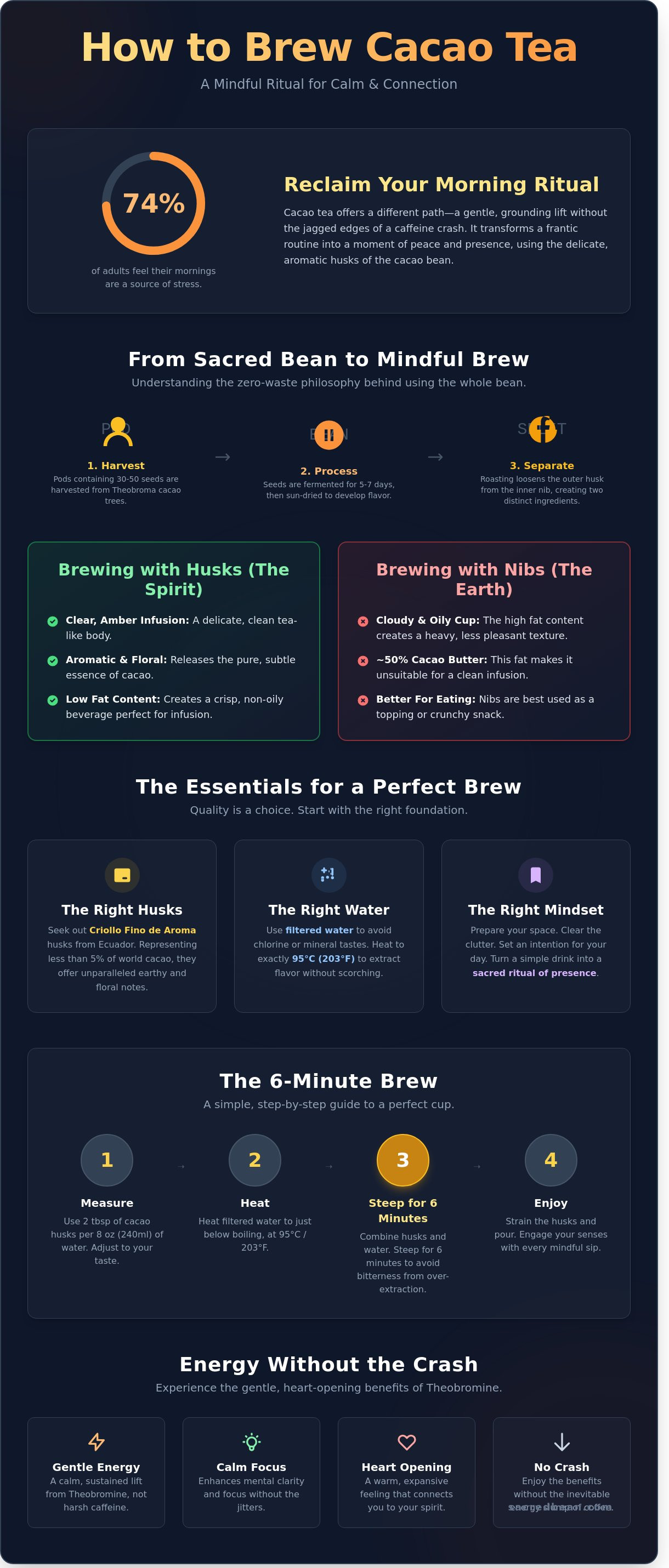
- Measure with Care: Add 2 tablespoons of cacao husks to your French press. Notice their light, earthy aroma.
- The Pour: Pour 250ml of freshly boiled water (100°C / 212°F) over the husks. The high temperature is essential to awaken their full flavor.
- The Steep: Stir gently once. As the tea steeps for 5-7 minutes, take a moment to set an intention. What do you want to invite into your day?
- The Press: Slowly press the plunger down, separating the husks from the golden-brown elixir. Pour into your favorite mug and enjoy the transformation.
Enhancing Your Ritual: Optional Additions
While beautiful on its own, your cacao tea can be tailored to your mood.
According to history of the cocoa bean, this is a well-documented area of ongoing research and practical application.
- For Creaminess: Add a splash of oat or coconut milk for a softer, fuller body.
- For Spice: Steep with a cinnamon stick or a few slices of fresh ginger for complementary warmth.
- For Sweetness: A touch of raw honey or maple syrup can enhance the delicate floral notes.
What is Cacao Tea? Understanding the Sacred Husk
Cacao tea is a pure, simple infusion made from the roasted outer shells of the cacao bean. It is not hot chocolate or the rich, thick drink made from ceremonial cacao paste. Instead, it offers a tea-like body with the unmistakable, soul-soothing aroma of raw cacao.
This practice embodies a "whole bean" philosophy, honoring the part of the cacao that is traditionally discarded. The husk protects the bean, and in return, it carries its own unique essence—a lighter, more delicate expression of the cacao's origin.
Research published by bioactive compounds in cacao shows that this is a well-documented area of ongoing research and practical application.
The Anatomy of a Cacao Bean
The journey begins inside a pod, where beans are encased in sweet pulp. After fermentation and roasting—processes that develop their deep flavor—the beans are cracked, and the outer husk is separated from the inner nib.
For centuries, this husk was seen merely as a byproduct. Today, we are rediscovering its value, transforming it into a zero-waste infusion that carries the story of the soil and the hands that harvested it.
Husks vs. Nibs: Which Should You Brew?
While you can brew cacao nibs, they create a different experience. Nibs are richer and fattier, often resulting in a cloudier, more intense cup. Husks, however, provide a clearer, lighter, and more aromatic infusion that is distinctly tea-like.
We suggest using organic cacao nibs as a textured topping for smoothie bowls or oatmeal, and saving the delicate husks for your brewing ritual.
The Essentials: Sourcing with Intention
The quality of your ritual begins at the source. The character of your tea is a direct reflection of the land, the cacao varietal, and the community that grew it.
Selecting Your Cacao Tea
True cacao tea is just one ingredient: cacao husks. Look for organic, single-origin husks to ensure a pure experience, free from artificial flavorings or added sugars.
We source our Criollo Fino de Aroma husks directly from small, family-owned farms in Ecuador. This direct-trade relationship ensures the highest quality and supports the communities that steward the land.
Tools of the Ritual
Your brewing vessel is a matter of personal preference. While a French press offers the best flavor extraction, a simple tea infuser ball or a traditional pot on the stove will also create a beautiful cup.
We recommend avoiding paper filters, as they can absorb the precious, naturally occurring cacao oils that give the tea its silky mouthfeel and aromatic depth.
The Benefits of Cacao Tea: Energy Without the Crash
Cacao tea offers more than just a comforting flavor; it provides a gentle, sustained sense of well-being. It is the perfect alternative for those seeking a mindful replacement for coffee.
The Science of Theobromine
The primary stimulant in cacao is theobromine, not caffeine. Theobromine is a gentle alkaloid that provides sustained focus and energy for 4-6 hours without the anxiety or crash associated with caffeine.
As a natural vasodilator, it helps increase blood flow, which contributes to its renowned "heart-opening" feeling. This makes cacao tea a wonderful evening drink, allowing for relaxation without disrupting sleep. To learn more, explore our guide on theobromine vs. caffeine effects.
Our Connection to Ecuador
Choosing to drink cacao husk tea is an act of sustainability. It creates a new revenue stream for farmers, ensuring that no part of their sacred harvest goes to waste.
This simple ritual connects you directly to the ecosystem of the cacao farm and the hands that tended the crop. It is a full-circle moment of gratitude—from the soil of Ecuador, to the husk, to your cup, and back again.
Frequently Asked Questions
Does cacao tea have caffeine?
Cacao tea contains very little caffeine. Its primary stimulant is theobromine, which offers a gentle, long-lasting energy boost without the jitters or crash of coffee.
How long should I steep cacao husk tea?
We recommend steeping for 5-7 minutes in freshly boiled water. Steeping for less time may result in a weak flavor, while steeping for too long can introduce bitterness.
Can I eat the husks after brewing?
The husks are fibrous and not meant for consumption. After brewing, they can be added to your compost, returning their nutrients to the earth.
Is cacao tea the same as hot chocolate?
No. Cacao tea is a light, sugar-free infusion with a tea-like consistency and a delicate cacao aroma. Hot chocolate is typically made with processed cocoa powder, sugar, and milk.
What is the best temperature for brewing cacao tea?
Unlike delicate green teas, cacao husks require boiling water (100°C / 212°F) to properly extract their deep, nuanced flavors.
Can I brew cacao tea in a coffee maker?
It is not recommended. A drip coffee maker's brew cycle is too fast and the water may not be hot enough, resulting in a weak and unsatisfying cup.


