

You're on your third cup by 10:00 AM, and your heart is drumming a frantic rhythm against your ribs while your focus scatters like dust. It's a familiar cycle of survival for the 66% of adults who drink coffee daily, but what if your morning didn't have to feel like a race? Learning how to replace coffee with cacao isn't about giving up your quiet time; it's about reclaiming it from the jitters.
We understand the grip of the coffee pot. That ritual of the steam and the mug is sacred, even when the caffeine leaves you crashing hard by the afternoon. You want the alertness, but you're tired of the anxiety and the hollow energy that burns out before the day is half done.
Discover how to transition to the grounded, heart-opening energy of ceremonial cacao from Ecuador without losing your morning routine. We promise to show you how to achieve sustained focus that lasts until sunset, trading the sharp edge of caffeine for a steady, mindful presence.
We'll explore the practical steps of making the switch, the role of theobromine, and the simple ways to build a ritual that honors your body and your spirit.
Key Takeaways
- Trade the jagged caffeine spike for the steady, heart-opening energy of theobromine found in ceremonial cacao.
- Follow a gentle 7-day guide on how to replace coffee with cacao without the grit of a withdrawal headache.
- Explore two preparation methods—modern and traditional—to find a morning flow that honors your need for stillness.
- Learn why origin matters and how choosing Criollo Fino de Aroma supports both the Ecuadorian forest and your own ritual.
- Shift your morning focus from a quick caffeine fix to a sacred moment of presence, intention, and connection.
Beyond the Caffeine Spike: Why We Look for an Alternative
Most of us are running on borrowed time and borrowed energy. We wake up and reach for that first cup, hoping for a spark. Instead, we often get a jittery spike followed by a hollow crash. It's a relentless cycle. We call it the "java dragon," and it's a demanding beast to slay. Learning how to replace coffee with cacao isn't just about changing your drink. It's about reclaiming your nervous system from a state of constant, frantic stimulation.
We don't actually crave the jitters. We crave the pause. That quiet moment before the world starts screaming for our attention is sacred. We want the warmth of the mug and the steam on our faces. We want to feel grounded before we face the day's struggles. Coffee gives us the heat, but it often steals our presence. We're looking for a way to keep the ritual without the wreckage.
To better understand this concept, watch this helpful video:
The Toll of Chronic Stimulation
Caffeine acts like a chemical whip. It forces your adrenal glands to dump cortisol into your blood, triggering a "fight or flight" response when you're just sitting at a desk. Research from 2022 suggests that high coffee acidity can irritate the gut lining, leading to long-term energy depletion and digestive discomfort. Breaking this habit feels like leaving a toxic partner. It's painful at first, but your body finally starts to breathe again. You move from being "wired" to being truly awake.
The "borrowed energy" trap is real. When we mask exhaustion with stimulants, we're just pushing the debt further down the road. We eventually hit a wall where no amount of espresso can clear the fog. This is where the nervous system begins to fray. We become reactive instead of responsive. We lose the ability to sit in silence because our hearts are racing at 100 beats per minute for no reason at all.
The Invitation of Ceremonial Cacao
Ceremonial cacao doesn't demand; it invites. It contains theobromine, a compound that offers a steady, heart-centered glow rather than a frantic head-buzz. When you choose Theobroma cacao, you're choosing a path of connection. It's a shift in intention. You're no longer just fueling a machine. You're participating in a cacao ritual that honors the land and your own well-being.
We focus on the Fino de Aroma standard, which represents only the top 8% of the world's cacao production. This artisan quality ensures the experience is honest and pure. It's a grounded way to start the day. You'll find that how to replace coffee with cacao becomes less about sacrifice and more about redemption. It's an opportunity to trade the hollow rush for a sense of deep, spiritual presence and lasting vitality.
The Science of Stillness: Understanding Theobromine vs. Caffeine
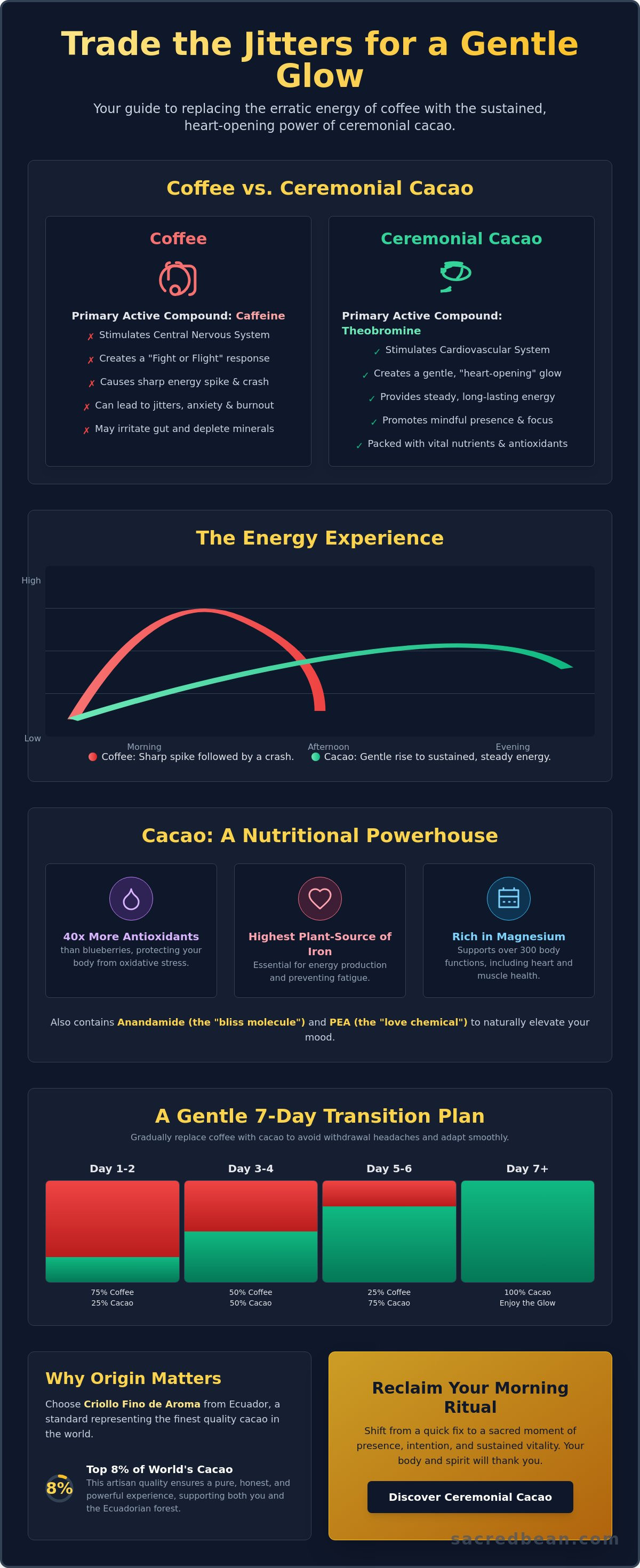
Cacao isn't just a different flavor. It's a different energy entirely. Most of us are used to the jagged, jittery high of coffee. That’s the work of caffeine. Pure ceremonial cacao relies on a different alkaloid called theobromine. The name comes from the Greek words theo and broma, meaning food of the gods. It acts on the cardiovascular system rather than the central nervous system. This is the first shift you'll notice when learning how to replace coffee with cacao.
Coffee is often just a vehicle for caffeine. Pure cacao is a nutritional powerhouse. It contains 40 times the antioxidants of blueberries. It's the highest plant-based source of iron and is packed with magnesium. This mineral supports over 300 biochemical reactions in the body. It helps with muscle relaxation and heart health. While coffee can deplete your body of minerals, cacao restores them.
We often talk about the heart-opening nature of this ritual. There's real science behind that feeling. Cacao contains anandamide, known as the bliss molecule. It also has phenylethylamine (PEA), the same chemical our brains release when we fall in love. A scientific review of the beneficial effects of cocoa highlights how these compounds improve mood and sustain alertness. You get the lift without the subsequent crash. It's a steady, reliable energy that respects your body’s boundaries.
Vaso-dilation vs. Vaso-constriction
Caffeine is a vasoconstrictor. It tightens blood vessels. This can lead to increased blood pressure or that feeling of being wired and anxious. Theobromine does the opposite. It is a vasodilator. It relaxes the smooth muscle and opens the blood vessels. This allows the heart to work more efficiently. This physical expansion is why people describe a sense of emotional openness during a cacao ritual. Theobromine has a half-life of approximately 7 to 12 hours, while caffeine typically clears the system in only 2 to 6 hours.
Mental Clarity Without the Edge
When you learn how to replace coffee with cacao, you trade frenetic focus for grounded presence. Coffee focus can feel like a chase. It's a race against the clock. Cacao focus feels like a foundation. It provides a clarity that doesn't push you over the edge into anxiety. This makes it the primary tool for writers, creators, and meditators who need to stay sharp but stay soft. It allows for a flow state that is sustainable rather than exhausting.
If you're ready to move away from the caffeine spike, you might consider starting your journey with our ceremonial cacao to feel the difference in your own morning rhythm. It's about finding a pace that honors your spirit and your health. This is a journey of redemption for your daily routine.
The Transition: A 7-Day Guide to Replacing Your Morning Brew
Breaking a long-term habit isn't just about changing what's in your mug. It's about rewiring your nervous system and being kind to your body. We've seen many people try to quit cold turkey, only to find themselves back at the coffee pot by noon. A slow, intentional shift is a far more compassionate way to find your center.
This 7-day guide shows you how to replace coffee with cacao without the jarring crash. We use a mixed brew strategy to keep those withdrawal headaches away. It's a method rooted in balance, allowing your body to adjust to the grounded energy of theobromine while slowly letting go of the caffeine spike.
- Days 1 to 3: The 50/50 Split. Mix half your usual coffee dose with ceremonial cacao. This introduces the earthy, honest flavor of the bean from Ecuador while maintaining a familiar routine. It's a bridge between your old habit and your new path.
- Days 4 to 6: Shifting the Ratio. Move toward the sacred majority. Use 25% coffee and 75% ceremonial cacao. You'll notice the energy feels different; it's less of a nervous buzz and more of a steady, heart-centered presence.
- Day 7: The Pure Cup. This is your first morning of total transformation. Brew a cup of 100% ceremonial cacao and set a clear intention for the day. You've arrived at a new way of being.
Managing Caffeine Withdrawal
The first 48 hours of any transition are often the hardest. Your brain is searching for its usual stimulant, and you might feel a bit heavy. Drink plenty of water and focus on mineral support. Magnesium and potassium are your best allies during this time to keep your head clear and your body relaxed.
If you hit a midday slump, don't reach for another espresso. Instead, try a handful of organic cacao nibs. They offer a gritty, satisfying crunch and a subtle energy boost that keeps you grounded. These nibs are an honest, simple snack that provides the vitality you need without the eventual comedown.
Designing Your New Morning Ritual
Ritual is the glue that makes this switch stick. It's not just about the drink; it's about the space you create around it. Replace the aggressive, mechanical sound of an electric grinder with the rhythmic, steady movement of a hand whisk. This physical act brings you directly into the present moment.
Intention is what turns a drink into a ceremony. Before your first sip, take three deep breaths. Light a candle or sit in the morning sun. When you understand how to replace coffee with cacao, you realize you're trading a frantic rush for a sacred pause. This new ritual is a daily commitment to your own peace and connection.
Crafting the Cup: Preparation Methods for Every Morning
Transitioning from the sharp, jagged kick of caffeine to a slower rhythm takes a bit of soul. You aren't just making a drink. You are building a bridge to a more present version of yourself. Learning how to replace coffee with cacao starts with the physical act of preparation.
The "Modern Quickness" method is for the mornings when the world feels heavy and fast. Throw your cacao and hot water into a blender for 30 seconds. This creates a thick, frothy, latte-like texture that feels indulgent. It's efficient, but it still requires you to stop and breathe.
For those who need to slow down, the "Traditional Whisk" method is a better fit. Using a wooden whisk or a molinillo connects you to the origin through movement. It is a rhythmic, grounded labor. This movement honors the farmers in Ecuador who tended the trees before the beans reached our roastery.
Temperature is where most people stumble. Never use boiling water. Boiling water scalps the bean, killing the "living" enzymes and flattening the flavor. Keep your water between 75 and 80 degrees Celsius. This preserves the complex nutrients and ensures the taste remains bold and honest.
Flavor alchemy allows you to customize the experience without relying on refined sugars. A pinch of sea salt opens up the palate. A dusting of cinnamon or a spark of cayenne pepper adds warmth. These spices work with the cacao to create a sensory experience that is both gritty and uplifting.
The Ceremonial Cacao Drink
To begin, measure 28g for a standard cup or 42g for a deeper, more intentional ritual. Combine this with 200ml of hot water. As you whisk, look for the "crema" to rise to the surface. This silky foam comes from the natural fats in the ceremonial cacao, not from dairy.
The sensory experience is immediate. The aroma is deep and earthy, reminding you of the soil. The taste is initially bitter, a raw and unpretentious flavor that demands your attention. It finishes with a grounded warmth that stays with you long after the cup is empty.
Cacao Husk Tea: The Gentle Alternative
Some people miss the thin, watery consistency of a black Americano. If that's you, the husk is the answer. This is a zero-waste ritual using the outer shells of the bean. It offers a light, tea-like body with a clear, roasted profile. It's a humble way to ensure no part of the harvest is wasted.
Brewing the husk is a simple act of redemption for a part of the plant often discarded. It provides a gentle transition for those learning how to replace coffee with cacao. Explore the Cacao Husk Tea: The Sacred Ritual to learn more about this zero-waste brew.
Choosing Your Origin: Why Criollo Fino de Aroma Matters
Not all beans are born equal. Most industrial powders are stripped of their soul through high-heat processing and chemical alkalization. We choose a different path. Our journey leads to the Ecuadorian Amazon, where the forest breathes through the trees. When you learn how to replace coffee with cacao, you aren't just swapping caffeine for theobromine. You're choosing which world you want to support. This is about purity and the gritty reality of the soil.
We demand honesty in our sourcing. Heavy metal testing is a non-negotiable part of our process. We ensure our ceremonial cacao powder is low-cadmium and free from the contaminants often found in mass-produced goods. This commitment keeps the ritual clean and your body respected. It's a matter of integrity. We believe that what you put into your body should be as honest as the intentions you set for your day.
Fino de Aroma: The Gold Standard
Criollo beans are rare gems. They represent less than 5 percent of the world's cacao production. These aren't the flat, bitter beans found in common grocery store products. They're complex and bold. You'll taste floral notes, hints of summer fruit, and a deep nuttiness. This profile survives because of traditional fermentation and low-heat roasting. We don't burn the life out of the bean. We honor the artisan methods that have existed for generations, preserving the delicate compounds that make this plant so transformative.
A Community of Redemption
This isn't just about a drink; it's about conscience. By choosing this path, you join a movement that values the land and the people over corporate profit. Your kitchen ritual creates a ripple of change. It supports the guardians of the Amazon who protect the rainforest from deforestation. These farmers maintain sustainable agroforestry, ensuring the forest stays standing for another generation. They are the heartbeat of the origin, and their hands are the ones that make your ritual possible.
Joining this community means standing in solidarity with the people behind the bean. We work with families in Ecuador who have chosen to stay on their land rather than sell to logging interests. It's a gritty, honest way of living that mirrors our own journey of redemption. When you understand how to replace coffee with cacao, you see that your morning routine can be an act of rebellion against the status quo. It's a way to vote for a better world with your cup. Your morning is sacred. Treat it that way.
Begin Your Ritual of Presence
The shift from a frantic caffeine spike to a grounded morning starts with one intentional choice. You've explored how theobromine provides a steady, calm energy that carries you through the day without the usual crash. By following a 7-day transition and honoring the preparation process, you're doing more than changing your beverage. You're reclaiming your time and your peace.
Learning how to replace coffee with cacao is a quiet rebellion against the rush of modern life. It's an invitation to slow down and connect with a deeper sense of self. We source our Daughter of the Forest, a 100 percent heirloom Criollo, directly from the guardians of the Ecuadorian Amazon. Every batch is lab-tested for purity to ensure low levels of cadmium and lead; this keeps your ritual clean and honest. This is about transformation, one cup at a time.
Start your transition with our Premium Criollo Fino de Aroma Ceremonial Cacao
Your new morning is waiting. Trust the process and lean into the stillness.
Frequently Asked Questions
Will replacing coffee with cacao give me a headache?
You might experience a headache if you stop drinking coffee abruptly because of caffeine withdrawal. Coffee contains about 95mg of caffeine per cup, while ceremonial cacao has significantly less. To avoid this, try a gradual transition over 7 to 10 days by mixing the two or slowly reducing your coffee intake. It's a journey of transformation, not a race to the finish line.
Is there enough 'energy' in cacao to get me through a workday?
Cacao provides a sustained, grounded energy that feels different from the jittery spike of coffee. Theobromine, the primary stimulant in cacao, takes longer to process and lasts roughly 6 to 8 hours in your system. Learning how to replace coffee with cacao helps you avoid the 2 PM crash. You'll find a steady sense of presence that keeps you focused without the frantic edge.
Can I drink ceremonial cacao every day?
Many people incorporate a small amount into their daily ritual, though we suggest listening to your body's wisdom. A standard daily dose is often 15 to 20 grams, which is about half of a full ceremonial serving. Constant use is fine, but taking a break every 7 days helps you stay sensitive to the plant's subtle effects. It's about connection, not just another habit to feed.
How does the taste of ceremonial cacao compare to coffee?
The flavor is earthy, bold, and bitter, sharing the same gritty honesty as a dark roast coffee. It doesn't taste like a sugary treat because it contains 100 percent pure bean with no additives. Because it retains its natural fats, the mouthfeel is much richer than a standard cup of black coffee. You'll taste the volcanic soil of its Ecuador origin in every sip.
Is it okay to drink cacao in the evening if it has theobromine?
It's generally better to enjoy your cacao ritual in the morning or early afternoon. Theobromine has a half-life of about 7 hours, so drinking it late might interfere with your sleep cycle. If you crave a cup at night, use a smaller dose of 10 grams to keep the experience light. We believe evening rituals should focus on winding down, not ramping up.
Do I need special equipment to prepare ceremonial cacao at home?
You don't need expensive machinery or corporate gadgets to make a beautiful cup. A simple pot to heat water and a hand whisk or blender will do the job perfectly. The goal is to emulsify the natural fats, which make up about 50 percent of the bean. This manual process is part of the sacred prep, keeping you grounded and connected to the work of your hands.
Can I add milk or sweetener to my ceremonial cacao?
You can certainly add a touch of honey or plant-based milk, but we recommend trying it with just water first. Traditional preparation honors the origin by keeping the ingredients simple and honest. Avoid dairy milk, as research suggests it can inhibit the absorption of the bean's beneficial compounds. If you're learning how to replace coffee with cacao, a pinch of sea salt can also help balance the bitterness.
What is the difference between ceremonial cacao and regular cocoa powder?
The difference lies in the integrity of the process and the fat content. Regular cocoa powder is processed at high heat and stripped of its natural butter, leaving a hollowed-out version of the plant. Ceremonial cacao is fermented, sun-dried, and stone-ground at low temperatures to preserve its living essence. It's the difference between a mass-produced product and a tool for redemption and transformation.