

What if the energy you need isn't a jolt, but a gentle awakening? A grounded hum instead of a frantic buzz that leaves you anxious by 3 PM.
We get it. You're looking for a way to feel alert and focused without the jitters, the crash, or the sleepless nights. It’s a familiar search for clarity in a world that moves too fast. The question does cacao have caffeine often comes from this exact place, a desire for something different, something more nourishing for both body and spirit.
This isn't just another article about stimulants. We're going to break down the honest truth about ceremonial cacao's unique chemistry. You'll discover its precise stimulant profile and learn how theobromine, cacao's sacred compound, creates a heart-centered energy unlike any other brew.
We’ll look at the milligram-for-milligram facts, explore the transformative benefits of theobromine, and guide you on how to time your cacao ritual for a sustained, clear-headed day.
Key Takeaways
- While the answer to "does cacao have caffeine" is yes, you'll learn why its unique chemistry offers a gentle lift without the coffee jitters.
- Discover the crucial difference between caffeine’s “head buzz” and theobromine’s heart-opening “body glow” for a more grounded energy.
- Learn how to harness cacao's unique energy to cultivate a calm, creative flow state for your work or personal rituals.
- Find the ideal timing for your cacao ritual to replace a morning coffee or navigate an afternoon slump without disrupting your sleep.
The Short Answer: Does Cacao Have Caffeine?
Let’s get right to it. Yes, cacao has caffeine. But that’s not the whole story. Not even close.
To say cacao has caffeine and leave it there is like describing a symphony by one of its quietest notes. It’s technically true, but it misses the entire point. The real energy of cacao doesn’t come from the familiar jolt of caffeine. It comes from a far more abundant and gentle compound: theobromine.
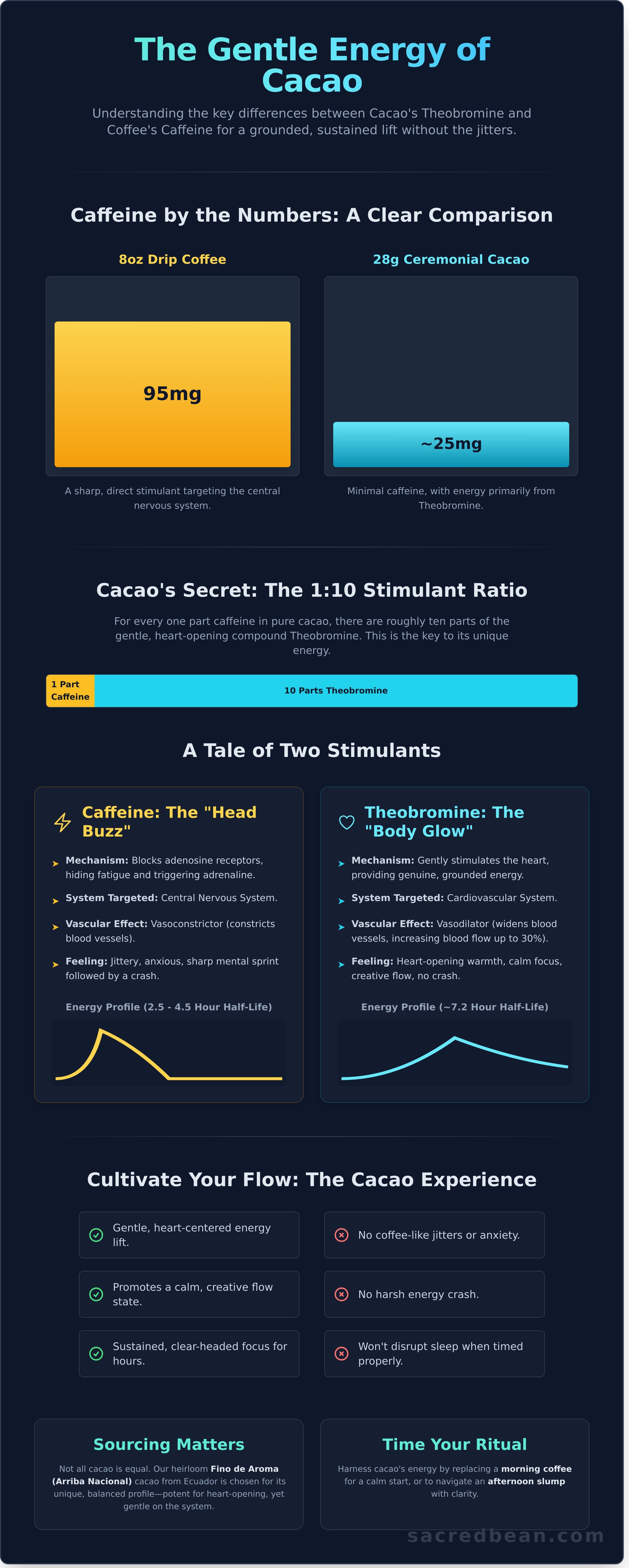
Think of it as a 1:10 ratio. For every one part caffeine you find in pure cacao, there are roughly ten parts of theobromine. This isn't just a numbers game; it's a fundamental shift in experience. While caffeine is a sharp, direct stimulant targeting the central nervous system, Theobromine is a cardiovascular stimulant. It works on your heart, widening blood vessels and increasing blood flow. The feeling is a sustained, heart-opening warmth. Not a jittery, anxious buzz.
This is why the "caffeine" label feels so misleading for a true ceremonial cacao. It’s a complex botanical, a sacred plant with over 1,200 chemical constituents. Reducing it to a single stimulant is a disservice to its ancient spirit and its profound ability to foster connection. So, if you're asking does cacao have caffeine because you're worried about coffee-like jitters, you can breathe easy. The experience is entirely different.
Caffeine Content by the Numbers
For a clear perspective, let's put some hard numbers on the table. Your standard 8-ounce cup of drip coffee contains, on average, 95 milligrams of caffeine. Sometimes much more.
A ceremonial serving of cacao, on the other hand, is a different world. Here’s the breakdown:
- A 28g (1 oz) serving of ceremonial cacao: Contains between 15-40 milligrams of caffeine.
- An 8 oz cup of drip coffee: Contains around 95 milligrams of caffeine.
The final concentration is deeply connected to how the cacao is grown and prepared. ‘Ceremonial grade’ isn't just a marketing term; it signifies a commitment to minimal processing that preserves the bean’s natural, sacred chemistry. It’s about integrity from soil to cup, ensuring the balance of compounds remains honest and whole.
The Role of Origin and Variety
Not all cacao is created equal. The plant's genetics play a huge role in its chemical makeup. The two most common varieties, Criollo and Forastero, have different profiles. Criollo is rarer and typically contains less caffeine, while Forastero is hardier and has a bit more.
Our cacao is different. We source directly from Ecuador, working with communities that cultivate the revered Fino de Aroma variety, also known as Arriba Nacional. This heirloom bean carries a unique, balanced profile that is both potent and gentle. It’s chosen not for its stimulating properties but for its ability to open the heart and quiet the mind.
On average, a 28-gram ceremonial dose of our Ecuadorian cacao contains approximately 25 milligrams of caffeine.
Theobromine vs. Caffeine: Understanding the 'God Food' Stimulant
So, does cacao have caffeine? Yes, but that’s the wrong question. It’s like asking if a forest has a single tree. The real story isn’t about that one tree; it’s about the entire ecosystem. The dominant, life-giving compound in cacao is a gentle giant called theobromine.
Its name comes from the cacao tree itself, Theobroma Cacao, which translates to “Food of the Gods.” A fitting name. While theobromine and caffeine are chemical cousins, they interact with our bodies in profoundly different ways. One is a jolt to the nervous system. The other is a slow, steady opening of the heart.
How Caffeine Works in the Brain
Caffeine gives you borrowed energy. It works by blocking adenosine receptors in your brain, essentially hiding how tired you actually are. This trick triggers a release of adrenaline, kicking your body into a low-grade 'fight or flight' state. The result is a sharp, often jittery, mental sprint. But it’s a sprint fueled by debt, and the crash comes when the caffeine wears off and exhaustion hits you all at once.
The Theobromine Difference
Theobromine takes a completely different path. It’s not a mask for fatigue; it’s a genuine source of grounded, sustainable energy. Instead of constricting blood vessels like caffeine, theobromine is a vasodilator. It gently widens them, increasing blood flow throughout your body by up to 30%. This is the source of the warm, heart-opening sensation many feel during a cacao ritual. It’s not just a feeling; it’s a physiological reality.
This creates a slow, steady rise in energy that lasts. Theobromine's half-life is around 7.2 hours, more than double the average 2.5-4.5 hour half-life of caffeine. No spike. No crash. Just a clear, enduring sense of presence. This beautiful synergy is why many people report a feeling of creative focus without anxiety. The complex interplay is well-documented, with a 2013 review from the National Institutes of Health exploring the psychoactive effects of cacao compounds and their unique impact on mood and cognition.
The trace amount of caffeine that cacao does have is delivered differently, too. The rich cacao butter slows down your body's absorption of both stimulants, smoothing out the experience even further. It’s an intelligent, holistic system. One that honors the body instead of hijacking it. This gentle, heart-centered energy is what we seek to honor in every block of our authentic ceremonial cacao.
The Cacao Experience: Why You Feel Different Than After Coffee
You know the feeling. That first hit of coffee in the morning. It’s a jolt to the system, a sharp, electric buzz that lives mostly in your head. It gets the job done. But it often comes with a frantic edge, a low-level anxiety that hums just beneath the surface.
Cacao is different. It’s not a head buzz; it’s a body glow. A slow, gentle unfolding of energy that feels warm, expansive, and grounded. It’s an energy that doesn’t just push you forward; it connects you to where you are, right now.
The core difference lies in the chemistry we explored earlier. While coffee relies on a caffeine-driven jolt that constricts blood vessels, theobromine in cacao is a vasodilator. It gently opens them, increasing blood flow and oxygen to the brain and heart. This creates a feeling of alertness that is both sustained and calm. The question of does cacao have caffeine is valid, but its small amount is profoundly balanced by theobromine’s heart-centered energy.
Mindfulness and the Cacao Flow
This unique chemistry makes cacao a powerful ally for creative work, meditation, or any practice that requires a state of flow. It offers sustained attention without the inevitable crash. You don’t get the frantic peak or the shaky valley. You get a steady, resilient focus.
Part of this magic comes from Anandamide, a neurotransmitter found in cacao that scientists named after the Sanskrit word for "bliss." It’s our body’s own version of a cannabinoid, and it plays a role in creating feelings of happiness, connection, and well-being. It’s what helps turn a simple drink into a sacred ritual of intention.
For those just starting, or for a lighter afternoon lift, a brew of cacao husk tea is a perfect entry point into this gentle, focused energy.
Cacao for the Caffeine-Sensitive
We hear the stories all the time. People who had to break up with coffee, who thought their days of warm morning rituals were over because of jitters, anxiety, or digestive issues. For so many, cacao has been a quiet, welcome return.
So, if you’re asking does cacao have caffeine because you’re sensitive, here’s the honest truth: yes, a little. But it’s buffered. Cacao is one of the planet’s richest sources of magnesium, with nearly 500mg per 100g of raw cacao. Magnesium is essential for a healthy nervous system and acts as a natural muscle relaxant. This mineral helps to beautifully balance the stimulant effects of theobromine, which is why many people who can’t handle coffee find peace with cacao.
It’s all about listening. Your body knows. Start with a smaller serving. Notice how you feel. Cacao isn’t about overpowering your system; it’s about partnering with it. It’s a practice in recognizing your own threshold and honoring the honest signals your body sends you.
Navigating Your Cacao Ritual: Timing, Sensitivity, and Dosage
Understanding cacao is one thing. Living with it is another. It’s not about rigid rules; it’s about listening to your body and finding a rhythm that feels true. This is about building a relationship with the plant, one that nourishes you without overwhelming you.
Many of us first turn to cacao to replace our morning coffee. Instead of the sharp, jittery spike of caffeine, theobromine offers a steady, heart-centered energy. It’s a gentle awakening. A slow-burn focus that can carry you through the morning with clarity instead of anxiety. It's the difference between a jolt and a hum.
Then comes the afternoon slump. That 3 PM wall. A small cup of cacao can be the perfect bridge, lifting your energy and mood without the long half-life of coffee that can steal your sleep. Theobromine’s lift is softer and fades more gracefully, making it a much kinder companion for the later parts of your day.
Still, we honor its power. For most people, we recommend enjoying your last cup of cacao at least 6 hours before bedtime. Theobromine is a stimulant, and giving your system this window allows its gentle energy to subside, preparing you for deep, restorative rest.
Finding your right amount is a personal journey, but here’s a simple guide to get you started:
- The Daily Dose (15-20 grams): This is your anchor. About 1.5 tablespoons of our shaved cacao. It’s perfect for daily focus, creative work, or a moment of quiet connection before the day begins. It opens the heart without taking you on a full-blown journey.
- The Ceremonial Dose (30-42 grams): This is for deeper work. About 3-4 tablespoons. Reserve this for dedicated rituals, meditation, journaling, or when you need to drop in and listen. It’s a profound dose that asks for your presence and intention.
Preparing Your Daily Ritual
A sacred ritual doesn't have to be complicated. Start with our pure ceremonial cacao powder for a quick, mindful elixir. As you stir, set an intention. What energy do you want to bring into your day? And remember, temperature matters. Use hot water, not boiling (around 170°F/77°C), to protect the delicate compounds that make this plant medicine so powerful.
When to Be Cautious
Cacao is a potent plant, and it asks for our respect. If you are taking SSRIs, MAOIs, or medication for a heart condition, please consult your doctor before starting a cacao ritual. While the question of does cacao have caffeine is relevant, the trace amounts (around 25mg in a daily dose) are also something to be mindful of during pregnancy or while breastfeeding. And always, always drink plenty of water. Theobromine is a mild diuretic, and hydration is key.
Ready to find your own sacred rhythm? Our Ecuadorian ceremonial cacao is waiting to support your journey.
Choosing Your Path: Sacred Bean’s Pure Ecuadorian Cacao
You’ve seen the science. You understand the gentle, heart-opening energy of theobromine versus the sharp jolt of caffeine. But knowledge is one thing. Experience is everything. The real answer to "does cacao have caffeine" isn't just in its chemistry; it's in the integrity of the bean you choose to welcome into your body and your life.
This is where the journey becomes personal. It’s about choosing a partner for your ritual, not just a product. We built Sacred Bean on a simple, rugged belief: what comes from the earth should be honored, not altered. Our commitment is to bring you the purest expression of Ecuadorian cacao, a vessel for presence in its most honest form.
The Purity of the Bean
We never add fillers, refined sugars, or emulsifiers like soy lecithin. These additives don't just dilute the cacao; they mask its true character and can disrupt the clean, stimulant profile you’re seeking. We keep it pure so you can feel the difference. For a truly raw connection, the gritty texture of our cacao nibs offers a grounded ritual, a direct link to the bean itself. The 'Fino de Aroma' designation, awarded by the International Cocoa Organization to less than 8% of the world's cacao, is our standard for this chemical excellence, ensuring a profile rich in flavor and spirit.
From the volcanic soil of Ecuador to your cup, we protect the bean’s sacred chemistry. Our cacao is single-origin Criollo Fino de Aroma, grown by the farmers of the Fortaleza del Valle cooperative. This isn't a commodity we buy on the open market. It's a relationship. We work directly with these communities to ensure that the heirloom cacao is minimally processed, preserving the delicate balance of theobromine, anandamide, and other vital compounds.
This choice has an impact that reaches far beyond your morning ritual. Every block of cacao you purchase directly supports the livelihoods of over 950 farming families in Ecuador. It helps them preserve biodiverse farming practices that have been passed down for generations. This is conscious commerce. It’s a quiet rebellion against a system that too often forgets the hands that feed us.
Starting Your Journey
Consider this an invitation. A second chance for your daily energy. A way to begin your day with intention instead of anxiety. A cacao ritual is a simple, profound act of turning inward, of choosing a grounded presence over a frantic pace. It's your moment to pause, breathe, and connect.
How you begin is up to you. Your needs will guide your choice:
- Ceremonial Paste: For the deepest, most traditional ritual. Melt it slowly, watch it transform, and feel its full, rich embrace.
- Powder: For versatility and ease. Perfect for a quicker cup or for adding a dose of intention to smoothies and other creations.
- Cacao Tea: For a lighter, more subtle experience. A gentle infusion made from the roasted husk, offering a whisper of cacao’s spirit.
The path is yours to walk. We’re just here to offer a worthy companion for the journey. A bean that carries a story of redemption, community, and the sacred power of a simple, honest ritual.
Experience the grounded energy of our Ceremonial Cacao.
Step Into Cacao’s Gentle Energy
So, the next time someone asks, does cacao have caffeine, you'll know the real story isn't that simple. Yes, a small amount is present, but the true energy comes from theobromine. It’s a heart-opening stimulant that offers a gentle, sustained lift, not a frantic jolt. Cacao invites you into your body, connecting you to a calmer, more focused state of awareness without the inevitable crash.
This sacred experience begins with the bean. Our commitment is to its purity and its people. We directly source our 100% pure Criollo Fino de Aroma cacao from family-run farms where it's sustainably harvested in Ecuador. Chef Pablo Aguilar personally ensures every block meets our exacting standards for quality and spirit. This isn't just a product. It's an honest connection to the land and a testament to transformation.
Ready to feel the difference? Begin your ritual with our authentic Ecuadorian Ceremonial Cacao. A quiet moment of presence is waiting for you.
Frequently Asked Questions
Does ceremonial cacao keep you awake at night?
Yes, ceremonial cacao can keep you awake if you enjoy it too close to bedtime. Its energy comes from theobromine, a gentle stimulant that offers a sustained lift without the jitters of coffee. We suggest creating your sacred ritual in the morning or early afternoon. This gives your body several hours to integrate the heart-opening effects, allowing you to rest peacefully at night. It’s about honoring the plant and your own natural rhythms.
Is the caffeine in cacao the same as the caffeine in coffee?
Chemically, the caffeine molecule (C8H10N4O2) in cacao and coffee is identical, but the experience is profoundly different. Cacao’s energy is delivered alongside a much larger dose of theobromine, a vasodilator that increases blood flow and creates a feeling of gentle, open-hearted alertness. It’s a grounded energy that fosters presence, not the sharp, nervous system-jolting rush you get from coffee. It’s a whole different story.
Can I drink cacao every day if I am sensitive to stimulants?
You can, but it’s essential to listen to your body and begin with a small, intentional dose. If you're sensitive, start with just 10-15 grams of ceremonial cacao, which is less than half of a full ceremonial serving. Pay close attention to how you feel. Many people who can't handle coffee find that cacao's gentle, theobromine-led energy offers a beautiful way to connect with themselves without the anxiety or crash.
What happens if I drink too much ceremonial cacao?
Drinking more than the recommended 42-gram ceremonial dose can overwhelm your system, leading to nausea, headaches, and a racing heart. This sacred plant is a powerful partner, not a product to be overconsumed. It asks for respect and mindfulness. Honoring the recommended serving size ensures your ritual remains a beautiful, heart-opening experience rather than a source of physical discomfort. Less is often more on this path.
How much caffeine is in a standard ceremonial dose of cacao?
A standard 28-gram (1 ounce) ceremonial dose of cacao has about 40-50 milligrams of caffeine. For comparison, an 8-ounce cup of coffee often contains over 100 milligrams. The real question isn't just "does cacao have caffeine?", but what else it contains. With over 250 milligrams of theobromine in that same dose, it’s clear that caffeine is only a small part of cacao's sacred, energizing story.
Is cacao husk tea caffeine-free?
Cacao husk tea is not 100% caffeine-free, but it contains only trace amounts, typically less than 5 milligrams per cup. It’s the gentle echo of the cacao bean. Made from the sun-dried shells of our Ecuadorian cacao, this tea offers a subtle, comforting ritual with an earthy, familiar aroma. It’s a perfect, calming alternative for the evening when a full cacao drink would be too stimulating. A quiet moment of connection.
Does cacao cause a crash like energy drinks or coffee?
No, cacao does not cause the harsh energy crash that follows coffee or sugary drinks. Theobromine provides a different kind of fuel. It’s a slow-release, sustained lift that gently tapers off over 3 to 5 hours. There is no sharp spike, so there is no jarring drop. This is a steady, heart-centered energy that supports you, leaving you feeling grounded and present, not shaky and depleted. It’s a true, honest ally.
Can children drink ceremonial-grade cacao?
Yes, children can enjoy ceremonial cacao in small, mindfully prepared amounts. We suggest a child's dose of around 5-10 grams, prepared with more water or plant-based milk than an adult's drink. It can be a beautiful way to share a quiet moment of connection and introduce them to the practice of setting an intention. As always, trust your intuition as a parent and observe how they feel.