

In 2013, archaeologists at the Santa Ana-La Florida site in Ecuador unearthed pottery shards containing cacao residue from 5,300 years ago. This discovery proved that the human bond with this plant started in the Amazonian basin, long before it reached the rest of the world. When we talk about ecuadorian cacao, we aren't just discussing a crop; we're honoring a sacred lineage that has survived centuries to offer us a moment of presence today.
We know how it feels to move through a world that demands your constant attention while leaving you feeling disconnected. You're likely tired of the hollow, shaky energy that comes from coffee or the heavy weight of unethical supply chains. It's difficult to find a sense of peace when your daily habits feel out of sync with your values.
This article will show you how the Arriba Nacional bean provides a path toward sustainable vitality and a deeper connection to the earth. We'll explore the genetic purity of these ancient trees and guide you through creating a meaningful ritual that supports ethical farmers. It's time to turn your morning routine into a transformative practice of intention.
Key Takeaways
- Uncover the ancestral roots of Arriba Nacional and why this rare, native bean remains the genetic gold standard for those seeking true purity.
- Identify the truth behind the bean by understanding the difference between ancient seeds and high-yield hybrids to ensure your practice is built on honest origins.
- Transform your daily routine into a sacred ritual of presence by learning to set a mindful intention with every cup of authentic ecuadorian cacao.
- Connect with the hands behind the harvest and see how direct sourcing creates a cycle of redemption and fair wages for the farming communities involved.
The Soul of the Andes: What Is Ecuadorian Cacao?
Ecuadorian cacao is not just a crop found in a field. It is a living ancestor. To understand the beans we source, you have to look back 5,300 years to the Mayo-Chinchipe culture in the Amazonian lowlands. Long before the rest of the world caught on, these people were already using cacao for more than just food. They treated it as a bridge between the physical and the spiritual. When you hold a cup of this cacao, you are participating in a history of Nacional cacao that predates almost every other agricultural tradition in the Americas. This variety, known as Arriba Nacional, is the genetic heartbeat of the region.
The name "Arriba" carries its own weight. In the 19th century, when European traders arrived at the Gulf of Guayaquil, they were struck by an incredible floral aroma wafting down the water. When they asked where the beans came from, the locals simply pointed "upriver" toward the Guayas River. "De río arriba," they said. It meant from above, from the highlands, from the heart of the country. The name stuck. It became a mark of quality that separated the forest's true gems from the mass-produced varieties found elsewhere. We keep that name alive because it reminds us that the best things in life often require us to look a little deeper and travel a little further.
In our work at Sacred Bean, we refuse to treat ecuadorian cacao as a commodity ingredient. A commodity is something you trade on a screen; it is anonymous and hollow. A sacred plant is something you respect. It has a face, a name, and a story of redemption. For us, this cacao is a tool for presence. It’s a way to slow down the frantic pace of modern life and find a moment of stillness. We don't just sell a product. We offer a chance to reconnect with a plant that has been used for millennia to open hearts and settle minds.
Arriba Nacional: The Fragrance of the Forest
This specific variety is world-renowned as "Fino de Aroma" or Fine Aroma. While most industrial beans taste burnt or flat, Arriba Nacional is famous for its complex sensory profile. You’ll notice distinct floral notes of jasmine and orange blossom that linger long after the first sip. This isn't an accident of chemistry; it's the soul of the forest. We believe these delicate scents help ground you in the present moment, turning a simple drink into a sensory ritual that clears the mental noise of the day.
Why Origin Matters in 2026
As we move through 2026, transparency isn't just a buzzword. It's a necessity. Single-origin sourcing ensures that the unique character of the Ecuadorian terroir remains intact. The volcanic soil of the Andes and the intense equatorial sun create a chemical composition in the bean that can't be replicated in a lab. This environment produces the highest quality ceremonial cacao, which we believe is the purest expression of the land. When you know exactly where your ecuadorian cacao comes from, you aren't just a consumer. You become part of a community that values the earth and the hands that tend it.
Criollo Fino de Aroma: The Genetic Gold Standard
The story of our ecuadorian cacao doesn't begin in a factory. It starts in the soil, with a seed that carries a heavy history. We work with the Criollo variety, the rarest bean on the planet. This variety makes up less than 5% of the world's total cacao production. Most industrial growers won't touch it because it's too delicate and the yields are too low. For us, those low yields represent a commitment to quality over mass-market noise.
The International Cocoa Organization (ICCO) classifies these beans as "Fino de Aroma." This isn't just a fancy label; it's a genetic marker of excellence. While the common Forastero bean is bred for toughness, it carries a harsh, one-dimensional bitterness. Criollo is different. It's complex, offering notes of nut, fruit, and earth that shift as the cacao melts. This complexity is vital to Ecuador's high-value cacao industry, where preserving heirloom genetics is a form of resistance against industrial homogenization.
Preserving these ancient trees is sacred work. They require more shade and more attention than the hybrids found on industrial plantations. Our farmers treat these trees like family members. It's a slow process. A difficult process. But when you taste the result, you understand why we refuse to settle for anything less than this genetic gold standard.
The Science of Heart-Opening Compounds
This cacao isn't just about flavor. It's about how it makes you feel. The primary stimulant here is Theobromine. Unlike caffeine, which hits the nervous system and leaves you wired, Theobromine is a gentle vasodilator. It relaxes the blood vessels and eases the heart's workload. It's a steady, long-lasting energy. No jitters. No crash. Just a quiet sense of presence.
Then there's Anandamide. Scientists call it the "bliss molecule." It's a neurotransmitter that binds to the same receptors as THC, creating a subtle feeling of euphoria and well-being. It's the chemical equivalent of a deep, honest breath. These compounds work in harmony to ground your energy, offering a steady focus that honors your mindful morning ritual without the jarring spikes of caffeine.
From Raw Bean to Ceremonial Paste
The transformation from bean to paste is where most commercial products lose their way. We keep it simple. We keep it raw. High-heat roasting might be faster, but it scorches the soul out of the bean. It destroys the delicate enzymes and antioxidants that make ecuadorian cacao a true superfood. We use low temperatures to honor the genetics of the Criollo bean.
We also skip Dutch processing. This alkalizing method is used by big brands to darken the color and mellow out the flavor of cheap beans. It's a chemical shortcut. It strips the cacao of its character and its health benefits. For those just beginning to explore this path, our ceremonial cacao powder offers an accessible way to experience this purity without the additives found in store-bought alternatives.
Every batch we produce is a testament to the hands that harvested it. It's about redemption for the land and the people. If you're ready to shift your daily routine into something more intentional, you might want to explore our current harvests and find the bean that speaks to your spirit.
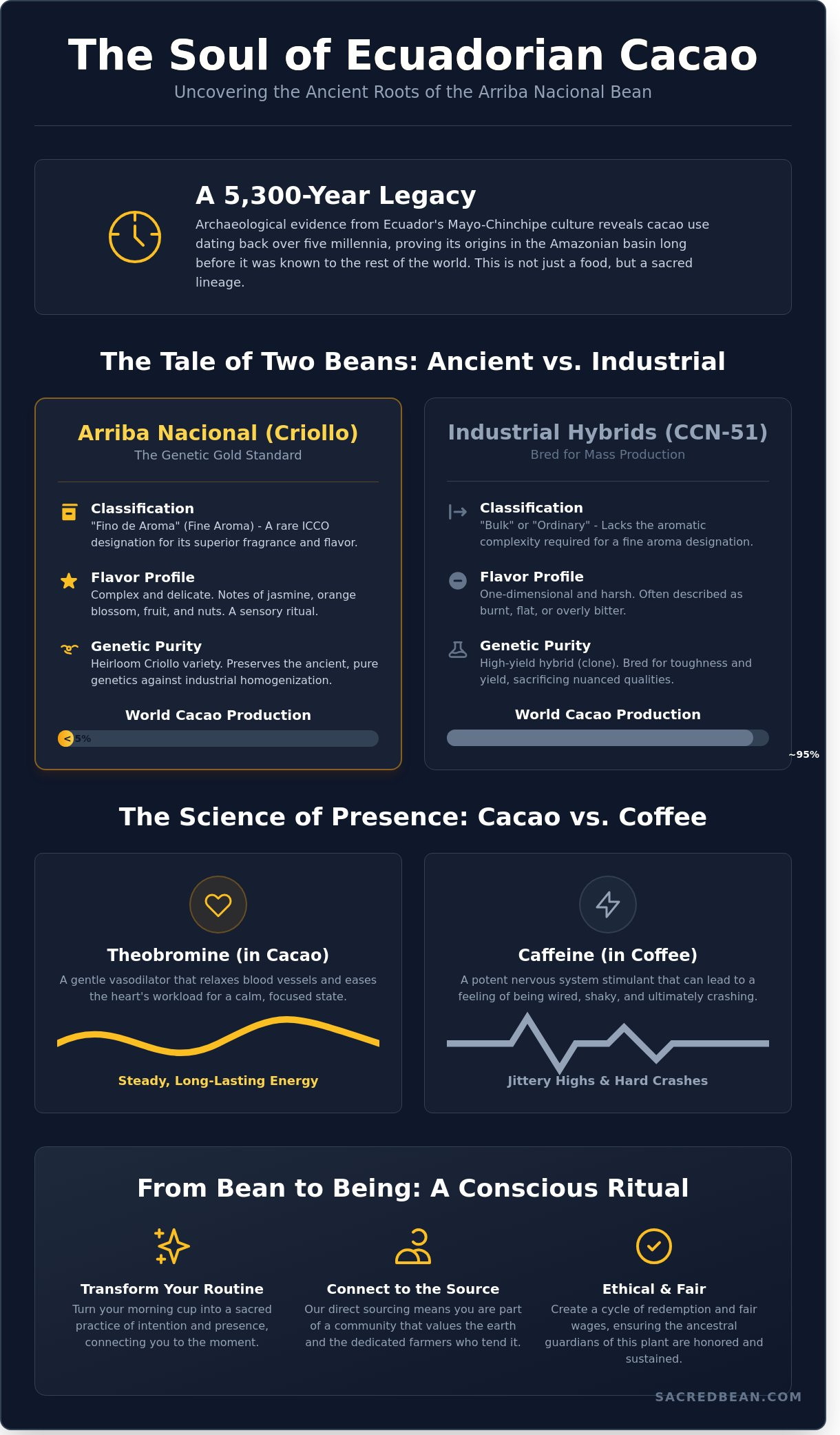
Ancient Nacional vs. CCN-51: The Fight for Purity
The most common misconception about ecuadorian cacao is that the origin name alone guarantees excellence. It doesn't. The truth is more complicated and a lot more urgent. We're currently witnessing a struggle for the survival of the world's most ancient flavor. This is the fight between the Ancient Nacional tree and a laboratory hybrid known as CCN-51.
CCN-51, or Colección Castro Naranjal, arrived on the scene in 1965. It was the work of agronomist Homero Castro. He wanted a bean that could resist disease and produce massive quantities. He succeeded. CCN-51 yields up to 3,000 kilograms per hectare. This is a staggering increase compared to the 500 kilograms produced by traditional trees. But this efficiency came at a spiritual cost. The industry calls it the "Scourge" because it's replacing the heritage of the land with a hollow, industrial substitute. Choosing pure cacao is a quiet rebellion. It's a way to stand with the 5,300 year history of the Nacional bean.
Why We Say No to Hybrids
Flavor profiles tell the real story of these two plants. CCN-51 is notoriously acidic and flat; it lacks the "Arriba" floral notes that made Ecuador famous. Beyond taste, the environmental impact is devastating. Hybrids are often grown in scorched earth monocultures. They don't want the company of other plants. Ancient Nacional thrives in a wild, diverse agroforestry system. It needs the shade of fruit trees and the hum of a healthy ecosystem.
Our farmers face a brutal dilemma. Do they choose the high yield hybrid to survive, or the low yield heirloom to preserve their soul? We solve this by ensuring our quality focused partners receive a 30% premium over standard market rates. We make the sacred choice the profitable one for the community. This ensures the trees stay in the ground and the families stay on their land.
Identifying Authentic Ecuadorian Cacao
You have to be an intentional consumer to find the truth. Start by looking for the "Nacional" or "Arriba" label on the packaging. These names are protected, but industrial brands often hide behind vague wording. Genuine ceremonial cacao will always offer direct trade transparency. You should be able to trace the bean back to the province, or even the specific farm. Use this checklist for your next ritual:
- Check the Variety: Look for 100% Nacional or Arriba genetics.
- Verify the Source: Ensure the brand names the specific region or cooperative.
- Look Beyond Organic: Seek out "heirloom" or "ceremonial" designations.
- Taste the Complexity: Real ecuadorian cacao should have notes of jasmine, citrus, or earth.
Remember that "organic" is just the beginning of the story. Heirloom status is the goal. It means the trees are descendants of the original wild groves. To taste this purity in its most honest form, we invite you to try our organic cacao nibs. They are raw, crunchy, and carry the unedited story of the land. They are a simple way to connect with the earth's purity without any additives or compromises.
From Bean to Being: Crafting Your Daily Cacao Ritual
Making your morning cup shouldn't feel like another box to tick on a heavy to-do list. It's a chance to stop. To breathe. We call it a ritual of presence because it demands you show up exactly as you are; messy, tired, or whole. This isn't about achieving a state of zen perfection. It's about a reformed rebel's approach to mindfulness. You don't need a white robe or a silent retreat. You just need a mug, some heat, and the honesty to sit with yourself for ten minutes.
The transition from a frantic morning to a grounded one begins the moment you touch the block of cacao. Feel the weight of it. This isn't processed powder from a factory. It's a living product. As you prepare it, notice the sensory shifts. The earthy aroma that fills the kitchen. The way the steam hits your face. The warmth of the ceramic against your palms. These small physical anchors pull you out of your head and back into your body. It's a sacred pause in a world that never stops shouting.
Preparing Your Ceremonial Elixir
Preparation is the first step of the transformation. Start by chopping roughly 28 grams of the cacao paste into fine shavings. This ensures it melts evenly without clumping. Heat your water or plant-based milk to exactly 160 degrees Fahrenheit. Never let it reach a rolling boil. Intense heat at 212 degrees destroys the delicate flavonoids and the "Fino de Aroma" profile that makes ecuadorian cacao world-renowned. Keeping the temperature lower preserves the complex chemical structure that supports your mood.
Once the liquid is warm, add your cacao and whisk vigorously. This isn't just for aesthetics. Whisking aerates the liquid, which releases the volatile scent compounds and creates a thick, creamy froth. You can customize your elixir based on what your spirit needs today. Add a pinch of sea salt to sharpen the flavor; a dash of cayenne pepper to kickstart your circulation; or a teaspoon of cinnamon for a sense of grounding. There is no wrong way to do this as long as you are present for the process.
Setting the Space for Intention
Before that first sip, take a moment to set an intention. This isn't a goal or a target. It's a direction. You might simply tell yourself, "I will be kind to my mistakes today." As you drink, think about the journey this bean took. Connect with the 1,200 smallholder farmers in the Napo region who hand-picked the pods. When you acknowledge the human hands behind the product, the act of drinking becomes a bridge between your kitchen and the Ecuadorian soil. It turns a simple beverage into a global handshake.
If you find that a full ceremonial dose is too heavy for your evening wind-down, you don't have to skip the ritual entirely. Reflection can happen at any hour. For a lighter experience that still carries the spirit of the origin, try organic cacao husk tea. It offers the same aromatic connection without the intensity of the full paste. Whether you use the bean or the husk, the goal remains the same; use this ecuadorian cacao to find your way back to yourself.
Ready to start your own journey of presence? Shop our authentic ceremonial cacao and bring the ritual home.
The Sacred Bean Journey: Sourcing for Redemption
We believe that a cup of cacao is more than a beverage. It is a bridge. On one side, there is the high-quality craft of small-batch production. On the other, there is a deep-seated need for social transformation. Our journey started with a conviction that these two worlds belong together. We don't just look for the best flavor profiles. We look for the heart behind the harvest. Our mission is built on the idea that the process of bringing ecuadorian cacao to your table should be as restorative as the ritual itself.
This is about conscience. We choose to bypass the industrial supply chains that have historically exploited land and labor. Instead, we focus on direct relationships. We see the faces of the people who ferment and dry these beans. This transparency allows us to pay premiums that sit 40% above standard Fair Trade minimums. It ensures that the beauty you experience in your morning ritual isn't built on someone else's struggle. We call this a cycle of second chances. It starts in the soil and ends in your hands.
Meet the Farmers of the Guayas Basin
The Guayas Basin is a place of intense life. Here, small-batch farms are tucked away under the humid canopy of the rainforest. Life on these 4-hectare plots is governed by the seasons, not by corporate quarterly reports. For the families we partner with, cacao is a legacy. By working directly with these communities, we ensure that 100% of our sourcing bypasses the "big cocoa" middlemen who often strip farmers of their profits. This direct connection creates a sacred bond between the grower in Ecuador and the drinker in Canada. It's a partnership rooted in mutual respect and shared dignity.
Redemption in Every Cup
Our philosophy of "Roasting for Redemption" is the pulse of our business. We know that transformation is a messy, gritty process. That's why we deliberately hire individuals who are navigating the challenges of life after incarceration or recovery. They understand the weight of a second chance. They bring a level of focus and reverence to the roasting process that you won't find in a factory. This grit meets the natural beauty of the ecuadorian cacao to create something truly honest. It is a product born from the belief that no one, and nothing, is beyond repair.
Every bag of cacao represents a shared journey of many hands. From the farmer who carefully hand-picks the pods to the roaster who monitors the temperature with quiet intention, the story is one of collective healing. We invite you to step into this story with us. This isn't just about a purchase; it's about participating in a movement that values people as much as the product. When you set your intention and take that first sip, you are supporting a global community dedicated to transformation and hope.
Experience the ritual for yourself. Shop our Ecuadorian collection today.
Your Daily Ritual of Redemption
Choosing the right bean is a choice for integrity. You've seen the stark difference between the ancient, genetically pure Arriba Nacional and the industrial CCN-51. We source our Premium Criollo Fino de Aroma quality directly from 12 heirloom farms in the coastal regions. This isn't just about flavor profiles. It's about the families we support through fair wages and our commitment to social restoration. Every cup of ecuadorian cacao you whisk is a bridge between ancient tradition and modern healing. It's a second chance for the soil and for the people who harvest it.
We've seen how a simple morning ritual can ground a person. It's a moment of presence in a loud world. Our "Roasting for Redemption" initiative has helped 15 individuals find steady work and a new path this year alone. When you sit with this cacao, you aren't just drinking a beverage. You're participating in a cycle of transformation. The journey from the Andes to your home is paved with honest work and a shared hope for something better. Take a breath; your new ritual is waiting.
Start your ritual with our authentic Ecuadorian Ceremonial Cacao
Frequently Asked Questions
Is Ecuadorian cacao the same as regular cocoa powder?
No, it isn't the same thing at all. Commercial cocoa powder is usually processed at temperatures exceeding 150°C, which kills the delicate nutrients and strips away the medicine. Our ecuadorian cacao is fermented and stone-ground at low heat to preserve 100% of the natural fats. This makes it a whole food rather than a processed byproduct. It's about keeping the spirit of the plant alive for your ritual.
What does 'Arriba Nacional' actually mean?
Arriba Nacional is a specific genetic lineage of cacao found only in Ecuador. This variety makes up less than 5% of the cacao grown worldwide today. It's famous for a complex, floral scent that local farmers call "La Arriba." We choose this bean because it carries a legacy of resilience. It's a rare gift from the earth that requires deep respect and honest labor to harvest.
Can I drink ceremonial cacao every day?
You can certainly make this a daily practice for grounding and presence. A serving of 20 to 28 grams is ideal for a morning ritual to set your intention. Drinking it every day helps build a steady rhythm of mindfulness. It's a gentle way to invite transformation into your routine without overwhelming your system. Listen to your body and find your own pace in this sacred journey.
Does Ecuadorian cacao contain caffeine?
Yes, it has a small amount, but the primary energy comes from a compound called theobromine. A 28g dose of ecuadorian cacao contains roughly 25mg of caffeine. That's about 75% less than your average cup of coffee. Theobromine offers a sustained, heart-opening lift. It doesn't give you the jagged spikes or the heavy crash often found in industrial stimulants, making it perfect for quiet reflection.
How do I know if my cacao is ethically sourced from Ecuador?
Check for direct trade evidence and specific regional origins like the Manabí province. We pay our farming partners 50% above the standard fair trade price to ensure real impact. Ethical sourcing isn't just a label; it's a commitment to the people who touch the soil. Transparency is the only way to ensure your ritual doesn't come at the cost of someone else's struggle or hardship.
What is the best way to store ceremonial cacao paste?
Store your paste in a cool, dry spot away from direct sunlight. When kept in an airtight jar at temperatures under 20°C, the cacao stays fresh for 24 months. Don't put it in the refrigerator. Moisture can cause the fats to separate and ruin the texture. Treat it like the sacred medicine it is. Keep it protected and respected in your kitchen so it's ready when you need to reconnect.
Why is Ecuadorian cacao more expensive than other varieties?
The higher cost reflects the rarity of the beans and the fair wages paid to the community. Pure Arriba Nacional trees yield 40% less crop than the mass-produced CCN-51 hybrid variety. We refuse to cut corners on quality or human dignity. By choosing this cacao, you're investing in the redemption of the land and the survival of ancient, honest farming traditions that prioritize the planet over profit.
Can I use cacao powder for a ceremony, or must it be paste?
Paste is the traditional choice because it retains the natural cacao butter. This healthy fat allows the body to absorb the nutrients about 30% slower than powder. Powder is often stripped of its oils, losing the grounding quality needed for a deep ritual. Using the whole bean connects you to the full essence of the plant. It's a more complete, gritty, and honest experience for your soul and your body.