

What if the energy you're chasing isn't found in a jagged spike, but in a slow, steady burn that actually opens your heart? Most of us have spent years trapped in a cycle of 3:00 PM slumps and the anxious hum of a third espresso. When we look at theobromine vs caffeine effects, the difference is more than just chemistry; it's about how we choose to show up. We understand that feeling of needing a boost just to face the day, only to end up with shaky hands and a mind that won't sit still.
It's a heavy price to pay for a little productivity. While caffeine constricts your blood vessels, theobromine actually dilates them. A 2013 study in the journal Psychopharmacology showed that this allows for a 10 percent increase in blood flow without the frantic heart rate. We're here to show you how this subtle shift can transform your daily energy from a jagged buzz into a steady, heart-centered flow.
You'll learn why cacao offers a gentler path to focus that lasts up to 8 hours without the inevitable crash. We'll walk through the science of these molecules and how to build a ritual that supports your mindfulness instead of draining it.
Key Takeaways
- Learn how theobromine—the "Food of the Gods"—creates a heart-centered energy that grounds you firmly in the present moment.
- Discover the science of vasodilation, where opening your blood vessels invites a sense of calm that caffeine's constriction simply can't match.
- Explore the theobromine vs caffeine effects to understand why a slow, steady plateau is more sustainable than a frantic, jagged spike.
- Shift your perspective on productivity, moving from a buzzy, distracted state into a deep, intentional flow that honors your spirit.
- See how your daily ritual supports Ecuadorian farmers, turning a simple drink into a sacred bridge of connection and redemption.
Understanding the Energy of Cacao: What is Theobromine?
Theobromine is the heartbeat of the Theobroma cacao plant. It's the primary alkaloid found in the beans we source from the coastal groves of Ecuador. In 1753, the scientist Carl Linnaeus gave the cacao tree its name, which translates literally to "Food of the Gods." This wasn't a marketing gimmick. It was a nod to the ancient traditions that saw cacao as a bridge between the physical and the spiritual. For us, theobromine represents a path to redemption from the frantic pace of modern life.
Think of theobromine as the steady, grounded cousin to caffeine. While coffee often feels like a jagged surge that demands your attention, cacao offers a different mission. It's a slow burn. It doesn't scream at your nervous system. Instead, it invites a gentle flow of energy that moves with you rather than against you. It's the difference between a lightning strike and a glowing ember.
The Chemical Connection and Key Differences
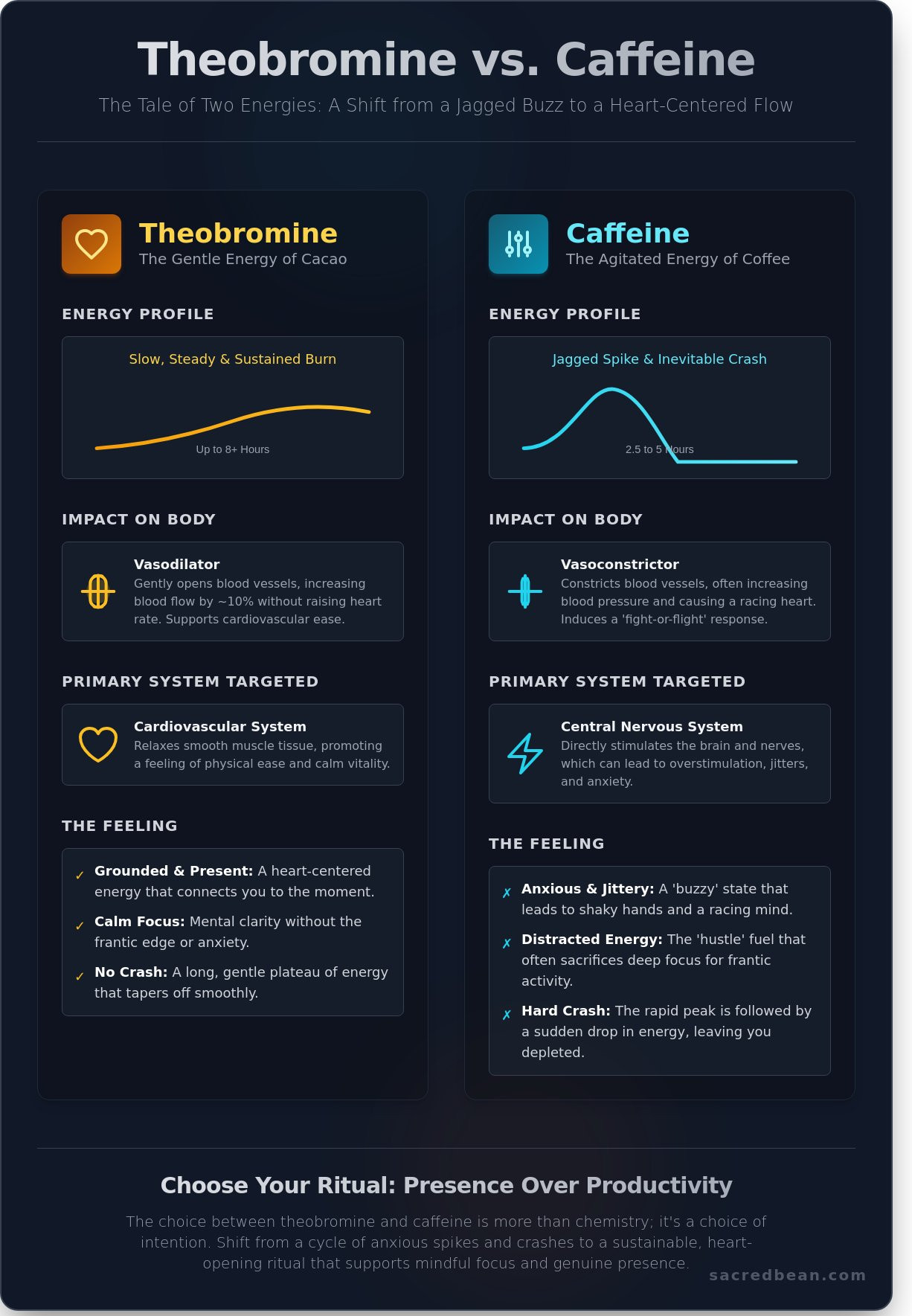
Chemically, theobromine and caffeine are close relatives in the methylxanthine family. They look almost identical on paper. However, theobromine is missing one specific methyl group. This tiny chemical absence changes how your body reacts. Caffeine targets the central nervous system, which can lead to jitters or anxiety. Theobromine works primarily on the cardiovascular system. It relaxes smooth muscle tissue and dilates blood vessels. This creates a sense of physical ease while maintaining mental clarity.
When we look at theobromine vs caffeine effects, the duration is a major factor. Caffeine has a half-life of about 2.5 to 5 hours. Theobromine stays with you much longer, often up to 7.2 hours. Our ceremonial cacao does contain trace amounts of caffeine, but it acts as a minor partner. It provides a light spark to the mind while theobromine provides the heavy lifting for a sustained, calm focus.
Cacao vs. Coffee: A Shift in Intention
Coffee is the fuel of the hustle culture. It's often consumed in a rush to meet a deadline or survive a morning commute. It's a tool for "doing." Cacao is a tool for "being." Choosing cacao is a quiet act of rebellion. It's a decision to step out of the grind and into a space of presence. We don't just drink it to wake up; we drink it to wake up to ourselves.
The way theobromine vs caffeine effects manifest in your daily life depends on your intention. If you want a quick spike of adrenaline, coffee serves that purpose. If you seek a mindful lifestyle, theobromine is the better companion. It supports a ritual of connection. It allows you to sit with your thoughts, your breath, and your community without the looming threat of a caffeine crash. It’s about finding beauty in the transformation of your energy.
The Science of the Heart: How Theobromine Works
Understanding theobromine vs caffeine effects begins with how these molecules interact with your blood vessels. Caffeine is a known vasoconstrictor. It tightens the walls of your veins, which often leads to a spike in blood pressure and a heart that feels like it's racing against a clock. Theobromine takes a different path. It acts as a vasodilator, meaning it encourages your blood vessels to relax and open wide. This biological shift creates a sense of cardiovascular ease rather than tension.
We see this physical opening as a mirror to the spiritual work we do at Sacred Bean. When the body isn't trapped in a state of fight-or-flight, the mind can finally settle into the moment. This isn't just about chemistry; it's about creating the physical conditions for a heart-opening ritual. By lowering peripheral blood pressure, theobromine allows you to feel deeply present without the frantic, jagged edge that usually follows a standard cup of coffee.
Vasodilation and Sustained Energy
Wider blood vessels mean your system can transport oxygen more efficiently to your brain and muscles. This process provides a steady stream of vitality that doesn't demand a heavy toll from your adrenal glands. Unlike caffeine, which peaks quickly and often leaves you depleted, theobromine has a half-life of 6 to 10 hours. This means the energy stays with you, supporting your daily intention through the afternoon without a sudden crash.
- Oxygen Flow: Improved circulation supports mental clarity and physical stamina.
- Heart Rate: Theobromine provides a gentle lift without causing jittery palpitations.
- Longevity: A 10-hour half-life ensures the energy remains stable for the duration of your work or practice.
The Role of Magnesium and Mood
Cacao is one of the densest plant-based sources of magnesium on the planet. This essential mineral works in tandem with theobromine to soothe the nervous system and relax muscle fibers. It's a holistic high that feels grounded and real. When you sit with a cup of ceremonial cacao, you're feeding your body the nutrients it needs to find a state of calm focus. It's a quiet strength, born from the soil of Ecuador and refined by hands that understand the value of a second chance. This combination of magnesium and theobromine helps you bridge the gap between a busy schedule and a peaceful heart.
Theobromine vs. Caffeine: A Side-by-Side Comparison
Caffeine is a shock to the system. It's a loud, demanding guest that leaves as quickly as it arrived. Theobromine is different. It's a slow burn. It's an honest energy that respects your boundaries. When we examine theobromine vs caffeine effects, we aren't just looking at chemistry; we're looking at how we choose to treat our bodies and our spirits.
Caffeine targets the central nervous system. It hijacks your adenosine receptors to mask tiredness. Theobromine, the primary alkaloid in our ceremonial cacao, focuses on the cardiovascular system. It acts as a vasodilator. This means it relaxes your blood vessels and allows for roughly 30 percent more oxygen to flow through your veins. It doesn't force your heart to race; it simply helps it breathe.
- Onset speed: Caffeine hits the bloodstream in about 15 to 45 minutes. Theobromine takes its time, usually requiring 30 to 60 minutes to be felt.
- System impact: Caffeine stimulates the brain and nerves. Theobromine supports the heart and muscles.
- Dependency: Caffeine is known for its chemical hooks. Theobromine offers a gentler path with no recorded "crash" or withdrawal symptoms.
The Peak and the Plateau
We've all lived through the coffee cycle. You get that sharp spike, a moment of frantic productivity, and then the inevitable 3 PM wall. It's an exhausting way to live. The half-life of caffeine is roughly 5 hours. It leaves you stranded. Theobromine has a half-life of 7 to 12 hours. It doesn't spike. It plateaus. This sustained presence is why many find it superior for deep work. It keeps you in the room. It keeps you focused without the frantic need for another hit.
Jitters, Anxiety, and Sleep
Caffeine often triggers a fight or flight response. For those of us who have walked through struggle or recovery, that physical anxiety can be a trigger. It taxes the adrenals and spikes cortisol. Theobromine avoids this tax. Because it doesn't cross the blood-brain barrier as aggressively, it provides clarity without the shakes. You can often enjoy a cup of cacao in the evening. It supports a relaxed state of presence rather than a wired state of panic. It's about finding a rhythm that feels sacred, not stressed.
Moving Beyond the Buzz: Why Presence Matters
We've been conditioned to believe that productivity requires a racing heart and a frantic to-do list. It's a story we tell ourselves at 9:00 AM while reaching for a third espresso. Current data shows that 85% of adults in the US rely on daily caffeine to function, yet this often leads to a cycle of burnout. We're trading our long-term peace for a short-term spike. True productivity isn't about speed. It's about the flow state.
When we examine theobromine vs caffeine effects, the difference is found in the quality of attention. Caffeine is a nervous system stimulant that can trigger a "fight or flight" response. Theobromine is a cardiovascular stimulant. It relaxes the blood vessels and offers a steady, 6 to 10 hour window of focus. You don't feel pushed; you feel supported. This grounded energy comes from the heart, allowing you to stay present with your tasks instead of rushing past them.
Sourcing is the bridge to this experience. Most commercial products use bulk cacao processed at temperatures exceeding 300°F, which destroys the delicate compounds. We choose Criollo Fino de Aroma cacao. This variety represents less than 5% of global production. It's naturally higher in theobromine and lower in caffeine, providing the honest, raw energy your body actually knows how to use.
Transitioning to a Cacao Ritual
You don't have to quit coffee cold turkey. Start by replacing your second cup of the day. For the cup you do enjoy, opting for a quality-focused specialty roaster like The Sasquatch Coffee Company can offer a more mindful experience than typical hustle-culture brews. That 2:00 PM slump is the perfect moment to choose a different path. While you whisk your elixir, take a moment to set an intention. It can be as simple as "I am here." This anchors the energy. Notice how the theobromine vs caffeine effects feel in your own skin. You'll likely find a soft clarity rather than the usual afternoon jitters. Listen to your body's signals; it knows the way home.
The Purity of Ceremonial Grade
Processing matters because integrity matters. Traditional Dutch-processing uses alkalizing agents that can strip away up to 90% of the cacao's natural antioxidants. We keep our process minimal to protect the plant's soul. The natural cacao butter is also essential. These healthy fats ensure the theobromine is absorbed slowly and sustainably. Without the fat, the ritual is incomplete. Choosing ceremonial cacao means choosing a product that respects the biology of the plant and the person drinking it.
Ready to shift your energy from frantic to focused? Experience the gentle power of our authentic Ecuadorian cacao.
Crafting Your Daily Ritual with Sacred Bean
Our journey begins in the mineral-rich soils of Ecuador. We don't just buy beans; we build lives. Sacred Bean works directly with over 150 farming families to ensure every harvest reflects the integrity of the land. This is where the shift happens. When you understand the difference in theobromine vs caffeine effects, you start to see your morning drink as a tool for transformation rather than a quick fix. It's about moving from the frantic energy of a stimulant to the steady, grounded presence of cacao. We believe in the beauty of the struggle and the power of a second chance.
Choosing Your Cacao Path
Your ritual should fit your life. Whether you're at a busy desk or in a quiet corner of your home, there is a way to connect. We offer different paths to help you find your rhythm. Each one carries the same Ecuadorian soul and commitment to quality.
- For the deep ritual: Ceremonial Cacao Powder. This is for those who want to slow down and sit with themselves.
- For a lighter, zero-waste brew: Cacao Husk Tea. It provides a gentle lift without the weight.
- For a mindful snack: Organic Cacao Nibs. Perfect for staying present while on the move.
A Moment for Intention
Start your first ritual with three simple steps. First, prepare your cacao with heat and care. Second, take a breath and set a single intention for your day. Third, take your first sip with full awareness. Notice the earthy aroma and the subtle warmth spreading through your chest. This is the heart of the theobromine vs caffeine effects; it is a slow expansion rather than a sharp spike. It invites you to be here, now.
We call our philosophy "Roasting for Redemption." It is our promise that every bean supports someone finding their way back from the edge. We employ ex-offenders because we know that everyone deserves a seat at the table. When you drink our cacao, you aren't just consuming a product. You are joining a movement of people who believe that something beautiful can grow from the ashes. It's honest. It's gritty. It's sacred. Join us in this transformation.
Step into Your Own Sacred Rhythm
Choosing a path for your daily energy involves understanding theobromine vs caffeine effects. Caffeine targets the central nervous system with a sharp spike and a 6 hour half life. Theobromine works through the cardiovascular system to provide 10 hours of sustained, heart centered vitality. It's a shift from a frantic buzz to a grounded, honest presence that doesn't demand a crash later.
We source our Criollo Fino de Aroma directly from 12 family farms in Ecuador to ensure every bean carries its full spirit. Our small batch process preserves the natural compounds that support both physical energy and emotional clarity. This work isn't just about cacao; it supports the 15 individuals in our local recovery program who are roasting for redemption. You're joining a community dedicated to transformation and second chances with every cup you pour.
Experience the gentle energy of our Ceremonial Cacao
The light of a new day is waiting for your honest presence. Take a breath and begin.
Frequently Asked Questions
Does theobromine in cacao make you jittery like caffeine?
Theobromine doesn't cause the jitters or the "crash" often felt with coffee. It's a vasodilator that relaxes the cardiovascular system rather than tightening it. While caffeine hits the central nervous system hard, theobromine offers a steady, heart-centered warmth. You'll feel alert but grounded. It's about presence, not a frantic rush. This is a tool for a more honest connection with your body and your work.
How much theobromine is in ceremonial cacao compared to coffee?
A standard 28g serving of our Ecuadorian ceremonial cacao contains roughly 250mg of theobromine and only 25mg of caffeine. In contrast, an 8 ounce cup of coffee delivers about 95mg of caffeine with zero theobromine. This shift in the theobromine vs caffeine effects profile is why cacao feels like an embrace rather than a jolt. It's a different kind of fuel for your morning.
Can I drink cacao every day instead of coffee?
You can absolutely enjoy ceremonial cacao every day as a sacred ritual for connection. Many in our community replace their second cup of coffee with a 28g serving of cacao to maintain focus without the late-day anxiety. It supports a consistent mood. Just listen to your body's rhythm. It's a tool for redemption, not just another habit to feed. We recommend one cup daily for a grounded spirit.
Is theobromine addictive or will I have withdrawals?
Theobromine isn't physically addictive, so you won't face the pounding headaches or irritability common with caffeine withdrawal. It doesn't hijack your adenosine receptors in the same aggressive way. We see it as an invitation to presence, not a chemical hook. You can step away from your ritual whenever you choose. The choice remains yours. It's about reclaiming your agency and building something beautiful from a place of freedom.
How long do the effects of theobromine last?
The effects of theobromine typically last between 6 and 10 hours. Because it has a half-life of roughly 7.2 hours, the energy tapers off slowly. You won't experience the sudden "cliff" that happens two hours after a double espresso. It's a slow burn. This sustained energy helps you stay mindful throughout your entire workday. It's a steady companion for those seeking a more resilient way to live and create.
Can I drink cacao if I am sensitive to caffeine?
Most people sensitive to caffeine find they can enjoy ceremonial cacao without the usual side effects. Since a serving contains about 25mg of caffeine, it's roughly 70 percent less than a standard cup of coffee. Understanding theobromine vs caffeine effects helps you see why this is a gentler path. If you're very sensitive, start with a smaller 15g dose. It's about finding your own rhythm in the ritual.
What is the best time of day to drink ceremonial cacao for energy?
The best time for your cacao ritual is the morning or early afternoon, ideally between 7:00 AM and 2:00 PM. This timing allows the theobromine to support your focus during daylight hours. Because it lasts up to 10 hours, drinking it after 4:00 PM might interfere with your sleep cycle. Use it to set your intention for the day ahead. Let the warmth guide your transition from rest into purposeful action.
Does cacao husk tea have as much theobromine as the beans?
Cacao husk tea contains significantly less theobromine than the whole beans used for ceremonial cacao. Recent lab tests show the husks retain about 30 percent of the theobromine found in the nibs. It's a lighter, more delicate infusion. While it's a beautiful way to reduce waste, it won't provide the same deep, grounding experience as the whole bean. We prefer the whole bean for a true ritual of transformation and grit.


