

What if the most restorative part of your morning ritual was currently sitting in a compost heap? For generations, the industry has discarded nearly 25% of the cacao harvest's weight, treating the protective outer shell as mere byproduct. You likely know the feeling of seeking a moment of peace only to end up with the jagged edge of caffeine jitters and a sense of disconnection from the source. No jitters. No waste. By embracing cacao husk tea, we find a path to redemption for these forgotten shells, turning grit into a sacred moment of connection.
This article promises to show you how this gentle, antioxidant-rich infusion transforms a discarded part of the bean into a mindful daily ritual. It's a way to honor the full journey of the plant from the Vinces region of Ecuador to your cup while living a zero-waste lifestyle. We'll explore the science behind the steady energy it provides and share how to integrate this sustainable brew into your own morning practice. It's time to discover a tea that values the whole bean and the hands that harvest it.
Key Takeaways
- Learn how the discarded outer shell of the bean is reclaimed to create a light, aromatic infusion that honors the whole plant.
- Discover the cellular protection and muscle-relaxing benefits of magnesium and polyphenols found within this delicate brew.
- Understand why cacao husk tea serves as the perfect zero-calorie, gentle alternative for those seeking a mindful lift without the intensity of coffee.
- Master the simple, intentional brewing process that turns a few minutes of patience into a grounding daily ritual for your spirit.
- Explore the story of our Ecuadorian partners and how choosing direct-trade husks supports a cycle of redemption and craft.
What is Cacao Husk Tea? Understanding the Outer Shell
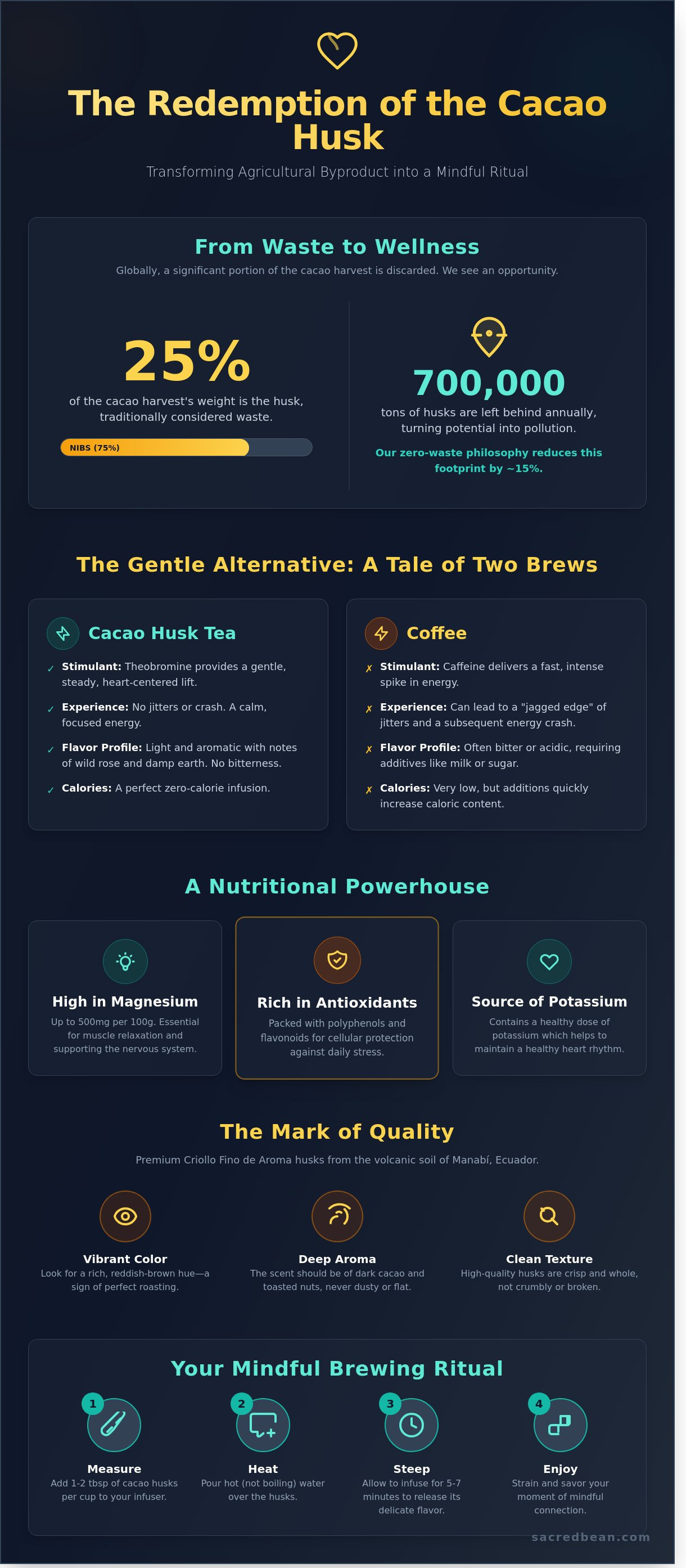
Cacao husk tea is a quiet revelation. It is a loose-leaf herbal infusion born from the roasted outer shells of the cacao bean. During the traditional winnowing process, the inner nib is separated from its protective casing. For decades, industrial producers discarded these shells as mere waste. In 2022, global cacao production reached 5.8 million tons, leaving behind roughly 700,000 tons of husks that often ended up in landfills or as low-value mulch. We see this differently. At Sacred Bean, we believe in the beauty of the overlooked. The husk is a vessel for a delicate, earthy experience that carries the spirit of the bean without the heavy fats found in solid cacao blocks.
The journey from bean to tea requires precision and respect. After the beans are fermented and dried, they are roasted to develop their complex aromatic profile. The winnowing machine then cracks the beans, using air to blow away the light husks while the heavier nibs fall below. This process preserves the integrity of the shell. When you brew these husks, you unlock a sensory profile that is both grounded and ethereal. You will notice clear notes of wild rose and damp earth. It provides a light, tea-like clarity that lacks the bitterness of coffee. It is an honest drink that doesn't need to hide behind additives.
Drinking cacao husk tea is an invitation to slow down. It offers a gentle lift without the jagged edge of high-caffeine beverages. Because the husks contain high concentrations of theobromine rather than caffeine, the energy they provide is steady and heart-centered. It is a ritual of presence. Each cup tells the story of the Theobroma cacao tree and the hands that tended it. We find that this tea serves as a bridge between the physical world and a deeper, more mindful state of being.
The Zero-Waste Philosophy of the Whole Bean
Our approach honors the entire harvest. Utilizing the husk is an act of redemption for a part of the plant once cast aside. By upcycling these shells, we reduce the environmental footprint of the farm by approximately 15 percent compared to traditional disposal methods. This practice supports a regenerative industry where nothing is squandered. It is about honoring the sacred nature of the bean by using every gram it offers. When you choose this tea, you join a movement that values resourcefulness over convenience.
Single-Origin Heritage: Why Source Matters
Quality begins with the soil. Generic husks from mass-produced beans often taste flat or unpleasantly bitter. We source premium Criollo Fino de Aroma shells from the Manabí region of Ecuador. The volcanic soil there, enriched by 2,000 millimeters of annual rainfall, creates a unique flavor profile. You can identify high-quality husks by their vibrant, reddish-brown color and a deep, roasted aroma. If the husks look grey or dusty, the soul of the bean has faded. We look for these markers to ensure every cup reflects the true heritage of its origin.
- Vibrant Color: Look for rich, warm browns that indicate proper roasting.
- Deep Aroma: The scent should be reminiscent of dark cacao and toasted nuts.
- Texture: High-quality husks are crisp and clean, not crumbly or full of dust.
Selecting single-origin husks ensures transparency. It connects you directly to the farming communities in Ecuador who maintain these ancient groves. This connection is the heartbeat of our mission. It transforms a simple beverage into a shared journey of restoration and hope.
The Nutritional Alchemy: Benefits of the Cacao Husk
We see beauty where others see waste. In the industrial world, the outer shell of the bean is often discarded as a byproduct. To us, it's a vessel of resilience. This thin, protective layer guards the bean during its long journey from the Ecuadorian soil through fermentation and sun-drying. Because it remains intact until the final stages of roasting, it preserves a complex nutritional and chemical composition that is often lost in more aggressive processing. When you steep cacao husk tea, you are reclaiming these nutrients. You're participating in a zero-waste ritual that honors the whole plant.
The husk is a dense source of polyphenols and flavonoids. These are the plant's own defense systems, and they offer us cellular protection against the wear and tear of modern life. Unlike processed powders that can lose their potency, the roasted shell keeps these antioxidants stable. It also retains a high concentration of essential minerals. For example, cacao products are famous for being one of the highest plant-based sources of Magnesium. Just 100 grams of cacao material can contain up to 500mg of Magnesium, which is vital for muscle relaxation and nervous system support. It also provides a healthy dose of Potassium to help maintain heart rhythm and balance fluids in the body.
Beyond the minerals, the husk contains natural pectin and fiber-related compounds. While you don't eat the shells, the hot water infusion draws out these soluble elements. They act as a gentle support for your digestive tract. It's a grounded way to start your morning. It doesn't demand anything from your body; it simply provides what is needed to stay steady and focused.
Theobromine: The Gentle Heart-Opener
Theobromine is the primary alkaloid found in the husk, usually making up 1% to 4% of its weight. It's a chemical cousin to caffeine, but it behaves very differently in the human spirit. Caffeine is a central nervous system stimulant. It can lead to that jagged, anxious spike followed by a heavy afternoon crash. Theobromine is a vasodilator. It relaxes the smooth muscles and opens the blood vessels. This creates a soft, sustained energy that typically lasts between 6 to 8 hours.
This alkaloid is why we call cacao a heart-opener. Physically, it improves blood flow. Emotionally, it provides a sense of calm mental clarity. It's a steady hand on your shoulder rather than a shove in the back. During your ritual, this energy allows you to sit with your intentions without the distraction of jitters. It's about presence. It's about finding a rhythm that feels honest and sustainable.
Antioxidant Powerhouse vs. Traditional Teas
Cacao husks are a formidable force in the world of antioxidants. On the ORAC (Oxygen Radical Absorbance Capacity) scale, cacao products frequently outperform many "superfoods." In fact, the antioxidant capacity of the cacao shell can be up to 3 times higher than that of traditional green tea. This is largely due to the high concentration of epicatechin. This specific flavonoid is known for its ability to support vascular health and cognitive function.
Drinking this infusion is a simple, sensory way to absorb these benefits every day. You aren't just drinking a brew; you're fortifying your body with the same compounds the plant used to survive the tropical sun. If you're ready to bring this sense of grounded protection into your home, you can find these nutrient-dense shells in our ceremonial cacao collection. We believe in the power of second chances, even for the humble husk. It's a small transformation that leads to a much larger sense of well-being.
Cacao Husk Tea vs. Coffee and Ceremonial Cacao
Choosing between these brews isn't just about flavor. It's about how you want to feel in your skin. Coffee is a high-octane spike, often followed by a hollow crash. Ceremonial cacao is a dense, heart-opening medicine that carries roughly 12 grams of healthy fats and 200 calories per ounce. It's a meal in a mug, designed for deep work and intentional ritual. Between these two lies the gentle path of cacao husk tea.
This tea is a translucent, amber infusion. It's the "spirit" of the bean without the weight. While ceremonial cacao grounds you with its thick texture and high mineral content, the tea offers a lighter touch. It's a zero-calorie alternative that doesn't sacrifice the signature aroma of roasted cacao. Research into cacao husk health benefits highlights that these outer shells contain significant antioxidants and pectin, proving that what we once threw away is actually a powerhouse of wellness. It's a zero-waste miracle for those who want the essence of cacao without the caloric commitment.
The intention behind each cup differs. You might reach for a full ceremony when you need to process heavy emotions or set a major life direction. You reach for the tea when you need a moment of quiet presence in a busy afternoon. It’s a softer ritual. It doesn't demand your full attention for an hour; it simply sits with you while you breathe.
Breaking the Caffeine Habit
Many of us are tired of the adrenal roller coaster. Coffee delivers roughly 95mg of caffeine per cup, which can leave the nervous system frayed. Transitioning to cacao husk tea provides a bridge to a calmer state of being. It contains trace amounts of caffeine but is primarily rich in theobromine. This alkaloid offers a steady, long-lasting energy that doesn't trigger the "fight or flight" response. It’s the perfect evening ritual for those who crave a roasted, warm beverage but want to protect their sleep. You get the psychological comfort of a hot mug without the midnight tossing and turning.
Complementing Your Cacao Practice
You don't need a full-blown ceremony every single day. Using organic cacao husk tea on your "off-days" keeps the connection to the plant alive without overstimulating your system. It acts as a daily maintenance ritual for the heart. We love pairing a hot cup of tea with a handful of organic cacao nibs on the side. This combination creates a beautiful, layered sensory experience. You get the crunch and bitterness of the nibs alongside the floral, light notes of the tea. It’s a way to honor the whole plant, from the protective shell to the potent heart, keeping your practice grounded and sustainable.
The Ritual of Brewing: How to Prepare Cacao Husk Tea
Brewing is more than a kitchen task. It’s a pause. Before you even reach for the kettle, find a moment of stillness. Our lives are often loud, cluttered, and fast. This cacao husk tea ritual is an invitation to slow down. Clear a small space on your counter. Notice the weight of the ceramic mug in your hand. This is where the transformation begins, moving from the chaos of the day into a state of presence. It’s about the quiet beauty of a second chance at rest.
To start, you need the right balance. We recommend a ratio of 2 tablespoons of husks for every 8 ounces of filtered water. Quality water matters. Tap water often carries chlorine or heavy minerals that mask the delicate, earthy notes of the Ecuadorian soil. When you measure the husks, look at the texture. These are the outer shells that protected the bean during its journey from the farm to the roaster. They’ve done their job, and now they’re ready to offer one last gift.
Temperature is the key to unlocking the soul of the brew. You must use boiling water at 212°F. While delicate green teas require a cooler touch, cacao husks are resilient. They’re tough. You need that fierce heat to penetrate the fibrous structure and extract the deep oils and theobromine. A 2023 analysis of cacao by-products showed that boiling temperatures are essential to release the full antioxidant profile trapped within the husk’s cellular walls. Don’t be afraid of the heat; it’s the catalyst for the infusion.
Set a timer for 5 to 8 minutes. This window allows for a balanced extraction. If you’re looking for a lighter, more floral experience, stay near the 5-minute mark. If you want a bold, gritty depth that reminds you of the earth, let it ride until 8 minutes. The beauty of this brew is its forgiveness. It doesn’t demand perfection to be sacred.
Tools for the Modern Ritual
We prefer a French press for this process. It allows for full immersion, giving the husks plenty of room to dance and expand in the boiling water. If you’re in a hurry, a simple stainless steel tea infuser works, but ensure it’s large enough for the water to circulate. Unlike traditional tea leaves, cacao husks don't contain tannins. This means a longer steep won’t result in a bitter aftertaste. If you get distracted and leave it for 10 minutes, the brew remains smooth. It’s a drink that respects your time, even when you lose track of it. Choose a vessel that feels grounded, perhaps something handmade, to anchor your practice.
Infusing with Intention
While the tea steeps, don’t just walk away. Stay with the process. This is the time to set an intention. It doesn’t have to be complex. Maybe it’s a single word like "patience" or "clarity." Watch the steam rise. Breathe it in. The aroma is a bridge to the Ecuadorian forests where these pods grew. Once the time is up, you can refine the flavor to match your mood. A small pinch of sea salt can brighten the mineral notes, while a touch of raw honey adds a gentle sweetness. These additions aren't about masking the flavor; they’re about honoring the complexity of the cacao husk tea. Every cup is a shared journey between the land, the farmer, and your own heart.
Ready to begin your own practice? Experience the ritual of cacao and find your moment of stillness today.
Sourcing for Redemption: The Sacred Bean Difference
At Sacred Bean, we don't see the world in terms of waste. Instead, we see potential. Our cacao husk tea isn't a side project or a clever way to clear the floor. It's a testament to our belief that everything, and everyone, deserves a second chance at being something beautiful. We source our beans through direct trade partnerships that prioritize the dignity of the farmers in Ecuador, ensuring that the value stays within the communities that nurture the land.
The precision behind our tea comes from Pablo Aguilar. With 15 years of experience as a professional chef, Pablo brings a culinary rigor to the roasting room that is rare in the industry. He doesn't just roast for flavor; he roasts for the soul of the bean. He understands that the husk carries its own unique profile. By treating these husks with the same respect as the nibs, we transform what others call a byproduct into a sacred brew. This is a labor of love that requires patience and a steady hand.
Every cup you pour connects you to a larger movement of transformation. We believe in the "reformed rebel" spirit. It's about taking the gritty realities of life and refining them into something restorative. When you drink this tea, you're participating in a story of redemption that stretches from the Ecuadorian coast to our roasting facility, where we provide opportunities for those seeking a path forward. It's about more than just a drink. It's about the resilience of the human spirit.
From Ecuadorian Soil to Your Cup
The journey begins in the mineral-rich soils of the Manabí province in Ecuador. We work directly with a collective of 12 family-owned farms that have rejected industrial chemicals for generations. These lands are 100% organic and pesticide-free. This purity is vital because the husk is the bean's first line of defense. If the farming isn't clean, the tea won't be either. Our small-batch roasting process, limited to 20kg at a time, ensures that we preserve the delicate integrity of the cacao husk tea without scorching the subtle notes of honey and earth. Transparency isn't a buzzword for us; it's our conscience. You can trace every batch back to the very soil it grew in.
Join the Sacred Bean Community
Your choice to brew this tea fuels our "Roasting for Redemption" initiative. This program provides tangible employment and mentorship for individuals seeking a fresh start after leaving the justice system. We believe that a person's past shouldn't dictate their future. Every bag of tea or ceremonial cacao powder you bring into your home directly supports this cycle of renewal and provides a living wage to our partners. We invite you to step away from the noise of the day. Take a moment right now to breathe, steep your tea, and connect with the hands that made it possible. You aren't just a customer; you're part of the movement.
Awaken Your Daily Ritual
You've discovered how this humble outer shell holds the power to transform your morning. It's a zero-waste miracle that honors the hard work of the Ecuadorian farmers who tend to these trees. By choosing cacao husk tea, you're embracing a 100% organic-certified brew that values every part of the harvest. We don't believe in waste; we believe in redemption and finding beauty in what others might overlook. It's a way to bring a piece of the sacred into your home while standing in solidarity with the land.
This tea offers a gentle, grounded energy that feels like a warm embrace. Our chef-crafted roasting process ensures that the soul of the cacao remains intact, delivering a delicate flavor that invites you to slow down. It's a bridge between the grit of the earth and the stillness of your own heart. Whether you're seeking a moment of quiet reflection or a cleaner alternative to your third cup of coffee, this ritual is here to ground you. Every sip is a connection to a community that's striving for something better.
Experience the gentle ritual of our Organic Cacao Husk Tea
The water is boiling, and the space is ready. We're honored to walk this path of presence alongside you.
Frequently Asked Questions
Does cacao husk tea have caffeine?
Cacao husk tea contains very little caffeine. It offers about 0.1 percent caffeine by weight, which is significantly less than the 1.2 percent found in roasted coffee beans. Instead, it’s rich in theobromine. This provides a gentle, heart-centered lift without the jittery crash. It's a sacred way to find focus during your daily ritual.
What does cacao husk tea taste like?
This brew tastes like a delicate, earthy infusion with subtle notes of toasted nuts and caramel. It isn't heavy or syrupy. The flavor is thin like a herbal tea but carries the deep, honest aroma of our Ecuadorian farms. It’s a grounded experience. Every sip connects you to the origin of the bean and the hands that harvested it.
Can I drink cacao husk tea every day?
You can absolutely enjoy cacao husk tea every day as part of your morning or evening ritual. Since it's nearly caffeine-free, it doesn't disrupt your sleep or peace of mind. The husks are packed with antioxidants, boasting 40 times the amount found in blueberries according to standard ORAC scales. It’s a simple act of self-care that builds a consistent bridge to presence.
How is cacao husk tea different from hot chocolate?
This brew is a clear infusion made from the outer shells of the bean, whereas other drinks use the processed inner solids and fats. It contains zero calories and no added sugars, unlike standard drinks that often exceed 200 calories per cup. It’s a raw, transparent way to experience the plant. We focus on the sacred essence of the bean, not a sugary confection.
Does cacao husk tea help with weight loss?
Cacao husk tea may support weight management by naturally suppressing appetite and boosting metabolism. The theobromine content can increase metabolic rate by approximately 10 percent without overstimulating the nervous system. It’s a mindful alternative to sugary snacks. Choosing this brew helps you stay grounded in your intentions while nourishing your body with zero-calorie hydration.
Is cacao husk tea safe during pregnancy?
Cacao husk tea is generally considered safe during pregnancy because its caffeine content is negligible. Most health organizations, including the NHS, suggest limiting caffeine to 200mg daily. A single cup of this tea contains less than 5mg. However, we always recommend speaking with your midwife or doctor first. It’s about honoring your body and the new life within.
Can I reuse the husks after the first steep?
You can reuse the husks for a second steep to extract every bit of goodness. The second cup will be lighter, so we recommend steeping it for at least 10 minutes to pull out the remaining minerals. It’s a zero-waste practice that respects the hard work of Ecuadorian farmers. Once finished, the husks make excellent nitrogen-rich mulch for your garden soil.
What are the main minerals found in cacao tea?
The main minerals found in this brew include magnesium, potassium, and iron. Cacao husks contain roughly 500mg of magnesium per 100g, which helps soothe the nervous system and support muscle recovery. These elements are vital for a healthy heart and a clear conscience. Drinking this tea is a practical way to feed your body while you nourish your spirit.