

What if the most honest thing you put in your body today wasn't a supplement from a plastic bottle, but a raw, gritty piece of the earth itself? Many of us feel caught in a cycle of sugar-heavy snacks, yet we're often confused by the harsh bitterness of raw ingredients. It's a struggle to find a balance between vitality and genuine flavor. You might feel overwhelmed by the technical labels or the simple difference between processed powder and the raw power of cocoa nibs.
We understand that you're looking for more than just a quick fix; you're seeking a moment of real connection. We promise to show you how these potent, crunchy treasures bridge the gap between ancient ritual and modern wellness. This guide will walk you through the nutritional superfood status of these beans. We'll also explore how to incorporate them into a daily mindfulness practice. By focusing on the 63% of fine flavor cacao that comes from heritage farms in Ecuador, we'll help you find high-quality, ethically sourced options that respect the earth and the community. It's time to turn a simple snack into a sacred act of transformation.
Key Takeaways
- Discover why these raw, crushed fragments represent the bean’s most honest form, preserving the living vitality of the earth.
- Learn how the rich magnesium and flavonoids in cocoa nibs support a healthy heart and a more grounded, resilient spirit.
- Navigate the nuances of raw versus roasted beans to select the perfect texture and depth for your personal practice.
- Shift from mindless consumption to a mindful ritual by learning to set intentions and observe the sensory beauty of each bite.
- Connect with the story of "Roasting for Redemption," where every bean supports direct trade and the transformation of lives in Ecuador.
What Are Cocoa Nibs? Nature’s Purest Cacao Essence
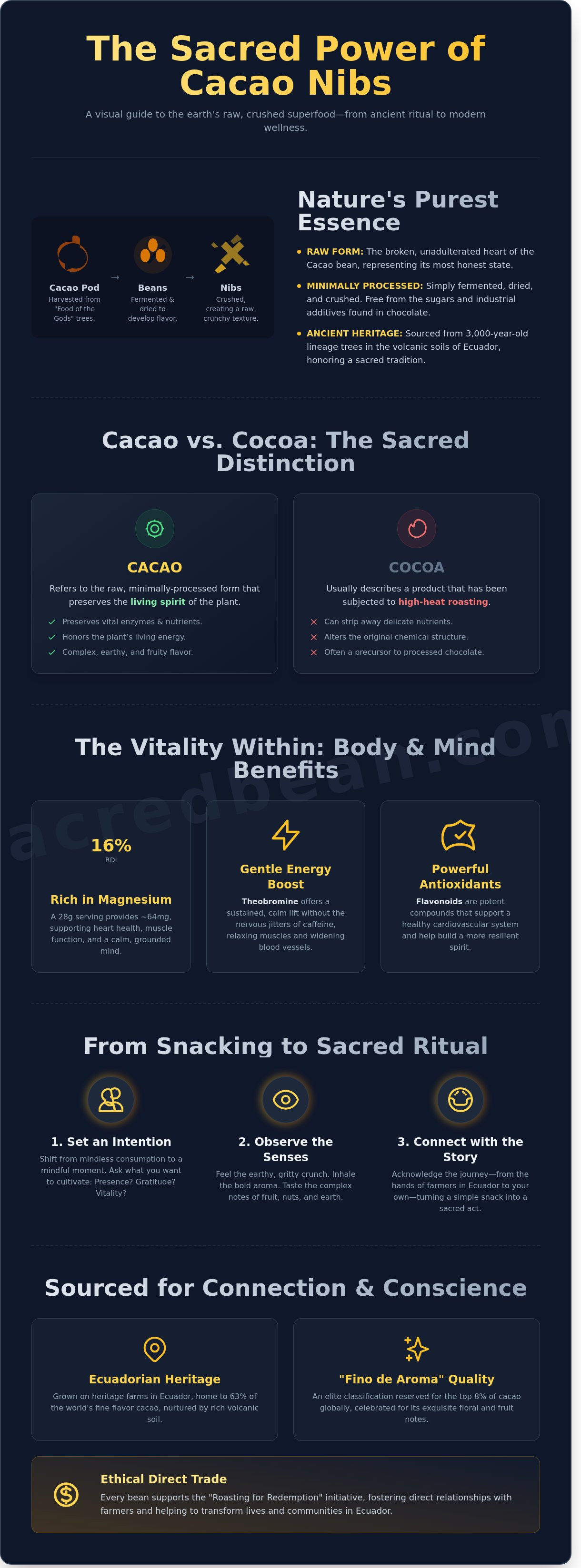
Understanding cocoa nibs starts with the raw, honest heart of the plant. They aren't a manufactured snack; they're the broken pieces of the Cocoa bean. These small, dark fragments are fermented, dried, and crushed without the interference of sugar or industrial additives. At Sacred Bean, we see this "broken" state as a form of beauty. It represents the least processed version of the bean, maintaining the integrity of the plant's spirit before it's ever transformed into something else. It's gritty, it's real, and it's full of potential.
The journey of these organic cacao nibs begins in the volcanic soils of Ecuador. They're harvested from pods that carry a lineage of over 3,000 years. This isn't just an agricultural product; it's a sacred heritage. The Theobroma cacao tree, literally translated as "food of the gods," served as a bridge between the physical and spiritual for the Olmec and Mayan civilizations. When you hold a handful of nibs, you're holding a piece of that ancient ritual, brought from the shade of the rainforest directly to your kitchen.
To better understand this concept, watch this helpful video:
We believe in a process that honors the hands that grow the crop. The transition from pod to nib is a slow, methodical transformation. It requires patience and a deep respect for the community in Ecuador. By choosing nibs, you're choosing to skip the refining machines and the chemical alkalis. You're choosing the bold, unmasked truth of the origin. It's a choice that reflects a conscience for quality and a desire for a deeper connection to what we consume.
Cacao vs. Cocoa: Understanding the Sacred Distinction
The words "cacao" and "cocoa" are often used interchangeably, but we recognize a vital distinction. It comes down to the living spirit of the plant. "Cacao" refers to the raw, minimally processed form that preserves the enzymes and life-giving nutrients. "Cocoa" usually describes a product that has been subjected to high-heat roasting, which can strip away the delicate essence of the bean. We use the term cacao to honor the plant’s living energy and its role in modern rituals of presence and intention.
The Anatomy of a Nib: Texture, Flavor, and Aroma
A nib is a sensory experience that demands you slow down. The texture provides a grounded, earthy crunch that feels substantial and real. Unlike the melt-in-your-mouth feel of processed sweets, nibs offer a gritty resistance. The flavor profile is complex; it's nutty, fruity, and deeply earthy. We focus on Fino de Aroma classification, a standard that applies to only the top 8% of global production. This ensures that every bite carries the signature floral and fruit notes unique to the Ecuadorian landscape, offering a bold aroma that fills the room during your morning ritual.
The Vitality Within: Exploring Cacao Nibs Benefits for Body and Mind
Cocoa nibs aren't just a snack. They're the raw, crushed soul of the bean. They carry the weight of the earth and the fire of the sun, offering a bridge between the soil of Ecuador and your own daily ritual. We believe in the beauty of transformation. Taking a raw bean and turning it into a tool for presence is a sacred act. It's a way to reclaim your energy from the frantic pace of modern life.
Magnesium and Theobromine: The Heart-Opening Connection
Magnesium isn't just a mineral in a lab report. It's the physical manifestation of a deep breath. A 28-gram serving of organic cacao nibs provides roughly 64 milligrams of magnesium. That's about 16 percent of what your body needs daily to keep your muscles from seizing and your mind from racing. It's a quiet strength that supports heart health and recovery after a long day of honest work. Cacao doesn't demand your attention with a loud voice. It invites you in with a steady hand on your shoulder.
Theobromine works differently than the jagged, nervous energy of caffeine. It's a gentle companion. While caffeine hits the central nervous system, theobromine relaxes the smooth muscles and widens blood vessels. This creates a sustained lift that feels like a warm glow rather than a frantic spark. You can learn more about this in our guide on Does Cacao Have Caffeine? Understanding Theobromine. It’s about clarity, not just stimulation.
Antioxidants and Cellular Protection
Protection is a primal need. Our cells face constant stress from the world around us. These nibs are packed with flavonoids that act as a shield. These compounds are found in higher concentrations here than in most other superfoods. In fact, research on cacao nibs nutrition and benefits shows they outmatch blueberries and green tea in antioxidant capacity. Polyphenols are the protectors of the cacao plant’s essence. They help your body stand its ground against oxidative damage and inflammation.
True vitality requires a foundation. Cocoa nibs offer more than just a quick hit of energy. They provide 9 grams of fiber per ounce. This fiber slows down digestion and keeps you feeling full. The healthy fats, mostly oleic acid like you'd find in olive oil, provide a slow-burning fuel for the brain. It's a way to stay satiated and present in the moment. When you eat with intention, your body responds with resilience. If you're looking for a way to ground your energy, consider inviting these nibs into your morning.
Raw vs. Roasted: Finding the Right Nibs for Your Ritual
Choosing your cocoa nibs isn't just about flavor. It's a choice about the energy you want to invite into your day. Some seek the vibrating, raw power of the earth. Others look for the grounded, familiar comfort of a gentle roast. At Sacred Bean, we don't believe in over-processing. We believe in redemption and the beauty of things left close to their natural state. Our philosophy is simple. We step back and let the bean speak for itself.
You can tell a lot about the journey of a bean by its physical presence. High-quality nibs should have a deep, rich color, similar to the dark soil of the Ecuadorian groves. When you press one between your fingers or bite into it, it should offer a clean, sharp snap. This snap is the hallmark of proper tempering and drying. If it's soft or crumbly, the vitality has likely been lost to poor storage or age. We look for that grit. That honest texture that reminds you this came from a tree, not a factory.
- Raw nibs: These are for the purists. They preserve the living enzymes and delicate nutrients that heat often destroys. They taste bright, slightly acidic, and intensely floral.
- Roasted nibs: We use a gentle, low-heat process. This develops the deep, nutty aroma most people associate with cacao without scorching the soul out of the bean.
The Impact of Heat on Cacao Vitality
Heat changes everything. When cacao is subjected to high-heat commercial roasting, often exceeding 130°C, the chemical structure shifts. Studies have shown that high temperatures can reduce the total flavonoid content by more than 50%. These antioxidants are the heart of the bean's medicinal power. They're what help clear the mind and protect the body.
We choose a different path. Traditional sun-drying is a patient, respectful method that takes about 5 to 7 days under the Ecuadorian sun. It's a slow transformation. This process allows moisture to leave the bean naturally while keeping the nutritional integrity intact. It's a balance. We want the flavor to bloom, but we won't sacrifice the vitality that makes the ritual sacred.
Choosing Your Origin: Why Ecuadorian Criollo Matters
Not all beans are created equal. Most of the global supply comes from mass-market varieties bred for high yields, not spirit. Criollo beans are the rare exception. They represent less than 5% of the world's cacao production. They're fragile, difficult to grow, and incredibly rewarding. They're the "rebel" of the cacao world, refusing to conform to industrial standards.
In Ecuador, the specific volcanic soil and humid climate create what experts call a Fino de Aroma profile. You'll taste hints of jasmine, earth, and blackberry. It's a complex narrative in a single bite. If you find yourself craving a deeper immersion into this heritage, you might explore ceremonial cacao for the full-bean experience. It's the same honest origin, just a different expression of the ritual.
From Mindless Snacking to Mindful Ritual: How to Use Cacao Nibs
We often treat eating like a chore or a distraction. We grab something on the go, barely tasting the fuel we put into our bodies. Cacao invites us to stop. It's a chance to turn a quick bite into a moment of redemption. When you use cocoa nibs, you aren't just eating; you're participating in a cycle of growth and transformation that started in the soil of Ecuador.
- Step 1: Set an intention. Before you even open the bag, take a breath. Ask yourself what you need in this moment. Is it grounding? Is it a spark of creativity? Let that intention sit with you as you prepare your meal.
- Step 2: Observe the texture and aroma. Pour a few nibs into your palm. Notice the jagged edges and the deep, matte color. Bring them to your nose. You'll smell the earth, a hint of smoke, and the honest bitterness of the raw bean.
- Step 3: Pair with intention. Don't just throw them in. Fold them into your morning oats or sprinkle them over a warm elixir with purpose. Each addition is a layer of nourishment for your day.
- Step 4: Practice slow chewing. This is where the magic happens. Don't swallow immediately. Let the nibs break down slowly to unlock the full flavor spectrum. You'll move past the initial bitterness into notes of fruit and nut.
Simple Ways to Incorporate Nibs into Your Day
The "Crunchy Ritual" is a favorite for many in our community. Adding a tablespoon of nibs to a smoothie bowl or coconut yogurt provides a textural contrast that forces you to slow down. For the "Savory Path," try using nibs in a salad or as a gritty crust for roasted root vegetables. They bring a bold, complex depth that balances sweet balsamic or earthy squash. You can also blend them directly into hot elixirs. This creates a whole bean ceremonial experience that feels thick, rich, and deeply sacred.
Listening to Your Body’s Cravings
Cravings are rarely about a lack of willpower. They're usually your body’s sacred language telling you it needs something vital. A 28g serving of cocoa nibs provides approximately 64mg of magnesium, which is about 15 percent of your daily value. It also offers 1.1mg of iron, roughly 6 percent of what your body needs daily. If you find yourself reaching for processed sweets, your body might actually be asking for these grounding minerals. You can learn more about this internal dialogue in our guide, Why Am I Craving Chocolate? Listening to Your Body’s Sacred Language. Using nibs is a way to answer those cravings with integrity rather than a sugar crash.
Ready to start your own ritual? Bring home our organic cacao nibs and find your moment of calm.
The Sacred Bean Difference: Sourcing for Connection and Conscience
Sacred isn't a polished marketing label. It's a conviction. We believe the journey of the bean from the volcanic soil of Ecuador to your kitchen should be a path of total integrity. Our story is built on what we call "Roasting for Redemption." This is the heart of Sacred Bean. We partner with people who have walked through the fire of life's hardest struggles, including those navigating the path of recovery and reintegration after prison. By focusing on these second chances, we turn the act of roasting into a ritual of personal transformation. We aren't just selling a product. We're building a bridge between the resilience of the human spirit and the vitality of the earth.
This philosophy flows through every bag of cocoa nibs we produce. We see the bean as a teacher. It teaches us that something raw and bitter can become a source of profound strength. When you choose to support our mission, you aren't just a customer. You're a partner in a movement that values human dignity as much as flavor. We invite you to be part of this story, one that values the messy, honest process of growth over corporate perfection.
Direct Sourcing: Honoring the Hands That Harvest
The global cacao industry often hides the faces of the people who do the heavy lifting. In many traditional supply chains, farmers receive less than 6% of the final value of the product. We refuse to participate in that system. Our 100% direct trade model means we work closely with family farms in the Manabí province of Ecuador. By cutting out the middlemen, we ensure that the families who harvest our cacao receive a price that actually supports their livelihood and their community. This is about more than just fair pay; it's about mutual respect.
Your purchase supports regenerative farming practices that protect the local ecosystem. These farmers use traditional agroforestry methods, planting cacao alongside fruit trees and native hardwoods to maintain soil health. To honor the entire plant and stay true to our zero-waste mission, we also offer organic cacao husk tea. This ensures that every part of the harvest serves a purpose, providing you with a gentle, antioxidant-rich infusion while honoring the earth's resources.
A Ritual for Every Day
You don't need a complex ceremony to find a moment of peace. It starts with a simple intention. Try taking a small handful of cocoa nibs and noticing the crunch, the bitterness, and the earthy depth. Let that moment ground you in the present. When you choose ethically sourced cacao, you create a ripple effect of conscience. You're supporting a community that values people over profits and transparency over marketing jargon. This daily ritual is a small but powerful way to align your habits with your values.
For those mornings when you have more time to sit in stillness and set a deeper intention, our ceremonial cacao powder provides a more immersive way to connect. Whether you're enjoying a quick snack or a slow, warm cup, we invite you to join our community of mindful cacao lovers. Let's walk this path of presence and redemption together, one bean at a time.
Step Into Your Daily Ritual of Presence
Choosing pure cacao is an act of intention. We've seen how these small, powerful fragments offer a direct connection to the earth and your own vitality. When you choose cocoa nibs, you aren't just eating; you're participating in a cycle of redemption that starts in the soil of Ecuadorian family farms. These farmers cultivate the 100 percent Premium Criollo Fino de Aroma bean, a variety revered globally for its complex soul and heritage.
Our process stays small and honest. We use small-batch techniques to ensure every ounce of vitality remains intact for your ritual. This isn't about mindless consumption. It's about taking a breath, setting an intention, and honoring the hands that harvested the bean. You deserve a moment that feels as real as the ground beneath your feet. Every bag represents a bridge between ancient tradition and your modern path to wellness.
Experience the crunch of pure Ecuadorian vitality with our Organic Cacao Nibs
May your journey toward presence be as bold and transformative as the cacao itself.
Frequently Asked Questions
Are cocoa nibs the same as chocolate chips?
Cocoa nibs are not the same as the processed chips found in most kitchens. They're the pure, crushed heart of the bean without any added sugar, milk, or vegetable fats. While a standard chip might contain 50 percent sugar, these nibs are 100 percent cacao. They offer a gritty, honest crunch and a deep bitterness. It's a raw way to connect with the plant's true essence.
Do cacao nibs have a lot of caffeine?
Cacao nibs don't have a high caffeine content. You'll find about 12 milligrams of caffeine in a single tablespoon. By comparison, a standard 8 ounce cup of coffee contains roughly 95 milligrams. The energy you feel comes from theobromine, a compound that offers a sustained, gentle lift. It's a more grounded way to find focus without the sudden crash that often follows other stimulants.
Can I eat cacao nibs raw?
You can absolutely eat cacao nibs raw. Many people choose this path to keep the 64 milligrams of magnesium per ounce fully intact. They have a bold, fermented flavor that reflects their origin in the Ecuadorian soil. Eating them raw is a way to honor the plant in its most honest form. It's a simple, powerful addition to your daily rhythm of wellness.
What is the difference between cacao nibs and cacao beans?
The only difference is the physical form. Nibs are simply cacao beans that have been cracked into smaller, manageable pieces with the thin outer husk removed. Think of it as the bean stripped of its armor. This makes them easier to blend into your morning ritual or sprinkle over a bowl. It's the same sacred medicine, just broken down for your convenience and daily use.
How many cocoa nibs should I eat per day?
Most people find that 1 to 2 tablespoons, or about 28 grams, is the right amount for a daily ritual. This serving provides 4 grams of fiber and 11 percent of your daily iron needs. Listen to your body and how it responds to the energy. It's about finding a balance that supports your intention. These cocoa nibs are meant to nourish your body and keep you grounded.
Are cocoa nibs good for focus and mood?
Cocoa nibs are powerful allies for focus and a steady mood. They contain phenylethylamine, a compound that triggers the release of endorphins in the brain. Research indicates that the flavonoids in cacao can increase blood flow to the brain by 10 percent within hours of consumption. Using them in a daily ritual helps create a sense of presence. It's about feeding both your spirit and your mind.
How should I store my cacao nibs to keep them fresh?
Store your nibs in an airtight container in a cool, dark place like a pantry. When kept away from light and moisture, they'll stay fresh for 12 to 24 months. Respect the product by keeping it sealed. This preserves the delicate aromatic compounds that make each ritual special. A simple glass jar works perfectly to protect this gift from the Ecuadorian groves and maintain its vitality.


