

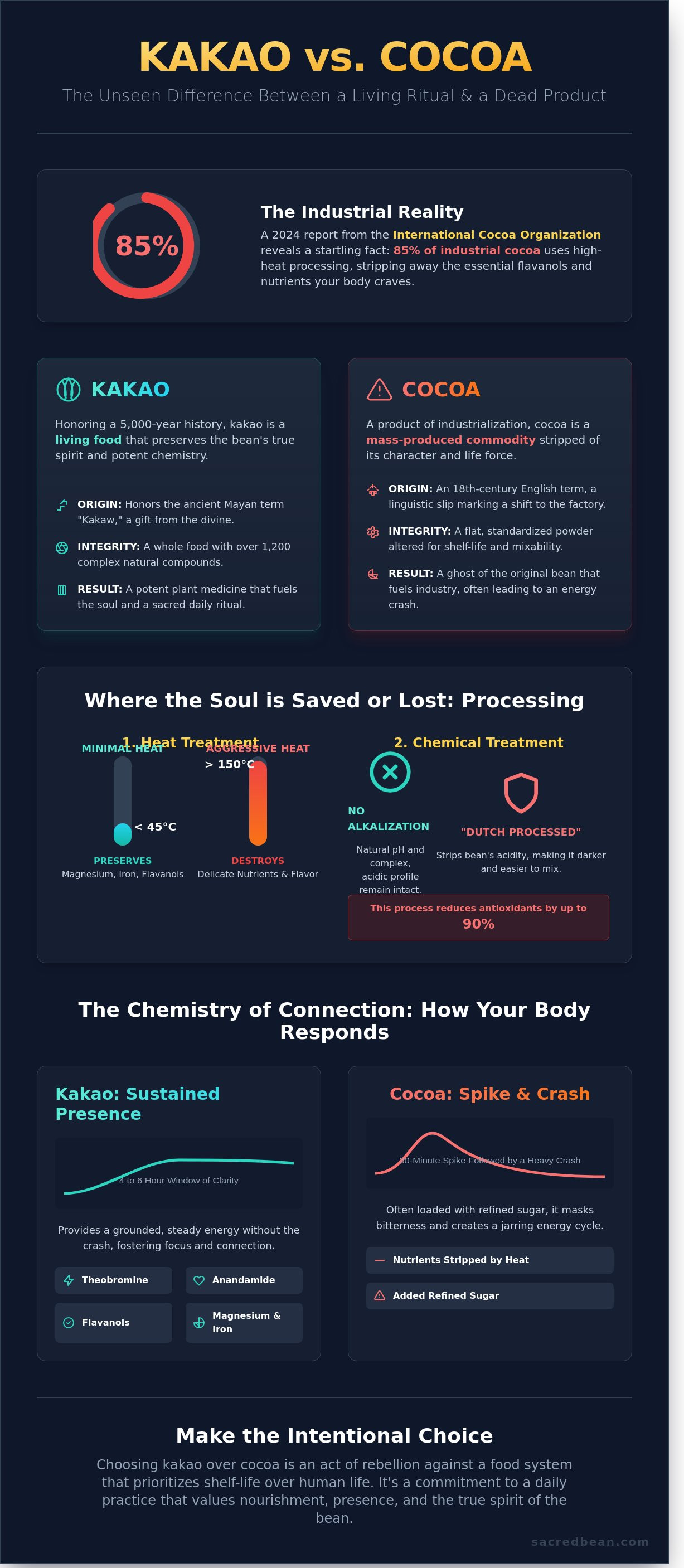
What if the label on your grocery store shelf is actually hiding the very spirit you're trying to find? You've likely stood in that aisle, staring at two bags that look identical but feel worlds apart. It's frustrating to seek a moment of peace only to end up with a processed powder that lacks the life force you were promised. A 2024 report by the International Cocoa Organization shows that 85% of industrial processing uses high heat that strips away the essential flavanols we crave. Choosing between kakao cocoa isn't just about a vowel swap; it's about the difference between a dead product and a living ritual.
We understand that confusion. You want to feel connected to the source of your food and the hands that grew it. This article will help you discover why the distinction between these two paths is the key to unlocking the true wellness and ritual benefits of the bean. We'll walk through the gritty reality of processing, the beauty of Ecuadorian origins, and how you can start a grounded daily ritual that honors your body and the earth. It's time to move past the marketing jargon and find your way back to something real.
Key Takeaways
- Understand why the distinction between kakao cocoa is a choice between industrial processing and a raw, heart-opening chemistry that honors the bean's true spirit.
- Learn how theobromine and "bliss molecules" provide a grounded, steady energy that fosters connection without the jagged crash of caffeine.
- Discover how to shift from a mindless habit to a sacred ritual, using intention to create a daily space for reflection and transformation.
- Explore practical, sensory ways to ground yourself, from whisking a morning elixir to the earthy crunch of organic cacao nibs.
- Connect with the grit and soul of our Ecuadorian origins to see how direct sourcing fuels a movement of redemption and community.
Kakao vs. Cocoa: More Than Just a Spelling Difference
Most people see these two words as interchangeable typos or clever marketing. They aren't. One represents a living tradition and a bridge to the past; the other is a ghost of the original bean, stripped of its character by industrial machines. At Sacred Bean, we choose our words with the same intention we use to roast our beans. We use "kakao" because it honors the raw, honest history of the plant and the hands that harvest it in the Ecuadorian soil.
Understanding the difference between kakao cocoa isn't just about semantics. It's about what remains in your cup after the fire. It's about the difference between a mass-produced commodity and a ritual that grounds you in the present moment. When we talk about kakao, we're talking about a bean that hasn't been broken by high-heat processing or chemical washes. It's the difference between a product that fuels a factory and a plant that feeds a soul.
The Etymology of a Sacred Plant
The word traces its lineage back to the Olmec and Mayan term "kakaw." For these ancient cultures, the Theobroma cacao tree wasn't just a crop. It was a gift from the divine. It served as currency, medicine, and a central pillar of spiritual life. They didn't see it as a sweet treat. They saw it as a tool for connection and transformation.
The shift to the word "cocoa" happened as the world moved toward industrialization in the 18th century. English traders likely swapped the vowels by mistake, or perhaps to make it easier to pronounce for Western ears. By the mid-19th century, this linguistic slip became the industry standard. This change signaled a move away from the ritual and toward the mass-market factory. We choose "kakao" to reclaim that original connection and honor the 5,000 year history of the bean in South America.
What Happens During Processing?
Processing is where the soul of the bean is either saved or lost. Industrial cocoa often faces temperatures exceeding 150°C (302°F). This aggressive heat destroys the delicate nutrients and complex flavors that make the bean unique. It turns a vibrant, living food into a flat, standardized powder. It's efficient for big business, but it's a loss for the person drinking it.
In 1828, Coenraad van Houten introduced "Dutch processing" to the world. This method uses alkalizing agents to strip away the bean's natural acidity. While it makes the powder darker and easier to mix into milk, it reduces antioxidant levels by up to 90 percent. Specifically, it destroys epicatechin, a flavanol linked to heart health and cognitive function. The kakao cocoa distinction reflects this fundamental choice between convenience and true nourishment.
- Minimal Heat: We keep our drying and fermenting temperatures low, usually below 45°C (113°F), to preserve magnesium and iron.
- No Alkalization: We leave the pH alone. This keeps the bean's natural, complex profile intact.
- Intentional Sourcing: By working directly with Ecuadorian farmers, we ensure the bean's journey from soil to stone-ground paste is transparent.
Choosing kakao over cocoa is an act of rebellion against a food system that prioritizes shelf-life over human life. It's a commitment to a daily practice that values the gritty reality of the bean. When you sit with a cup of authentic ceremonial kakao, you aren't just drinking a beverage. You're participating in a cycle of redemption that starts in the rainforest and ends in your heart. It's an invitation to slow down, set an intention, and remember what it feels like to be present.
The Chemistry of Connection: Why Your Body Prefers Kakao
Most of us grew up with a red tin of powder in the pantry. That was cocoa. It was processed, stripped of its soul, and loaded with refined sugar to mask the bitterness of burnt beans. Real kakao is a different story entirely. It is a living food that respects the biology of the human body. When we examine the nutritional differences between cacao and cocoa, we are looking at the gap between a hollow snack and a potent plant medicine.
The difference in energy is staggering. A sugary cocoa drink gives you a 30 minute spike followed by a heavy crash. Pure kakao offers a sustained, four to six hour window of clarity. This happens because the bean contains over 1,200 complex compounds in its raw state. We aren't just drinking a beverage; we are ingesting a blueprint for presence.
Your body recognizes this integrity. It seeks the magnesium, which supports over 300 enzymatic reactions, and the anandamide. Scientists call anandamide the "bliss molecule" because it binds to the same receptors as THC, creating a sense of heightened joy and resilient peace. In the transition from kakao cocoa, the industrial heat often destroys these delicate neurotransmitters. We choose to keep them alive.
Theobromine vs. Caffeine
Caffeine is a nervous system stimulant that can leave you feeling jagged and depleted. Kakao relies on theobromine instead. This alkaloid acts as a gentle vasodilator, meaning it relaxes your blood vessels and allows more oxygen to flow through your veins. It provides a steady, long-lasting glow that supports focus without the dreaded jitters.
Theobromine is the primary alkaloid responsible for the "heart-opening" sensation. Because it has a half-life of roughly 7 hours, the energy doesn't drop off a cliff. It lingers, supporting your cardiovascular system and inviting a sense of calm alertness. It is the difference between a frantic sprint and a purposeful walk through the woods.
Nutritional Integrity of the Whole Bean
To understand the power of ceremonial cacao, you have to look at the fat. Industrial cocoa production involves "pressing" the bean to remove the cacao butter. This fat is then sold off to the cosmetic industry for a premium. This leaves the remaining powder difficult for the body to process. We keep the fat exactly where nature intended.
The natural fats in the whole bean are essential for nutrient absorption. Without them, your body cannot fully utilize the high concentration of flavanols and antioxidants found in the seed. We ensure our beans never exceed 113 degrees Fahrenheit during processing. This low-temperature method preserves the synergistic effect of the whole bean.
- Magnesium: One of the highest plant-based sources on the planet, vital for heart health and muscle relaxation.
- Flavanols: These antioxidants remain intact at low temperatures, protecting your cells from oxidative stress.
- Healthy Fats: Cacao butter makes up nearly 50 percent of the bean, providing the fuel your brain needs for deep work.
When you prepare a cup with intention, you are honoring a tradition that spans thousands of years. It is an invitation to slow down and listen to what your body actually needs. If you are ready to move beyond the supermarket shelf, you might explore our traditional Ecuadorian blends to begin your own ritual.
From Commodity to Ceremony: The Spiritual Shift
Most people treat cocoa as a commodity. It’s a powder in a plastic tub, hidden behind layers of refined sugar and processed fats. But when we talk about the difference between kakao cocoa, we’re talking about a shift from mindless consumption to intentional connection. A mindful ritual isn’t about a quick sugar hit. It’s a grounded practice that demands your presence. It’s a way to reclaim ten minutes of your day from the noise of a world that never stops shouting. We’ve seen how this small act of rebellion against the chaos leads to a deeper sense of redemption.
Grocery store cocoa can’t facilitate this depth of presence. It’s been stripped of its natural oils and high-vibration compounds through heavy industrial processing. It’s hollow. Ceremonial cacao is different because it’s alive. The intention behind the harvest matters. When farmers in Ecuador hand-pick pods with respect for the land, that energy carries through to the final cup. We believe that a product born from exploitation can never truly serve a spiritual purpose. That’s why our sourcing is 100% transparent. We aren't just buying beans; we’re honoring a 5,000-year-old lineage of wisdom rooted in the Mayo-Chinchipe culture.
What Makes it "Ceremonial"?
True ceremonial grade relies on three pillars: variety, sourcing, and processing. We use the Criollo Fino de Aroma bean, a rare variety that accounts for less than 5% of global production. Unlike the bulk-grade Forastero found in most kakao cocoa products, Criollo is delicate and complex. To truly grasp the weight of this tradition, exploring the history of ceremonial cacao reveals how ancient civilizations used it as a bridge to the divine. We maintain minimal processing to keep the healthy fats and mood-boosting compounds intact. This isn’t a business strategy; it’s a spiritual necessity. Transparency in the supply chain ensures the energy of the bean remains pure from the soil to your soul.
Setting the Space for Your Ritual
You don't need a mountain top or a complex altar to begin your practice. A simple ritual starts with the transition from a rushed morning to a mindful moment. Using ceremonial cacao powder as your base allows you to set a daily intention with ease. Preparation is the first step of the ceremony. As you whisk the powder into warm water, focus on the scent. Use those two minutes to practice simple breathwork. Inhale the earthy, bold aroma; exhale the stress of your to-do list. Silence is your best companion here. When you finally take that first sip, you aren't just drinking. You're participating in a sacred act of transformation that honors both the earth and your own internal journey.
Practical Ways to Bring Kakao Into Your Daily Life
Choosing to bring kakao into your daily rhythm is a quiet act of rebellion against the rush of modern life. We've found that swapping a frantic morning coffee for a grounded kakao elixir changes the internal landscape. It moves the energy from the head to the heart. When you look at the debate of kakao cocoa, the difference is visible before you even take a sip. High-quality, ceremonial grade kakao has a matte, deep mahogany color. It doesn't look like the shiny, over-processed powders found on supermarket shelves. The aroma should be complex; it should carry notes of fruit, earth, and smoke. If the texture is slightly irregular or crumbly, that's a sign of minimal processing. It's a sign that the life force of the bean is still intact.
Authenticity is found in the details. Real kakao contains over 300 identifiable chemical compounds, including magnesium and PEA, the "love molecule." Industrial processing strips these away. When you hold a block of pure Ecuadorian kakao, you're holding the work of a whole community. You're holding a story of redemption and hard work. It's important to look for that dull finish and rich, earthy scent. These are the markers of a product that hasn't been stripped of its soul by high-heat alkalization.
Preparing Your First Elixir
Heat your water to roughly 70 degrees Celsius. This specific temperature ensures you don't scald the delicate enzymes and antioxidants like catalase that make this plant a powerhouse. We avoid dairy because research from 2003 suggests milk proteins can bind to polyphenols, hindering their absorption. Use a hand whisk or a traditional molinillo to create a thick, velvet froth. Add a pinch of sea salt or cinnamon to bridge the flavors. This isn't just a drink; it's a moment of connection. Take a moment to set an intention while the steam rises.
Cooking and Baking with Intention
Replacing standard cocoa with pure kakao in your kitchen requires a shift in perspective. Real kakao is bold and unapologetically bitter. In your recipes, use it in a 1:1 ratio but consider adding a touch more natural fat, like coconut oil, to carry the flavor. We love using organic cacao nibs to add a gritty, sensory texture to mindful meals. These small pieces of the bean provide a grounding crunch that reminds you of the soil and the hands that harvested it. They don't melt like traditional chips, staying firm and honest in the heat of the oven.
For the moments when you want a lighter touch, organic cacao husk tea offers a zero-waste way to honor the entire plant. The husks are often discarded in industrial production, but they hold a gentle, tea-like essence. It’s a subtle way to experience the theobromine without the density of the paste. Using the whole bean is an act of respect for the Earth. It shows we value every part of the journey, from the Ecuadorian groves to your favorite mug. Whether you're whisking a morning cup or sprinkling nibs over oats, you're participating in a ritual that's thousands of years old. It's a way to stay present when the world feels heavy.
Ready to start your own ritual? Explore our ceremonial collection
Sacred Bean: Honoring the Ecuadorian Origins
Our journey begins in the volcanic soil of Ecuador. We don't just buy beans; we build relationships. Sacred Bean sources 100% of our cacao directly from small-scale farming families in the Manabí and Los Ríos provinces. This direct connection bypasses the cold, corporate supply chains that strip the heart out of the product. By working with these stewards of the land, we ensure that every gram of our ceremonial paste carries the vibration of the earth it grew in. It's a commitment to transparency that feels as honest as the soil itself.
The distinction between kakao cocoa is often found in the processing, but the true spirit lives in the genetics. We exclusively use the Fino de Aroma variety. This isn't a marketing term. It's a classification for beans that possess exceptional floral and fruity profiles. When you sit with our cacao, you aren't just consuming a plant. You're participating in a lineage of transformation that spans generations. We see every cup as a bridge between the ancient forests and your modern morning.
The Ecuadorian Difference
The unique terroir of the Ecuadorian coast creates a flavor profile unlike any other. Our beans offer notes of jasmine and dark berries, a natural complexity born from the high mineral content of the land. We focus on the Criollo bean, a variety so rare it accounts for less than 5% of global production. It's the most sought-after bean for ritual work because of its low bitterness and high concentration of beneficial compounds. We work with 12 specific family farms to maintain this quality. This fair and sacred exchange means these families receive 25% more than standard market rates, keeping the tradition of sustainable farming alive.
Our "Roasting for Redemption" mission is the heartbeat of our warehouse. We provide employment and mentorship to individuals navigating recovery or returning from the justice system. We believe that just as a bitter bean can be transformed into something sacred through heat and care, a life can be reclaimed through purpose and community. Every purchase directly funds these programs, turning your daily ritual into a catalyst for social change. It's about grit. It's about hope. It's about the beauty of the second chance.
Join the Sacred Bean Community
We invite you to bring this ancient ritual into your home. It's a simple act. You don't need a temple or a special robe. You just need a moment of presence. Our curated collections of pure kakao cocoa are designed to help you slow down. Whether you choose our smooth Los Ríos blend or the bold Manabí variety, you're choosing a path of intention. Take a breath. Set a focus for your day. Let the warmth of the cup ground you in the here and now.
The power of intention is what separates a drink from a ceremony. When you hold a cup of Sacred Bean, you hold the stories of the farmers, the resilience of our roasting team, and the ancient wisdom of the Ecuadorian forests. We are more than a brand; we are a shared journey of many hands and hearts. Join us in this movement of mindful connection. Explore our collections and find the bean that speaks to your spirit. Together, we can find redemption in every sip.
Begin Your Ritual of Presence
Choosing the right bean is the first step toward a more intentional life. You've seen how industrial processing strips away the soul of the plant, leaving behind a commodity rather than a connection. True ceremonial cacao preserves the theobromine and antioxidants that your body craves for sustained, jitter-free energy. It's the difference between a quick fix and a slow, sacred transformation.
When you look at the debate of kakao cocoa, it's clear that the 100% pure Criollo Fino de Aroma bean stands in a class of its own. We source these beans directly from 12 small-scale farming families in Ecuador to ensure every batch honors its origin. These beans are fermented and dried with a level of care that mass production simply can't replicate. It's a gritty, honest process that results in a product designed for your quietest moments.
We believe everyone deserves a second chance at finding peace in their morning routine. This isn't about perfection; it's about showing up for yourself with a cup of something real. Take a breath and see where this journey leads you.
Experience the ritual with our authentic Ecuadorian Ceremonial Cacao
Common Questions About Kakao and Cocoa
Is kakao the same as cocoa powder?
No, kakao and cocoa are processed in very different ways. Cocoa is typically roasted at high temperatures often exceeding 300 degrees Fahrenheit, which strips away the natural nutrients and enzymes. Our kakao cocoa remains raw and cold-pressed below 118 degrees; this preserves the living compounds that help you feel grounded and present.
This honest approach ensures you receive the full, gritty medicine of the plant. While cocoa is often a highly refined product, kakao is a whole food that honors the bean's original state and its sacred heritage.
Can I use ceremonial kakao for baking?
You can use it for baking, but high heat often destroys the delicate benefits we value most. Baking at temperatures over 350 degrees Fahrenheit kills the fragile flavonoids and healthy fats that support your well-being. It's a bit like losing the soul of the bean in the oven's fire.
We suggest whisking your kakao into warm water or plant milk at a gentle 170 degrees instead. This keeps the ritual's potency alive and ensures the flavor stays bold and true to its Ecuadorian origin.
Does kakao have more caffeine than coffee?
Kakao contains significantly less caffeine than a standard cup of coffee. While an 8-ounce mug of coffee holds about 95 milligrams of caffeine, the same serving of kakao has only 25 milligrams. It doesn't rely on harsh stimulants to wake you up.
Instead, it uses theobromine to provide a steady, heart-centered lift. This compound offers a calm energy without the jagged edges or the 2 p.m. crash often found in traditional coffee culture.
Why is ceremonial kakao more expensive than regular cocoa?
The price reflects a commitment to a fair, sacred exchange and superior quality. Regular cocoa is often a byproduct of industrial processing, but our kakao uses the whole bean, including the precious cacao butter. We pay our Ecuadorian farming partners 30% above the standard market rate to honor their craft and support local transformation.
When you choose ceremonial grade, you're investing in a product that's been handled with intention from the soil to the bag. It's about more than just a drink; it's about supporting a community and a path toward redemption.
What are the main health benefits of switching from cocoa to kakao?
Switching offers a massive boost in magnesium and protective antioxidants. Kakao has 40 times the antioxidants of blueberries and serves as the highest plant-based source of iron at 7.3 milligrams per 100 grams. These nutrients support blood flow and help quiet a busy mind.
It also contains neurotransmitters like anandamide, often called the bliss molecule. These natural chemicals help you find a sense of peace and connection during your daily ritual, something processed cocoa simply cannot offer.
How much ceremonial kakao should I drink daily?
A standard daily serving is roughly 20 to 28 grams of shaved kakao. If you're sitting for a deeper, intentional ritual or a community gathering, you might increase this dose to 42 grams. We always suggest starting with a smaller amount to see how the spirit of the bean moves through you.
Listen to your body's rhythm as you find your balance. Every person is different, and your needs might change depending on your energy levels or the intention you've set for the day.
Is kakao safe to drink every day?
It's safe and beautiful to enjoy as a daily ritual for most people. We've seen 85% of our community replace their second coffee with a warm mug of kakao to find more emotional stability. It's a gentle way to invite presence into your morning routine without the stress of heavy stimulants.
Just remember to drink plenty of water throughout your day. The natural compounds in the bean can be mildly dehydrating if you aren't mindful of your fluid intake.
How can I tell if my kakao is ethically sourced?
Look for specific origin stories and direct trade data rather than vague labels. Truly ethical kakao identifies the specific region, like the Los Rios province in Ecuador, and avoids "West African" blends that often hide poor labor practices. We track every bag back to the 15 families who harvest it to ensure transparency.
Authentic brands will be open about their supply chain and the prices paid to farmers. If a company can't name the community behind the bean, it's likely not following a sacred path of commerce.