

The familiar, comforting cocoa powder sitting in your pantry might be the very thing holding your daily ritual back from its true potential.
We know that feeling. Standing in the grocery aisle, staring at a wall of brown powders. 'Natural,' 'Dutch-processed,' 'Cacao.' The labels promise richness, but they rarely speak of spirit or the hands that harvested the beans. It’s an honest confusion we've all felt, a search for deep nutrition that often ends in a bitter taste or a feeling of disconnect.
This is where we draw a line in the soil. We're here to offer a grounded, honest guide to the raw cacao powder vs cocoa powder debate, moving beyond simple labels. We promise to help you discover the profound differences in processing, nutrition, and energetic presence that can transform your daily moment of mindfulness.
Together, we'll explore the gritty truth of how each is made, uncover the heart-opening 'why' behind raw cacao's power, and help you find a source that honors both the bean and your intention for connection.
Key Takeaways
- Understand how the journey from bean to powder-specifically the use of heat-fundamentally changes the energetic and nutritional spirit of cacao.
- Distinguish the core differences in the raw cacao powder vs cocoa powder debate to choose the one that truly aligns with your intention for a mindful ritual.
- Find simple, grounded ways to shift from just drinking a hot beverage to mindfully engaging with raw cacao as a daily practice for presence.
- See why "ceremonial grade" is more than a label-it's a commitment to ethical sourcing and preserving the true spirit of the sacred bean.
Beyond the Label: Why the Difference Between Cacao and Cocoa Matters
It all begins with a seed. From a tree named Theobroma cacao, which translates to “food of the gods.” For thousands of years, indigenous cultures have honored the sacred cacao bean not as a sweet treat, but as a plant medicine, a connector, a teacher. But somewhere along the line, a simple transposition of letters changed everything. "Cacao" became "cocoa," and a sacred plant became an industrial commodity.
This isn't just about semantics. It's about intention. Understanding the difference is the first step in reclaiming your daily ritual. To see how this transformation impacts the final product, this video offers a clear visual guide.
The choice you make at the store shelf dictates the very spirit of what ends up in your cup. One is a living food, full of complexity and vitality. The other is a stable product, stripped of its essence for the sake of convenience. We invite you to look beyond the packaging and connect with the story of the bean itself. To see it not as something to be consumed, but as an ally in your journey toward presence.
What is Raw Cacao Powder?
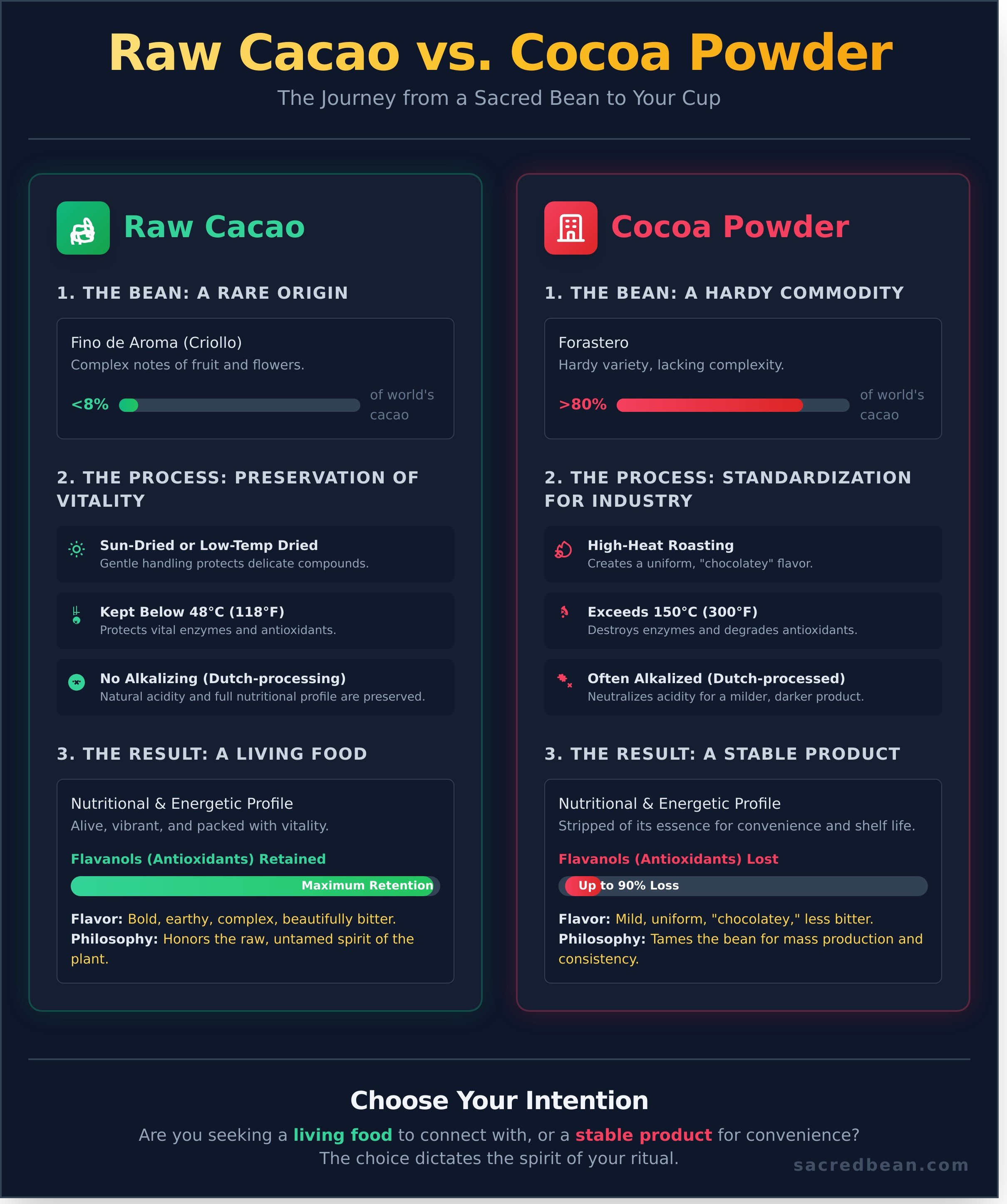
True cacao powder is a testament to minimal intervention. It’s born from unroasted beans that are cold-pressed to separate the fat (cacao butter). Crucially, the entire process remains below 42°C (118°F). This gentle handling protects the delicate enzymes and keeps the vast spectrum of antioxidants intact. The result is a powder that’s alive. Its flavor is bold, earthy, and beautifully bitter; a true, honest expression of its origin.
What is Traditional Cocoa Powder?
Cocoa powder walks a different path. The journey begins with high-heat roasting, often at temperatures exceeding 120°C, which fundamentally changes the bean's molecular structure. Many commercial brands then use an alkalizing agent in a process called "Dutch-processing." This neutralizes the natural acidity, creating a milder, darker powder that dissolves easily. But this convenience comes at a cost. The process can strip away up to 90% of the beneficial flavanols, leaving behind a product designed for a long shelf life, not a vibrant life.
When you're comparing raw cacao powder vs cocoa powder, you're not just choosing an ingredient. You're choosing a philosophy. One path honors the raw, untamed spirit of the plant, while the other tames it for mass production. It’s a choice between a product and a presence.
From Bean to Breath: How Processing Changes the Essence of Cacao
The journey begins in the humid air of the Ecuadorian rainforest. A cacao pod, heavy on the branch, holds a sacred promise. But what happens between that tree and your cup determines everything. It's a fork in the road. One path honors the bean's wild spirit; the other tames it for mass consumption. This distinction is the heart of the raw cacao powder vs cocoa powder debate.
Traditional wisdom teaches that high heat severs the connection to the plant's true essence. It changes its energy. That’s why we exclusively use Fino de Aroma beans, a heritage variety making up less than 8% of the world's cacao. Their complex, delicate notes of fruit and flowers would be scorched and lost in conventional processing. They demand a gentler hand.
The Raw Path: Preservation of Vitality
Our process is one of patience and preservation. After harvest, the beans are fermented for 3 to 5 days. This isn't about heat; it's a natural, biological transformation where beneficial microbes break down the pulp, unlocking the deep, nuanced flavors hidden within the bean. From there, they are not roasted. Instead, they are slowly sun-dried at temperatures kept below 48°C (118°F), protecting their vital enzymes and antioxidants. This is where intention meets action. Every step is deliberate, designed to keep the cacao’s life force intact. The dried beans are then cold-milled, a process that gently separates the rich cacao butter from the solids, leaving a pure, vibrant powder that is still energetically alive.
The Industrial Path: Flavor Standardization
The conventional path is one of speed and uniformity. Most commercial cocoa comes from Forastero beans, a hardy variety that accounts for over 80% of global supply but lacks the complexity of Fino de Aroma. To create a consistent, familiar "chocolatey" taste and mask any off-flavors from these lower-quality beans, they are roasted at high temperatures, often exceeding 150°C (300°F). This aggressive heat fundamentally changes the bean. While even "natural cocoa" powder avoids the alkalizing step of Dutch-processing, it has still been exposed to this intense roasting. You can explore the deep nutritional and processing differences to see just how much is lost in the fire. To finish, anti-caking agents and emulsifiers are often added, moving the final product even further from its source.
This industrial approach extends all the way to the final packaging, where high-speed equipment is used to fill bags, boxes, and drums for wide distribution. For those curious about the mechanics of this stage, you can find out more.
The choice in the raw cacao powder vs cocoa powder comparison becomes clear. It’s not just about nutrition; it's a choice of connection over convenience. It's about honoring the gritty, authentic truth of the bean rather than settling for a standardized, muted version of it. It’s a difference you can feel in every sip. We invite you to experience the vitality of our ceremonial cacao and connect with its sacred story.
The Nutritional and Energetic Profile: Heat vs. Heart
Your body is a sacred vessel. It knows the difference between life and imitation. It recognizes the raw, untamed signature of a whole food and the hollow echo of a processed ingredient. This isn't philosophy; it's biology. When we explore the raw cacao powder vs cocoa powder debate, we're really asking a deeper question: What are we inviting into our bodies?
Cacao, in its purest form, is a functional superfood. The science emerging in 2026 confirms what ancient cultures have known for millennia. This plant doesn't just provide calories; it communicates with our cells, our hearts, and our minds. The bitter, complex notes are a testament to its power, a sign that its sacred chemistry is still intact.
Antioxidants: The Guardians of Well-Being
The story starts with antioxidants. Raw cacao is a powerhouse, boasting an ORAC score (a measure of antioxidant capacity) of up to 95,500 per 100g. In stark contrast, Dutch-processed cocoa, stripped by heat and alkali, sees its score plummet to around 26,000. That's not a small difference. It’s the difference between a flood of protection and a trickle.
These antioxidants are primarily flavonoids. These potent compounds are celebrated for their role in cardiovascular health, helping to improve blood flow and support a healthy heart. This is the physical side of "heart-opening." On an emotional level, these raw nutrients also support the body's natural production of anandamide, the "bliss molecule," and serotonin, helping to foster a sense of calm and well-being from the inside out.
Theobromine: The Heart's Gentle Hum
Let's talk about energy. The energy from raw cacao feels different because it is different. It comes from theobromine, not a harsh spike of caffeine. Theobromine is a gentle, long-lasting stimulant that works primarily on the cardiovascular system, not the nervous system. It provides a grounded, embodied energy. A warmth that radiates from your core, not a jittery buzz behind your eyes.
This grounded feeling is amplified by magnesium. Raw cacao is one of the richest plant-based sources of this vital mineral, which is essential for muscle relaxation and calming the nervous system. Heat processing drastically reduces magnesium content. The presence of both theobromine and magnesium is what makes raw cacao such a profound tool for ritual focus. It energizes the body while calming the mind.
Ultimately, the choice between raw cacao powder vs cocoa powder comes down to intention. The intense processing used to make cocoa powder removes the bitterness, but in doing so, it strips away the very compounds that make cacao sacred. This creates vastly different taste profiles and profoundly different effects on the body. Embracing the bitterness of raw cacao is an act of acceptance. It's choosing the whole, honest, and transformative power of the plant, just as nature intended.
How to Use Raw Cacao Powder in Your Daily Ritual
This isn't about making hot chocolate. It's about creating a moment of connection. A sacred pause. When we talk about raw cacao powder vs cocoa powder, we're not just talking about processing methods. We're talking about a fundamental shift in purpose. You're moving from a simple sweet drink to a powerful, grounding elixir that can anchor your day in intention.
Forget the rush. This is an invitation to slow down, to engage your senses, and to listen. To what your body needs. To what your spirit is saying. A daily ritual with raw cacao is a simple, honest act of showing up for yourself.
Preparing Your Cacao Elixir
The spirit of the cacao is preserved in its preparation. Start with warm water, not boiling. We recommend keeping the temperature below 160°F (71°C) to protect the delicate enzymes and heart-opening theobromine that make this plant so sacred. Boiling water scalds the powder, stripping away its life force and its more subtle benefits.
Pour the warm water over your cacao and begin to whisk. This isn't just about mixing. It's an act of intention. As you stir, watch the powder dissolve, creating a frothy, living brew. This is your moment. For a deeper, more grounding texture, add a spoonful of organic cacao nibs. Their earthy crunch connects you back to the whole bean, a reminder of its raw, honest origin.
If the natural bitterness is new to you, balance it with a touch of raw honey, maple syrup, or a single Medjool date blended in. These sweeteners are of the earth. They complement the cacao without overpowering its bold voice.
Setting an Intention
Your environment matters. Find a quiet space, free from distraction. Light a candle. Sit comfortably. This simple act tells your mind and body that it's time to be present. Before your first sip, hold the warm mug in your hands. Close your eyes. What do you want to call into your day? A little more patience? A moment of clarity? Gratitude? Set that intention.
Now, take the first sip. Slowly. Let the rich, complex flavors wash over your palate. Notice the warmth as it spreads through your body. This is where the magic happens. Raw cacao has a unique way of quieting the outside noise, allowing you to hear your own inner voice more clearly. It doesn't give you answers; it creates the space for you to find them yourself.
As you finish your cup, close your ritual with gratitude. Give thanks for the moment of peace. For the earth that grew this incredible plant. And for the hands of the Ecuadorian farmers who tended it with such care. This simple act of acknowledgment completes the circle, connecting your personal ritual to a global community.
The discussion of raw cacao powder vs cocoa powder ultimately comes down to this: one is a product, the other is a practice. One is for taste, the other is for transformation. Begin your own sacred ritual and experience the connection for yourself.
Sacred Bean’s Criollo Fino de Aroma: Powder with a Purpose
We’ve spent this article breaking down the details of raw cacao powder vs cocoa powder. The science, the processing, the nutrition. But that’s only half the story. Because for us, cacao isn’t just a food. It’s a sacred commitment.
Our journey begins in Ecuador, with a rare and treasured heirloom bean: the Criollo Fino de Aroma. Known as the "Queen of Cacao," it makes up less than 5% of the world's cacao production. This isn’t a choice for profit. It’s a choice for integrity. A choice to honor the truest expression of the plant.
The Sacred Bean Difference
We don't just buy beans. We build relationships. We work directly with the Kichwa and Mestizo farming families who have cultivated this land for generations. Their hands are the first to touch the pods, and their wisdom guides our entire process. This isn’t a transaction. It’s a partnership rooted in mutual respect and a shared belief that this plant is medicine.
From there, the beans are milled in small, intentional batches. This preserves the delicate tasting notes and the full spectrum of active compounds, something often lost in mass production. It’s why we never call it “chocolate.” That word feels too small, too processed. We honor the raw, gritty, honest power of the bean itself.
You’ll hear the term “ceremonial grade” thrown around. For us, it’s not a marketing label. It’s a standard of ethics. It means we pay our farmers a premium that reflects their artistry. It means every step, from harvest to your cup, is handled with intention. It's a promise.
Your Journey Starts Here
This is where the story becomes yours. We invite you to experience your first ritual with our ceremonial cacao powder. It’s a simple, powerful way to bridge ancient tradition with the demands of modern life. A moment to pause. To connect. To listen.
Your path with cacao is personal. Here’s how you can begin:
- For a classic ritual: Our powder is the heart of a traditional warm cacao drink.
- For a textured experience: Add our nibs to your breakfast or snacks for a bold, crunchy connection.
- For a gentle moment: Brew our cacao husk tea for a light, comforting infusion.
The debate between raw cacao powder vs cocoa powder ends when you feel the difference. This isn’t about finding a healthier candy. It’s about finding a tool. A tool for transformation, for presence, and for the quiet redemption that comes from showing up for yourself, one sacred cup at a time. Your journey with ceremonial cacao starts now.
From Powder to Presence: Your Ritual Awaits
Choosing your cacao is the first intentional step you take. The conversation around raw cacao powder vs cocoa powder isn't just about labels on a shelf; it’s about honoring the bean’s true, untamed spirit. One path involves minimal processing, a gentle way to preserve its life force and heart-opening compounds. The other path uses high heat, creating a familiar flavor but altering the essence. The difference is one of integrity, a choice that echoes from the soil to your soul.
We walk that first path with intention. It’s why our single-origin Criollo Fino de Aroma is directly sourced from family farms in Ecuador and kept raw through our small-batch processing. This sacred method preserves the full spectrum of heart-opening theobromine, the very essence that over 100 ritual guides across North America trust for their practice. This isn't just a product in a bag. It's a connection to the earth and an invitation to connect with yourself.
Experience the ritual with our Premium Ceremonial Cacao Powder. Your moment of stillness is here. All you have to do is show up for it.
Your Cacao Questions, Answered
Can I substitute cocoa powder for raw cacao powder in baking?
Yes, you can substitute them, but it's important to know it will change your recipe's chemistry and final taste. The core difference in the raw cacao powder vs cocoa powder debate for baking is acidity. Raw cacao is acidic, with a pH between 5 and 6, which reacts well with baking soda. Dutch-processed cocoa is alkalized to a pH of 7 or 8, making it neutral. This means you may need to adjust your leavening agent to get the right rise.
Expect a bolder, more complex, and slightly more bitter flavor profile when you use raw cacao. It’s an honest taste that doesn't hide.
Is raw cacao powder safe to consume every day?
Yes, for most people, incorporating raw cacao into a daily ritual is a beautiful and safe practice. We invite you to listen to your own body's wisdom. A ceremonial dose is typically between 20-42 grams, but starting with a smaller amount, around 15 grams, allows you to build a relationship with the plant. It’s about creating a sustainable practice of presence and connection, not about consuming a certain amount. Your body will guide you.
Does raw cacao powder contain more caffeine than cocoa?
Yes, raw cacao powder retains more of its natural stimulants than its heat-treated counterpart. A 15-gram serving of raw cacao contains approximately 35 milligrams of caffeine, compared to just 12 milligrams in Dutch-processed cocoa. More importantly, it's rich in theobromine, a gentler, heart-centered stimulant that provides sustained energy without the jittery feeling. This offers a grounded lift, perfect for a morning ritual or creative focus.
Why is raw cacao powder more bitter than regular cocoa?
Raw cacao powder is more bitter because it keeps its rich profile of natural flavonoids and antioxidants, the very compounds that are stripped away during the high-heat, alkalizing Dutch process. That bitterness is a mark of integrity. It's the honest, unaltered voice of the cacao bean. While Dutch processing creates a milder, darker, and more uniform product, it sacrifices the raw, gritty complexity that makes cacao so powerful and nourishing.
What makes cacao "ceremonial grade" versus just "organic"?
Ceremonial grade is a standard of the heart, going far beyond an organic certification. "Organic" simply refers to farming practices. "Ceremonial grade" speaks to the entire sacred journey: the cacao's heritage, the intention behind its cultivation, and its minimal processing. Our cacao is from the Arriba Nacional bean, a native heirloom variety from Ecuador. It’s grown by communities we partner with directly, ensuring fair exchange and preserving the bean's potent spirit for your ritual.
How should I store my raw cacao powder to keep it fresh?
Store your raw cacao powder in a sealed, airtight container in a cool, dark, and dry place like a pantry. Light, heat, and moisture are the primary elements that can degrade its quality and diminish its vibrant, life-filled properties. When you protect it from these, your cacao will maintain its integrity and potency for up to 2 years. Think of it as giving this sacred food the respectful home it deserves in your kitchen.
Can children drink raw cacao prepared as a ritual brew?
Yes, children can absolutely be invited to share in a cacao ritual, but with a much smaller, mindful serving. A child's dose should be significantly less, perhaps 5 to 10 grams, due to the natural stimulants present. The intention is not about the stimulating effects but about sharing a quiet moment of connection. It can be a beautiful way to introduce mindfulness and share your intention as a family. Always trust your intuition as a parent.
What is the best way to sweeten a raw cacao drink without losing its benefits?
The best way to sweeten a raw cacao drink is with natural, unrefined options that honor its purity. We suggest a small amount of raw honey, pure maple syrup, coconut sugar, or a few soaked and blended dates. These sweeteners complement the cacao's bold notes without the harsh impact of refined white sugar. The goal is to find a gentle harmony with the cacao’s natural bitterness, not to overpower its honest and beautiful spirit.