

Grief isn't a problem to be solved; it's a fierce love that simply has nowhere to go. We've all sat in those cold, sterile funeral pews feeling like the ceremony didn't quite touch the edges of the person we lost. It feels hollow. You might feel stuck in a kind of emotional numbness, searching for a personal ritual to honor a loved one's passing that actually feels real. It's a heavy weight to carry when you're terrified that your connection to them will start to fade. We believe there's a more honest way to navigate this journey.
We want to help you find a path toward healing and presence. We'll show you how to use ceremonial cacao as a tool for grounded reflection and transformation. In the next few minutes, we'll walk through the process of setting a clear intention, the sensory experience of preparing your cacao, and how to hold a sacred space for one quiet hour that brings a genuine sense of peace to your most difficult days. This is about honoring the beauty of a life well-lived while finding the strength to carry on through connection.
Key Takeaways
- Learn why the heart needs tangible action to navigate the weight of grief and how ritual provides a container for the formless nature of loss.
- Discover how to prepare a grounded, heart-centered ritual to honor a loved one's passing using the intentional warmth of ceremonial cacao.
- Set a safe and sacred space that allows you to move from the raw pain of trauma toward a quiet, honest state of remembrance.
- Integrate simple sensory "micro-rituals" into your daily life to sustain a lasting connection that evolves alongside your healing journey.
- Embrace the Sacred Bean philosophy of transformation, finding the strength to create something beautiful from the ashes of your experience.
Understanding the Role of Ritual in Healing and Remembrance
Loss is a weight that doesn't just disappear with time. It's a heavy, shifting fog that settles into the bones. A ritual to honor a loved one's passing acts as a bridge between the physical world we inhabit and the internal world of memory. It gives a tangible shape to the formless nature of grief. We don't just think our way through loss; we have to live through it with our whole bodies.
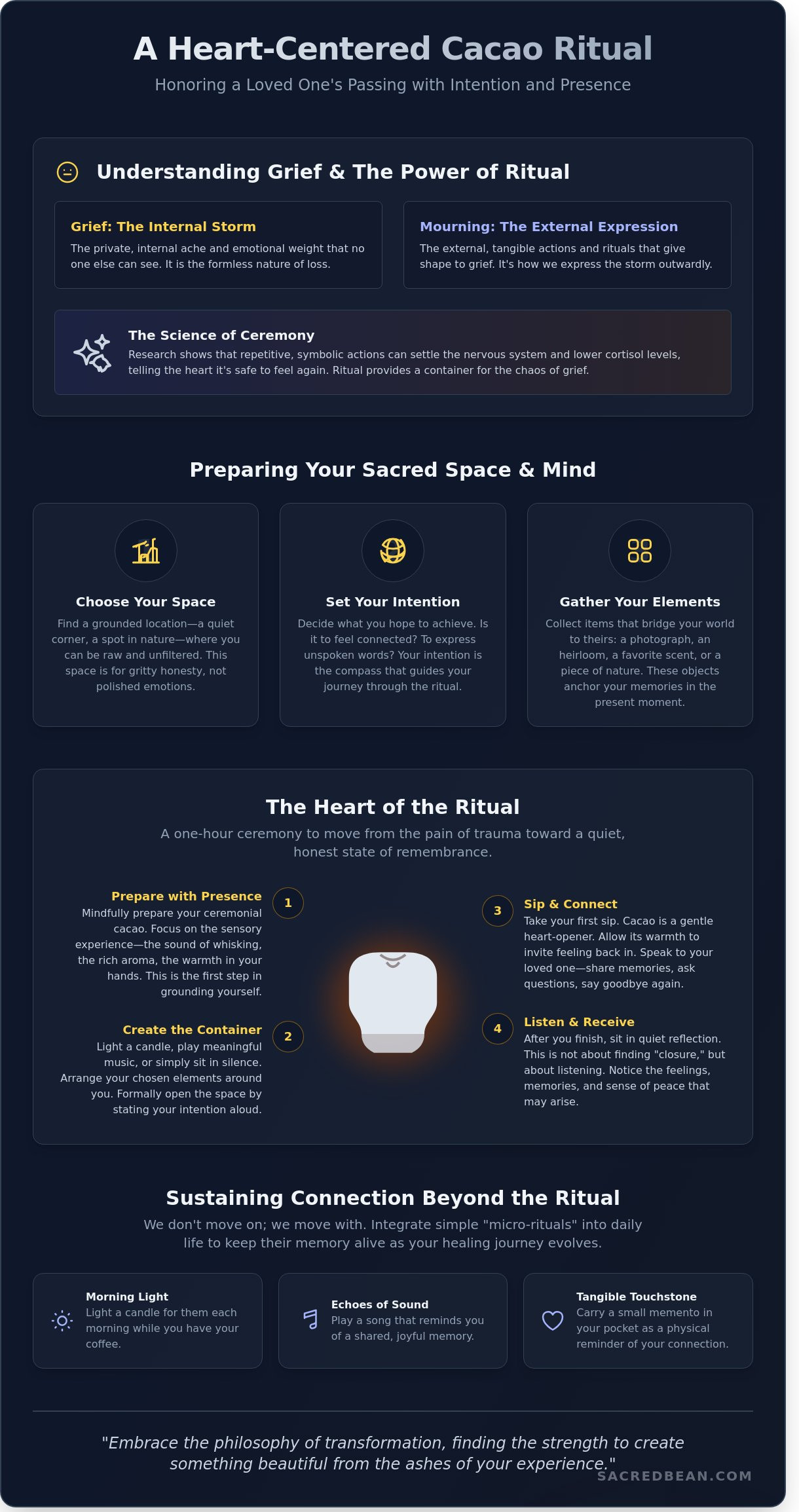
Our brains are wired for patterns and rhythms. When trauma hits, the amygdala often stays on high alert, keeping us in a state of survival. Research from Harvard Medical School in 2021 indicates that repetitive, symbolic actions can help settle the nervous system and lower cortisol levels. These physical acts tell the heart it's safe to feel again. By engaging our senses, we move the energy of grief out of our heads and into our hands.
To better understand this concept, watch this helpful video:
Modern society often pressures us to "move on" or "find closure." We believe that's a hollow goal. We don't move on; we move with. We build a sacred connection that evolves over time. The heart is our primary organ for navigating this journey. It's the compass that finds beauty in the ashes of what was, allowing us to carry the essence of our loved ones into our daily lives.
The Difference Between Mourning and Grieving
Grief is the internal storm, the private ache that no one else can see. Mourning rituals are the external expressions of that storm. While public funerals serve a purpose, they can sometimes feel sterile or rushed. Reclaiming your agency through a private ritual to honor a loved one's passing allows you to speak directly to the person you lost. It's an honest, gritty act of love that belongs only to you.
Why We Look to Ancient Traditions
We aren't the first people to walk this difficult path. Indigenous cultures have used ceremony for thousands of years to keep the fire of remembrance burning. In ancient Mayan and Aztec traditions, cacao was used as a bridge between worlds. It wasn't just a drink. It was a sacred tool used to honor ancestors and open the heart during times of transition.
Reclaiming this space is a rebel act. In a world that demands constant productivity, stopping to sit in silence with ceremonial cacao is a protest against the rush. It acts as a gentle heart-opener for those feeling numb or disconnected. It invites the warmth back in, one intentional sip at a time, reminding us that even in deep sorrow, there is a pulse of life worth honoring.
Preparing Your Space and Mind for a Sacred Ceremony
A ritual to honor a loved one's passing doesn't start when you light the first candle. It begins the very second you decide to make space for their memory. This decision is a bold act of rebellion against the rush of modern life. It's an invitation for transformation to take root in the middle of your grief.
Choose a location that feels grounded. This might be a quiet corner of your living room or a specific spot under an old oak tree. The physical space matters less than how it makes you feel. You need a place where you can be raw. We call this gritty honesty. There's no need to polish your emotions here. If you're angry, let that be part of the space. If you're exhausted, lean into it.
Research from Harvard Business School highlights the psychological benefits of rituals, proving they help us regain a sense of control during times of loss. By intentionally stepping into this space, you aren't just performing a task. You're navigating the heavy waters of mourning with a compass in hand. That compass is your intention.
Gathering Your Ritual Elements
Collect items that carry the weight of your shared history. A faded photograph, a heavy heirloom, or even a handful of earth from a place they loved can serve as anchors. These aren't just objects. They're bridges to the person you're honoring. Sensory details like the scent of cedar incense or the flicker of a single flame help pull your mind back to the present moment when it starts to wander.
We often include ceremonial cacao in these moments of remembrance. Unlike standard products, this authentic cacao from Ecuador is a tool for heart-centered presence. It offers a gentle, grounding energy that supports you as you sit with difficult feelings. It's about connection, not distraction. Preparing a warm cup can become a meditative part of the ritual to honor a loved one's passing, helping you stay open to whatever arises.
Setting the Intention
Your intention is the soul of the ceremony. It doesn't need to be poetic or complex. Simple, honest phrases work best. You might say, "I honor our love," or "I allow myself to feel this weight." Write this intention down on a piece of paper. This physical act turns a thought into a commitment. It's a way of saying "I am here" to yourself and the memory of your loved one.
There is no right way to feel while you prepare. You might feel a sudden surge of peace or a deep, hollow ache. Both are valid. This process is about redemption, finding beauty in the ashes of what was lost. If you feel called to start this journey of presence, you might find that exploring our pure ceremonial cacao provides the steadying warmth you need to begin.
A Heart-Centered Cacao Ritual to Honor a Loved One’s Passing
Grief is rarely a clean process. It is messy, heavy, and often feels like an anchor dragging behind you. Sometimes, words aren't enough to bridge the gap between the living and those who have moved on. A ritual to honor a loved one's passing offers a physical way to hold space for that connection. It is a slow, intentional practice that uses the earth's medicine to soften the sharp edges of loss. This isn't about a fleeting moment of distraction. It is about a deep, sacred transformation of pain into presence.
Brewing the Elixir with Intention
The ritual begins long before you take the first sip. It starts at the stove. When you learn how to prepare ceremonial cacao, you see that the process is a moving meditation. Avoid the urge to multitask. Focus on the whisking. Watch the bubbles form on the surface of the dark, rich liquid. This is where you set your intention. You aren't just making a drink; you are building a bridge.
Pay attention to the sensory details. The steam should carry the scent of the Ecuadorian soil where the beans were born. The warmth of the ceramic cup against your palms acts as a grounding force. We recommend adding a pinch of coarse sea salt or a flick of chili. These elements represent the gritty, honest reality of a human life. Life is rarely just sweet. It is salty, spicy, and complex. Acknowledging this helps keep the ritual grounded in truth rather than sentimentality.
The Heart-Opening Connection
Cacao contains theobromine, a bitter alkaloid that acts as a gentle vasodilator. It widens the blood vessels and allows the heart to beat with a bit more ease. This physiological shift creates a heart-opening effect without the jagged anxiety of a caffeine spike. It provides a calm, resilient energy that helps you face the weight of memory. Use this expanded space to open the ceremony. You can do this with a simple spoken sentence or a quiet, internal nod to the person you are honoring.
This is the core of the ritual to honor a loved one's passing. Take a moment to speak out loud. Say the things that didn't make it into the eulogy. Share a story that still makes you laugh, or offer up the grief that feels too heavy to carry alone. The cacao helps facilitate a felt sense of presence, making the conversation feel real and supported. Sit in the silence that follows. Let the warmth of the cacao move through you, carrying the memory into your bones.
Close the space with a simple act of gratitude. Identify one specific trait or lesson from your loved one that you want to carry forward. This is how their legacy lives on through your actions. Finish the cup and take a deep, grounding breath. Press your feet into the floor to feel the earth beneath you. The ritual ends, but the love remains as a steady, quiet pulse in your daily life.
Sensory Practices for Sustaining Connection Beyond the Ritual
Grief isn't a task to be checked off. It's a landscape we learn to inhabit. While a single ritual to honor a loved one's passing provides a necessary anchor, the real work of healing happens in the quiet spaces between the big events. We often find that the initial ceremony is just the start of a much longer trek. Sustaining a connection doesn't require grand gestures every day. Instead, we lean into sensory micro-rituals. These small acts help us carry the love forward without being crushed by the weight of the loss. They're for us, the living. They help us find a way to breathe again when the air feels thin.
Integrating a loved one's essence into your daily routine keeps the relationship alive in a new form. It's about transformation. We aren't looking to move on; we're looking to move forward with them. This involves the senses-the smell of a specific herb, the texture of a stone, or the rhythm of a morning drink. These practices serve as a bridge between what was and what is now.
Daily Acts of Sacred Remembrance
Mornings are often the hardest. The house is quiet. The absence feels heavy. We suggest starting the day with a gentle organic cacao husk tea ritual. This isn't about a quick caffeine fix. It's about the warmth in your hands and the earthy, honest aroma that grounds you to the earth. Spend six minutes in silent reflection while the steam rises. Let the bitter and sweet notes remind you of the complexity of life.
You might also keep a sacred corner in your home. A single photo, a piece of driftwood, or a candle lit at 6:00 PM creates a dedicated space for memory. This is the spirituality of the ordinary. You'll start to hear their voice in a specific song or see their spirit in the grit of the natural world. It's about being present to the signs they left behind.
Navigating Anniversaries and Milestones
When birthdays or anniversaries arrive, the pain can sharpen like a blade. These dates require a more intentional framework to get through the day. We believe in roasting for redemption. Just as we roast beans to bring out their best profile, we look at the ashes of our past to find the beauty that remains. You might gather four close friends to share a meal or visit a place that held deep meaning. This turns a day of dread into a day of communal honoring.
Sharing a ritual to honor a loved one's passing with others prevents the isolation that follows deep loss. It's about collective strength. Data from 2022 suggests that communal grieving rituals can lower perceived isolation levels by 35 percent among participants. We don't have to walk this path alone. By bringing the community into our remembrance, we ensure the story of our loved one continues to touch other hearts.
Ready to begin your morning of reflection? Explore our cacao husk tea for your daily ritual.
Walking the Path of Transformation and Redemption After Loss
A ritual to honor a loved one's passing isn't a one-off event or a box to check. It's a tool for transformation that stays with you. We've seen this truth in the lives of our team members who have navigated the hardest paths toward redemption. At Sacred Bean, our philosophy is simple. Every struggle is an opportunity for a second chance. Your grief isn't a detour from your life. It is a sacred part of your own origin story. It's the grit that gives your future its depth.
The human heart possesses a stubborn resilience. It can break and still find the rhythm to keep beating. This isn't about "getting over" a loss. It's about integrating that loss into who you are now. You're walking a path that requires a quiet, rebellious kind of courage. You're choosing to look at the pain and find a way to create something meaningful from it. This is how we find our way back to the light. It's a slow process, but it's a powerful one.
The Beauty of a Heart Stitched Back Together
Loss changes us for the better if we let it. It strips away the noise and leaves us with what matters most. There is a unique, rugged beauty in a heart that has been broken and carefully stitched back together. Using ceremonial cacao during these moments serves as a raw reminder of your inherent strength. The bold, honest flavors of the cacao mirror the complexity of your own journey.
Drinking cacao isn't about escaping reality. It's about leaning into it with intention. We encourage you to be gentle with yourself in the coming days. Healing doesn't follow a schedule. It requires patience and a commitment to your own well-being. Your heart is learning a new way to beat, and that deserves your compassion.
Finding Your Community
Honoring a loved one is a journey we don't have to walk alone. We believe that connection is the antidote to the isolation that grief often brings. Our community is a space for those who value authenticity over perfection. We understand the weight of the walk because we've walked it ourselves. By joining the Sacred Bean community, you find a collective of hearts dedicated to shared ritual and mutual support.
We don't just roast cacao. We're roasting for redemption. We believe that every person and every story has value. Creating a ritual to honor a loved one's passing is a profound way to keep their memory alive while moving forward. Explore our ceremonial cacao to begin your ritual and connect with a movement that believes in the power of second chances. We are here to walk beside you.
Carrying the Light Forward
Grief isn't a problem to be solved. It's a journey of the heart. By creating a dedicated ritual to honor a loved one's passing, you offer yourself the space to breathe and remember. We've explored how grounding your senses and setting a clear intention can shift the weight of loss into a moment of sacred connection. Transformation is a slow, honest process. It requires patience and presence.
Chef Pablo Aguilar founded Sacred Bean on the belief that redemption is always possible, even in the wake of hardship. This commitment to healing is why we source our premium Criollo Fino de Aroma beans directly from small-scale Ecuadorian farmers. Every batch represents a bridge between traditional culture and your modern path to peace. You don't have to walk this road alone. Let the warmth of the cacao open your heart to the memories that matter most.
Begin your heart-centered ritual with our Ceremonial Cacao
Take a breath. Your journey of remembrance is a beautiful act of love and courage.
Frequently Asked Questions
What is a ritual to honor a loved one’s passing?
A ritual to honor a loved one’s passing is a deliberate, symbolic act designed to process grief and celebrate a life. These practices provide a physical container for heavy emotions that words often fail to capture. Whether you are lighting a single candle or preparing ceremonial cacao, the ritual creates a bridge between the pain of loss and the beauty of remembrance. It's an honest way to acknowledge that while a life has ended, the connection remains.
Can I perform a grief ritual if I am not religious?
Yes, rituals are deeply human experiences that don't require a specific faith or religious framework to be effective. Research from 2023 shows that 28 percent of adults now identify as spiritually curious rather than religious, seeking connection through personal meaning instead of dogma. You can create a secular practice focused on nature, shared memories, or simple silence. It's about your own journey through the ashes of loss and finding a path toward transformation.
Why is ceremonial cacao used in mourning rituals?
Ceremonial cacao serves as a gentle, heart opening companion that helps you stay present with difficult emotions during a ritual to honor a loved one’s passing. It contains theobromine, which supports blood flow and a sense of calm without the harsh energy spikes of caffeine. We use this ancient plant medicine from Ecuador to create a grounded space for reflection. It helps us move through the grit of grief toward a place of sacred hope and quiet resilience.
How long should a remembrance ceremony last?
A meaningful ceremony can last anywhere from 15 minutes to over an hour, depending on what your heart needs in the moment. There's no fixed clock for grief, but many people find that 30 minutes provides enough time to settle in, set an intention, and sit with their memories. The goal isn't to rush toward a finish line. Instead, it's about giving your sorrow the time and respect it deserves to be fully seen and felt.
What if I feel too overwhelmed or start crying during the ritual?
Crying is a natural, honest part of the healing process and you should welcome it as a form of release. These tears are often the physical manifestation of the love you still carry for the person you lost. If the weight feels too heavy, take a slow breath and sip your cacao to ground yourself back in the present. Remember that rituals aren't about being polished or perfect; they're about being real and finding redemption in the struggle.
Can I do this ritual with my family or should it be private?
You can perform a ritual alone for deep reflection or with family to build a sense of community and shared support. Shared rituals can strengthen bonds, as 72 percent of people in grief support studies report feeling less isolated after participating in communal acts of remembrance. If you choose a group setting, ensure everyone feels safe to share their own truth. Private rituals offer a different kind of sacred space for personal, unfiltered dialogue with the deceased.
How often should I perform a ritual to honor someone?
You can honor your loved one as often as it feels right, whether that's every morning or only on significant anniversaries. Some find peace in a small daily practice, like setting an intention while the sun rises. Others prefer larger ceremonies on birthdays or the date of the passing. Listen to your own internal rhythm and don't feel pressured by outside expectations. There's no limit on how many times you can reach out for connection.
What items should I include on a memory altar?
Include items that spark a sensory connection to your loved one, such as a photograph, a favorite book, or a handwritten letter. Natural elements like stones, flowers, or a cup of warm cacao can also help ground the space and keep you present. You might add a specific object that represents their unique spirit, like a tool they used or a piece of fabric they wore. These items serve as anchors, helping you focus your intention during your practice.


